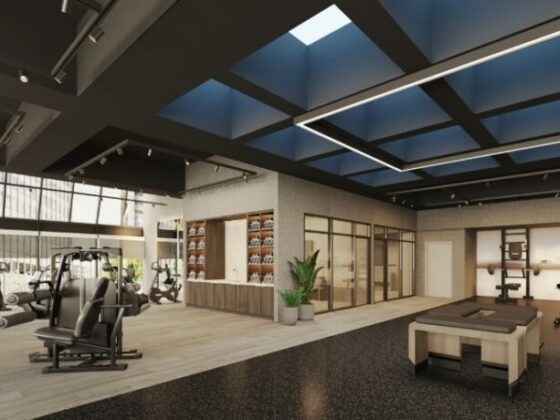
Grounded in neurochemistry, WATG craft environments through our landscape design lens that instinctively nurture wellbeing, where self-care then becomes effortless.
The global wellness industry has experienced remarkable growth in recent years. According to Global Wellness Institute, the industry was valued at approximately $6.3 trillion by 2023, accounting for about 6% of the global GDP. This is projected to reach $9.0 trillion by 2028 – indicating an annual growth rate of 7.3%, notably outpacing the projected global GDP growth of 4.8%.
Behind this exponential growth lies a sobering truth. The wellness industry is expanding not only because people want to thrive — but also because many are struggling. As the world quickly distances itself from the difficult years of post-pandemic in an attempt to resume a sense of normalcy, it is a poignant moment to reflect on the impact and cost of being unwell.


Around the world, mental health challenges and cardiovascular diseases (CVD) are exerting significant economic and social pressures. According to World Health Organization, depression and anxiety alone cost the global economy over $1 trillion annually in lost productivity. In Singapore, a 2023 study by Duke-NUS Medical School and the Institute of Mental Health estimated that anxiety and depression cost the nation nearly S$16 billion annually, approximately 2.9% of its GDP. Similarly, cardiovascular diseases remain a leading cause of death, accounting for 31% of all deaths in 2022.

Why Are We So Unwell?
Illness has been designed into our daily lives. From sedentary jobs and long commutes to overly processed food and overstimulating digital environments, many modern systems are unintentionally engineered against our biological needs. The environments we inhabit — especially in cities — often limit access to daylight, greenery, fresh air, and opportunities for movement, all of which are foundational to health. Social infrastructure — like parks, plazas, and public gathering spaces — has been neglected in many urban developments, reducing opportunities for community and connection, resulting in the loneliness epidemic even when we’re more connected today than ever. In fact, loneliness increases the risk of premature death by up to 30% — a mortality impact equivalent to smoking 15 cigarettes a day.
As a remedy to our ‘unwell’ built environment, healthcare is evolving from a reactive model — waiting until symptoms emerge — to a proactive approach focused on preventing injury and disease before they occur. Fast becoming the backbone of modern medicine, preventive healthcare is enhanced by technology, supported by economic incentives, and driven by patient empowerment. This shift moves care from simply reacting to illness to actively anticipating and avoiding it. The benefits are clear: healthier individuals, more resilient healthcare systems, and a future where wellness becomes the norm.
Wellness as a Way of Life: An Active Pursuit
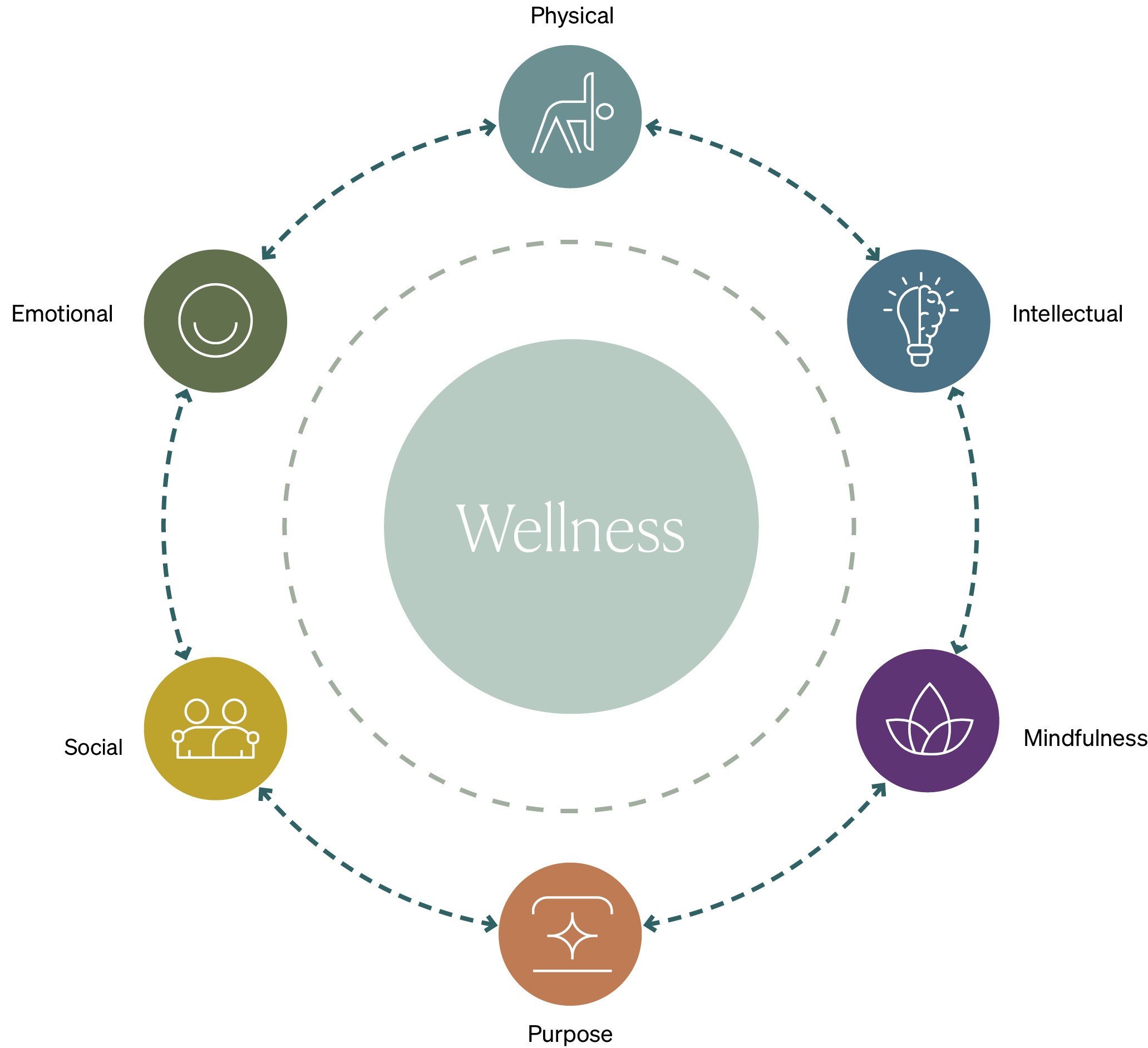 Wellness — as defined by the Global Wellness Institute — is the active pursuit of activities and lifestyles that lead to holistic health. Pfizer defines wellness as the act of practicing healthy habits on a daily basis to attain better physical and mental health outcomes, so that instead of just surviving, you’re thriving.
Six dimensions are identified in a McKinsey & Company research as key focus areas of consumer wellbeing. These are segmented into two broad categories of products and services. Products currently make up the larger market share. However, the services sector, including wellness tourism, spas, and mental health services, is experiencing significant growth and is expected to continue expanding in the coming years.
The definition and offerings of health and wellness are also rapidly evolving and expanding. Younger generations are placing greater emphasis on wellness, dedicating a disproportionate share of their spending towards it. For millennials and Gen Z, wellness is no longer viewed as a series of occasional activities or purchases; it has become a daily, personalized practice — shifting from episodic experiences to continuous, integrated routines grounded in evidence and supported by technology.
Wellness Real Estate
While wellness was once viewed primarily as a consumer-driven market, the pandemic accelerated growth in public health, prevention, and personalized medicine, which now accounts for 12.4% of all wellness spending. Notably, wellness real estate has emerged as a growth leader before, during, and after the pandemic, as both consumers and the building industry increasingly recognize the profound impact that external environments have on physical and mental health. This underscores a vital truth: our surroundings are not just aesthetic backdrops but powerful tools in preventive healthcare — and landscape design plays a major role in shaping environments that keep us well.
Through our landscape design lens at WATG, we focus on creating environments that passively promote health — spaces where we ‘feel good’ while naturally ‘doing good’ for ourselves. In this way, self-care becomes part of our daily rituals. When wellness is seamlessly embedded into our routines and surroundings, it becomes second nature.


The Neurochemical Basis of ‘Feeling Good’
Our sense of well-being is deeply rooted in neurochemistry. Four key neurotransmitters— endorphins, dopamine, oxytocin, and serotonin—play pivotal roles:
- Endorphins: Released during physical activity, they act as natural painkillers and mood enhancers.
- Dopamine: Associated with pleasure and reward, it’s triggered by novel and enjoyable experiences.
- Oxytocin: Often termed the ‘love hormone,’ it’s linked to social bonding, sense of community, belonging and trust.
- Serotonin: Regulates mood, appetite, and sleep; its production is influenced by exposure to sunlight and nature.
By understanding these chemicals, we can craft spaces that naturally stimulate their release, creating environments where individuals ‘feel good’ effortlessly by way of design, thus maximize the landscape’s potential to support wellness and long-term wellbeing.


Designing for Wellness Through Neurochemistry
Here are some of the design principles we prescribe by — each thoughtfully curated to promote the natural release of neurochemicals that underpin wellbeing:
- Emotional – Sensory layers that reach beyond simple aesthetics to enrich all senses
- Physical – Curating delightful journeys, that promote active mobility
- Social – Meaningfully programmed and climatically comfortable outdoor social spaces
- Intellectual – Moments of surprise and wonder encourage creative thought and deeper enquiry
- Purpose – Naturally thoughtful and culturally sensitive design bringing deeper meaning to experiences


The wellness sector is growing faster than many others, demonstrating resilience in an unpredictable world. Wellness-focused design delivers economic value — driving higher occupancy, longer stays, and stronger brand loyalty, while delivering measurable benefits for the environmental, and human. A truly wellness-focused development is holistic, integrated, and begins at the masterplan level.
Wellness Journey
The wellness journey is one not through places, but through feelings. Begin with the calm of arrival — a deep breath, a sense of space. Move through curiosity, delight, and quiet connection as each element invites you to slow down and be present. Feel grounded by nature, uplifted by light, and nourished in every sense. Unfolding gently moment by moment, it is more than design — it’s a deeply human emotional experience.
Learn more: The Feel-Good Effect: Designing Landscapes that Heal, Habitually
Eileen Tan
Regional Marketing & Communications Manager, APAC WATG
WATG