
Know the Difference Between Essential, Core and Peripheral Services
A common mistake during PMS integration is failing to differentiate between essential, core, and peripheral services.
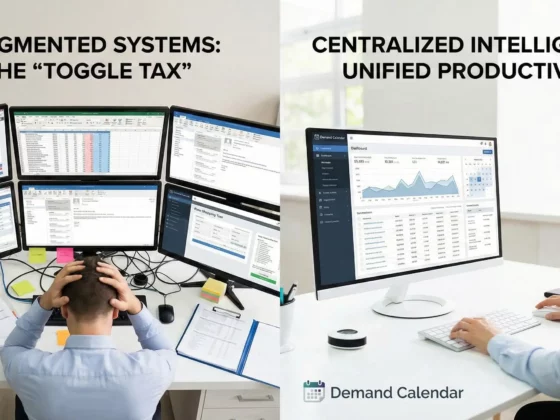
Essential functions like property and channel management should be centralized on a single, reliable platform to keep room availability, rates, and bookings in perfect sync across all channels. Core functions – like guest communications and performance tracking – need to be embedded into one streamlined system to eliminate integration hassles. Then, important peripheral services like marketing or Point of Sale (POS) systems, can be plugged in via open API integrations.
This hybrid approach lets hoteliers harness the power of an all-in-one system while maintaining the flexibility to integrate third-party tools without overwhelming staff. Ultimately, employees should only need to juggle a few systems, ideally no more than five, with front-desk staff using just one system.
Some hotels opt for separate systems for its PMS, channel management, and revenue management, only to find later that the complexity and cost of integrating them all outweighs any potential benefits. Custom development can often be a pricey gamble as well as high-maintenance, requiring additional software spend and training time. Hotels without in-house development teams will often engage contractors for the initial work, but as platforms evolve, those contractors may no longer be available, leaving the hotel without essential support. A hybrid approach, by contrast, provides centralized control with the flexibility to adapt to future needs.
Open APIs are Key for Future-Proofing, but Simplicity is Key
In today’s rapidly changing tech landscape, open APIs are crucial for hotels to stay ahead of the curve. They enable seamless integration of new technologies – whether it’s advanced POS management tools, accounting or communication systems – allowing you to adapt quickly to emerging innovations.
When integrating a PMS, your guiding star should always be future-proofing your operations. You want to be able to effortlessly integrate the latest solutions without disrupting your daily operations, which would also impact guests, or requiring a full system overhaul. A PMS with open APIs means you can further adjust your tech stack to meet specific operational needs, ensuring your system scales effortlessly as your business grows.
Another pitfall that gets overlooked is the amount of training required for new systems. High staff turnover, especially in front-of-house roles, makes it vital that any PMS you integrate is easy to learn.
For instance, front-desk staff should be able to view all of the guests’ relevant financial information in one place, without needing to switch between systems or log into multiple extranets to determine how much is owed by the guest standing in front of them. Simplicity is key for most staff, and a well-integrated all-in-one solution ensures smooth operations and a short learning curve, helping new employees become more productive more quickly.
Scaling is a Priority for Now, Not the Future
Lastly, scalability should be a top priority for any hotel CIO when integrating a PMS. Consider the rising trend of hotels adding mixed-use properties that cater to both short-term and long-term stays into their portfolio. A countryside hotel might expand into glamping or yurts, while a boutique hotel may acquire vacation rental properties.
CIOs must ensure their PMS is equipped to handle this diversification from the start. Whether managing hotel rooms, apartments, or unique stays, the ability for a PMS scale across property types is essential for long-term growth.
Again this is where open APIs can facilitate smooth integration across property types that need different tools. Hotels might need specialized accounting and POS integrations.
Vacation rentals require a PMS that not only offers built-in cleaning and maintenance features with a status dashboard, but also the flexibility to integrate with additional specialized systems, while keeping guest communications centralized within the PMS.
For property management companies (PMCs), a PMS that provides trust accounting and integrates with the back office accounting system is vital
Choosing a PMS that can handle all these diverse needs will allow you flexible growth without the operational headaches.
In the fast-moving world of hospitality, striking the right balance between flexibility and reliability is important. A hybrid strategy — combining the strengths of an all-in-one PMS with the adaptability of open APIs — offers the best path forward. As long as you choose a system that can grow with the business, you can avoid the costly pitfalls of poor integrations.
ABOUT THE AUTHOR
Eric White has more than 26 years of experience in the technology sector, with deep expertise in areas such as travel booking management, consumer websites, cash management, and FX trading. As eviivo CTO, he oversees teams working across multiple technology stacks and programming languages to create integrated, effective solutions for hospitality property managers.