INTRODUCTION
Talking about luxury in Monte Carlo involves more than just listing iconic hotels or mentioning astronomical rates. Over more than a century, the Principality has developed a very particular way of understanding hospitality: a precise blend of tradition, theatricality, aesthetics, and narrative. Hotels are not just places to sleep or be waited on, they are stories. Stories told through marble, staircases, silent lobbies, and almost choreographed gestures of service. And among these stories, three hotels occupy a central place in the construction of the myth of European luxury: the Hôtel de Paris, the Hôtel Hermitage, and the Metropole.
Each embodies a different chapter in this narrative. The Hôtel de Paris represents the monumental version of luxury; the Hermitage preserves the discreet elegance of the Belle Époque; and the Metropole offers a contemporary reinterpretation of that legacy, more closely linked to style, fashion, and sensory aesthetics. Together they form a trilogy that, rather than describing Monte Carlo, invents it, shapes it, and keeps it alive as a myth.
THE HÔTEL DE PARIS: THE ARCHITECTURE OF ABSOLUTE LUXURY
There are places that need no introduction. Just cross the Casino square to understand why the Hôtel de Paris is an icon. Its almost theatrical façade seems designed to make visitors feel they are entering a world where luxury is not questioned, but affirmed. It is not just a hotel; it is the embodiment of the European imagination of prestige, something like an elegant synthesis of all possible palaces.
Inside, marble becomes a language. The columns, the chandeliers, the height of the lobby… every element conveys the feeling that luxury requires a certain inner silence, a calm that is very similar to respect. Without meaning to, guests adopt a different posture: they stand up straighter, walk more slowly, adjust the way they look at things. It is as if the hotel reminds them—without words, without haste—that they are participating in an ancient ritual.
The Hôtel de Paris narrates the aristocratic myth of European luxury: the idea that prestige is built in stone, that history confers legitimacy, that time and opulence form a natural alliance. Its narrative is vertical, solemn, almost classical. And, perhaps for that very reason, it remains indispensable.
THE HÔTEL HERMITAGE: ELEGANCE AS A REFUGE
A few steps away from the bustle of the square, the Hôtel Hermitage tells another story. A more intimate and gentler one of European luxury. Its Belle Époque beauty does not impress with grandeur, but with details that seem to have always been there, waiting to be discovered.
Gustave Eiffel’s dome, the pastel tones, the filtered light that crosses the corridors with an almost poetic balance: everything at the Hermitage invites you to slow down. It is easier to sit in a corner of the lobby and observe how the atmosphere influences those who pass by. The movement of the guests is more delicate, more leisurely, as if the architecture were asking them to be gentle.
The Hermitage tells the romantic myth of luxury, one that is associated with quiet beauty, confidentiality, long conversations, and the perception that time has a different density. There are no loud noises or grand gestures: elegance is, literally, an atmosphere. And it is precisely this aesthetic intimacy that makes the hotel one of the most consistent symbols of Monte Carlo.
THE METROPOLE: WHEN LUXURY BECOMES STYLE
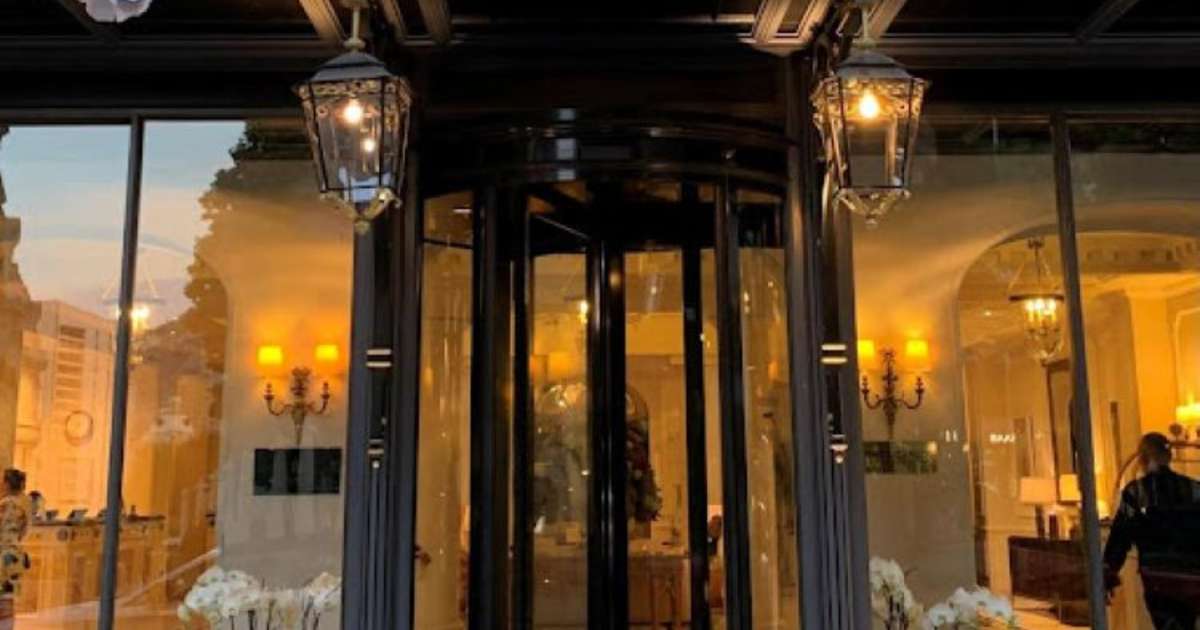
The Metropole breaks with tradition (without breaking it). It does not seek to compete with the solemnity of the Hôtel de Paris or the softness of the Hermitage. It represents contemporary luxury, linked to fashion, design, and sensory experience. The entrance, with its suspended crystal chandeliers, anticipates an aesthetic that combines glamour and modernity.
The Metropole speaks the language of hospitality as style. Its spaces are designed to be felt rather than interpreted. The light is warmer, the materials more tactile, the sound more present. Everything is carefully considered, not in a monumental sense, but in an emotional one. Guests enter and, without realizing it, synchronize with a different rhythm, closer to a luxury lifestyle than to palatial tradition.
Here, the myth is different: that of the contemporary traveler who seeks exclusivity, but also spontaneity. Who values a designer’s signature, a collaboration with a renowned chef, or the atmosphere of a spa where aesthetics become almost narrative.
CONCLUSION
Three stories, one territory: Monte Carlo as narrator
What is interesting about these three hotels is not only what they represent individually, but how they dialogue with each other within the urban landscape of Monte Carlo. The city becomes a narrative space where each building contributes to the overall plot of European luxury.
The Hôtel de Paris offers epic luxury.
The Hermitage brings lyricism.
The Metropole introduces contemporary aesthetics.
Together, they compose a complex narrative where visitors can move between stories without traveling more than a few hundred meters. Monte Carlo doesn’t just sell rooms or experiences; it sells stories that intertwine, enrich, and strengthen each other.
And perhaps that is the true secret of the Principality: it has understood that luxury is not so much a product as a well-told story, sustained over time, in aesthetics and architecture. The hotels do not describe Monte Carlo. In their own way—with marble, light, and atmosphere—they write it.
Xavier Reinaldo
Academic Researcher