Think about the last time someone truly moved you to act.
It probably wasn’t a slick pitch or a clever discount.
It was a person who made you feel seen, safe, and excited about a future you could be part of.
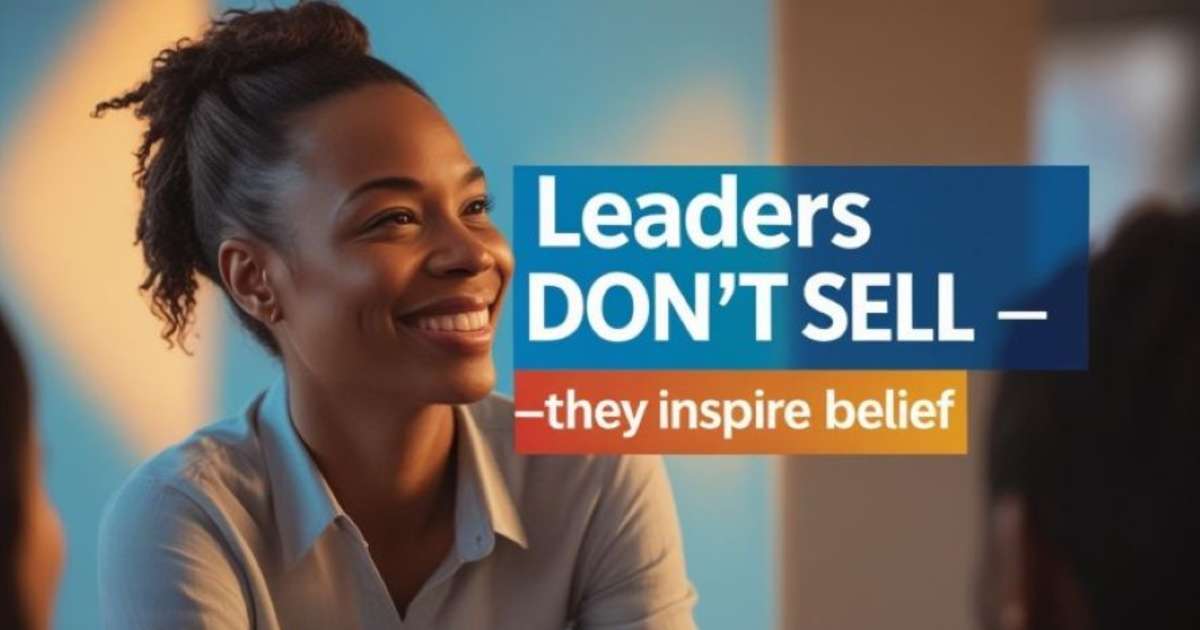
That’s the core of great leadership in sales: not pushing people to buy, but inspiring them to believe—in you, in the mission, and in what’s possible together.
The Moment It Clicked for Me
Years ago, I watched a seasoned sales leader walk into a high-stakes meeting with nothing but a notebook. No slides. No pressure.
He opened with two simple questions:
“What would a great year look like for you?”
“What’s the risk that keeps you up at night?”
For 40 minutes, the client talked. He listened—really listened—without interrupting. Then he paraphrased their goals, named the risk, and painted a clear picture of how success could look and feel.
No rush. No hype. Just clarity and confidence.
The client didn’t buy because they were “sold.”
They bought because they believed— in the vision, in the partnership, and in the leader in front of them.
That day changed me. I stopped obsessing over the perfect pitch and started practicing the posture of leadership: purpose, empathy, and trust.
Why “Inspire” > “Sell” Wins in 2025
The world is noisy. Buyers are overwhelmed with options, claims, and data. What cuts through?

🔁Trust beats features.
🔁Clarity beats complexity.
🔁Purpose beats pressure.
Leaders who inspire belief create pull. They attract talent, partners, and clients because people want to be part of something meaningful. That’s how you build loyal customers, high-performing teams, and resilient results.
This isn’t soft leadership. It’s strategic leadership. When people believe, they commit. When they commit, they execute. And when they execute, results compound.
The Belief Shift: From Pitching to Leading
Here’s what changes when you lead with belief:
➡️From transactions to transformation
You stop chasing deals and start building outcomes that matter.
➡️From price to value
The conversation moves from “How much?” to “How far can we go together?”
➡️From persuasion to partnership
You invite people into the mission and let them see themselves in the solution.
➡️From fear to confidence
Teams that believe in the mission sell with calm conviction.
A Human Story You’ll Recognize
A manager on my team once struggled with a complex account. Lots of competition. Conflicting priorities. Stalled progress.
Instead of another “follow-up email,” we reset the conversation:
1. We ran a listening session with the client’s cross-functional group.
2. We mapped their goals, risks, and decision criteria on a single page.
3. We wrote a shared success statement: “By Q4, we will achieve X without risking Y.”
No pitch. No push. Just leadership.
Momentum returned. People aligned. And the deal closed—because the group believed in the path forward.
The BELIEF Framework
If you want to sell like a leader, try this simple framework you can use today:
B — Begin With Purpose
Open every conversation with 𝘸𝘩𝘺. Why does this matter—to them, to you, to the bigger picture? Leaders anchor outcomes in meaning.
E — Empathize Before You Advise
Ask questions that surface hopes and fears: “What does success look like?” “What would make this a win six months from now?” Reflect back what you heard.
L — Listen for the Real Problem
There’s the stated need, and there’s the real need. Listen for risk, friction, and hidden constraints. Your job is to name the truth kindly.
I — Illuminate the Vision
Paint a before/after picture. Show the path, the milestones, and the safeguards. Make the future feel visible and viable.
E — Equip with Simple Next Steps
Leaders remove friction. Offer a clear, low-friction next step: a pilot, a workshop, a 2-week sprint, or a scorecard review.
F — Follow Through Relentlessly
Belief grows when words match actions. Keep promises. Communicate early. Celebrate small wins.
Case in Point: Starbucks’ Belief Engine
When Howard Schultz shaped Starbucks, he wasn’t selling coffee. He was building a third place—a space between home and work where people felt they belonged. The product mattered, but the meaning mattered more.
📌Internally, partners (employees) were treated with dignity—benefits, ownership mindset, a language of respect.
📌Externally, customers bought an experience of warmth, consistency, and community.
That belief scaled. People didn’t just buy lattes; they bought into a culture. The result? A brand built on trust, identity, and everyday ritual. That’s leadership driving sales—without the hard sell.
𝗠𝗲𝘁𝗿𝗶𝗰𝘀 𝘁𝗵𝗮𝘁 𝗠𝗮𝘁𝘁𝗲𝗿 𝗪𝗵𝗲𝗻 𝗬𝗼𝘂 𝗟𝗲𝗮𝗱 𝘄𝗶𝘁𝗵 𝗕𝗲𝗹𝗶𝗲𝗳
If you adopt an inspire-don’t-sell posture, watch these signals:
🔵Stakeholder alignment time goes down (fewer meetings to get to yes).
🔵Pilot-to-rollout conversion goes up (clarity reduces risk).
🔵Referral rate increases (people advocate for leaders they trust).
🔵Churn declines (belief sustains loyalty through rough patches).
🔵Sales cycle quality improves (fewer “maybe later,” more decisive yes/no).
These are the fingerprints of trust at work.
The Mindset Shift
Leaders who inspire belief don’t need to be the loudest voice in the room. They don’t need the flashiest deck or the fanciest jargon. They do a few simple things, consistently:
🔵They make people feel heard.
🔵They make the future feel clear.
🔵They keep their word—especially when it’s hard.
Do that, and you won’t have to push people to buy.
They’ll ask how to join.
What’s one habit you’ll try this week to lead with belief—not just sell?