
A lot of what matters right now in travel, tech, and brand-building comes down to what feels real, human, and personal. That’s the thread running through this edition’s picks.
This is the last newsletter of the year. I’m grateful to all of you for subscribing, reading, and engaging. Wishing you a Merry Christmas, a Happy New Year, and a great start to 2026!
Special thanks to Propellic for sponsoring this edition of the newsletter:

While you’re still optimizing for keywords, Google’s AI is rewriting the rules of travel search. Our NavLog readers are ahead of the curve with Google’s AI search surfaces. Don’t get caught playing catch-up when your competitors are already adapting. Get the travel marketing intelligence that matters. → Join 1,500+ travel marketers.
1. Storytelling needs humans
Microsoft is hiring storytellers at $300k. Google, USAA and others are doing the same. This short post by Paul Stanton breaks down why narrative is becoming a core requirement for big tech, and for anyone building in public or raising capital, whether for a startup or a fund.

Founders (and GPs) who can clearly communicate their market view, traction, and long-term vision are separating from those who just update a pitch deck. Customers, investors, and talent still care about the numbers, but what they remember is the story, especially early on when the numbers are insufficient or nonexistent.
2. Personalization is only real when it’s human
I got this email from Frontier with a subject line telling me to “leave the cold behind.” The only problem: I live in New Orleans, which isn’t exactly a cold place. It was 76°F (24.5°C) that day…hardly a reason to “leave the cold behind.” It also claimed the offer was “just for me,” which, of course, it wasn’t. Mail merge ≠ Personalization.

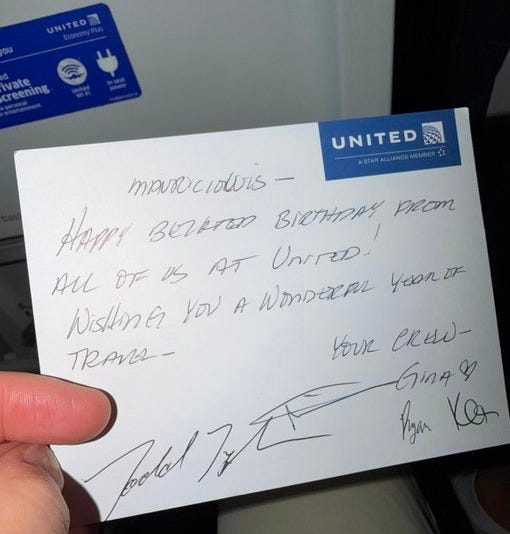
Contrast that with what United did. I flew yesterday (1 day after my birthday), and the crew handed me a handwritten card from the pilots and flight attendants, wishing me a great year of travel. The fact that it was the day after my birthday made it feel even more real.
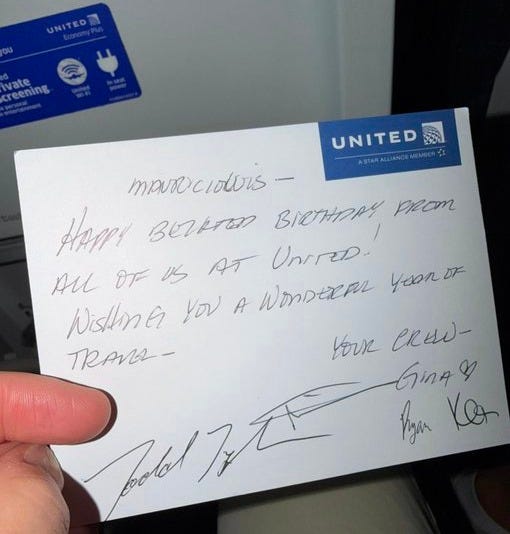
One was automated and off-target. The other was small, thoughtful, and spot on. The tech is easy. The trust is the hard part.
3. Airbnb’s 2026 predictions are out
In my last newsletter, I shared my own take on 2026 travel trends, including the Belgian who moved to Barcelona last Tuesday and is already yelling at tourists to go home. This week, Airbnb released its official 2026 predictions. It’s more polished than mine, but we’re in synch. Airbnb’s key takeaways:
-
Gen Z travelers love 1-2 day international trips to cool cities
(Translation: young people with limited time and money still want to go to fun places)
-
Interest in outdoors and nature is surging
(Translation: Parks are pretty, good for your brain, and free/low-cost) -
Big events drive bookings
(Translation: Turns out people want to be where things are happening) -
Travelers to France like food
(Translation not needed)
All jokes aside, their release is worth a look; unlike most “Megatrends” out there, their data brings real depth and context to what travelers are doing.
4. VCs are not investing in non-AI (at all)
Bill Gurley spent decades as a partner at Benchmark, one of Silicon Valley’s most respected venture capital firms, backing companies like Uber, Zillow, and OpenTable. He has seen multiple technology cycles play out from the inside. When someone with that background speaks plainly about startups and capital markets, it is usually worth paying attention.
In a recent conversation with Tim Ferriss, Gurley described the current funding environment in the simplest possible terms:
“Institutional investors have zero interest in non-AI deals. Zero.” — Bill Gurley
Gurley was simply describing how capital is being allocated right now. This has little to do with whether AI is overhyped or whether every product truly needs it. Capital moves in waves, and the current wave is entirely focused on AI.
If you are building something that is not AI-related, you may still be building a good business, but you are operating outside the attention span of institutional investors. That matters because venture funding is path-dependent. Angels think about follow-on rounds. Founders think about who will fund the next stage.
As a result, even solid, sensible businesses can struggle. Not because they’re flawed but because they sit outside the current narrative. Right now, the funding market is highly concentrated, and almost all of that attention is on AI.
5. Where the real AI opportunities are
Bill Gurley believes that the era of building a new foundation model as a startup is effectively over. That game now requires enormous amounts of capital, infrastructure, and access. If you think you are going to back the next OpenAI as an angel investor, you are not being realistic.
Where he sees opportunity is in companies that sit deep inside specific industries, applying AI to complex workflows, proprietary data, and real operational problems. Areas that require context, domain expertise, and an understanding of how work actually gets done. Software that automates processes, connects fragmented systems, and reduces friction inside complex organizations. Not the kind of things that show up on OpenAI or Anthropic’s immediate roadmap.
“I don’t think it will make sense for OpenAI to go crush every little vertical.” — Bill Gurley
For industries like travel, hospitality, and logistics, this should sound familiar. Workflows are messy, data is fragmented, and a lot of the work is still very human. Bill Gurley and Tim Ferriss
6. A practical note on careers and AI
One of Bill Gurley’s most practical points had little to do with startups or venture capital. It was about careers.
AI is going to affect almost every role, whether you work in tech or not. And ignoring it is not a neutral choice. Gurley’s view was straightforward. The safest response is familiarity.
“I don’t care what field you’re in, you should be playing with this stuff. It has the potential to impact your career, and the best way to protect it from AI is to be the most AI-enabled version of yourself you can be.”
This is not about becoming technical or chasing every new tool. It is about understanding what these systems can do, where they help, and where they fall short. What disappears in technology shifts is rarely expertise. It is rigidity. Expectations around speed, output, and judgment are already changing, and they will continue to change whether we like it or not.
For most professionals, the risk is lower that AI will replace us overnight. It is that someone else learns to use it better, faster, and more comfortably than we do. Over time, that gap compounds. Those who reject these tools on principle fall behind, often without noticing it until it is too late.
Standing still and acting like change/progress/technology is bad has never been a great career strategy. It is even less so now.
7. Travelers are highly receptive shoppers
Rory Sutherland, Ogilvy’s Vice Chairman and a longtime behavioral economist, recently shared this post on LinkedIn explaining that people planning a trip are unusually open to change and more likely to say yes to new things.
In his work with Expedia, he found that travelers are 20% more likely to be shopping for a car, 27% more likely to be seeking cosmetic advice, 29% more likely to make in-app purchases, and 12% more likely to want to try new restaurants. Travel planning puts people in a different headspace. They’re more open, more curious, and more willing to try things they wouldn’t consider in day-to-day life. That creates real opportunities for non-travel brands to get in front of people when they’re paying attention.
8. Building travel brands for the AI economy
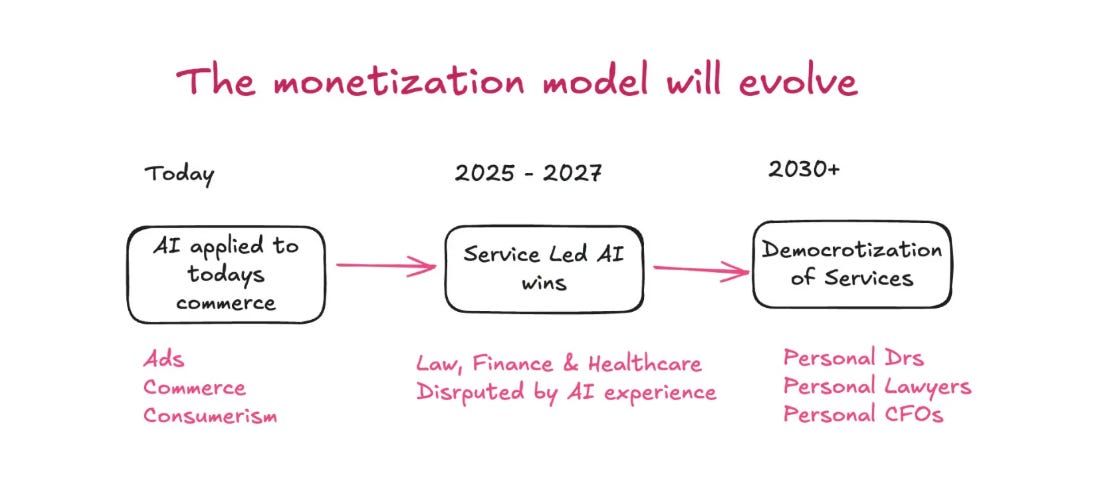
This guest post from Mario Gavira explores a provocative idea: if AI reduces the need for entry-level knowledge work, we could see downward pressure on middle-income wages — even as services powered by AI become cheaper to produce. If that shift plays out, the structure of consumer spending may change in ways travel companies can’t ignore. Mario suggests that travel may need to position itself less as entertainment and more as a way to deliver meaningful outcomes, such as health, growth, and a personal reset. He offers clear, practical examples of how brands might respond.
9. Flight subscriptions done right
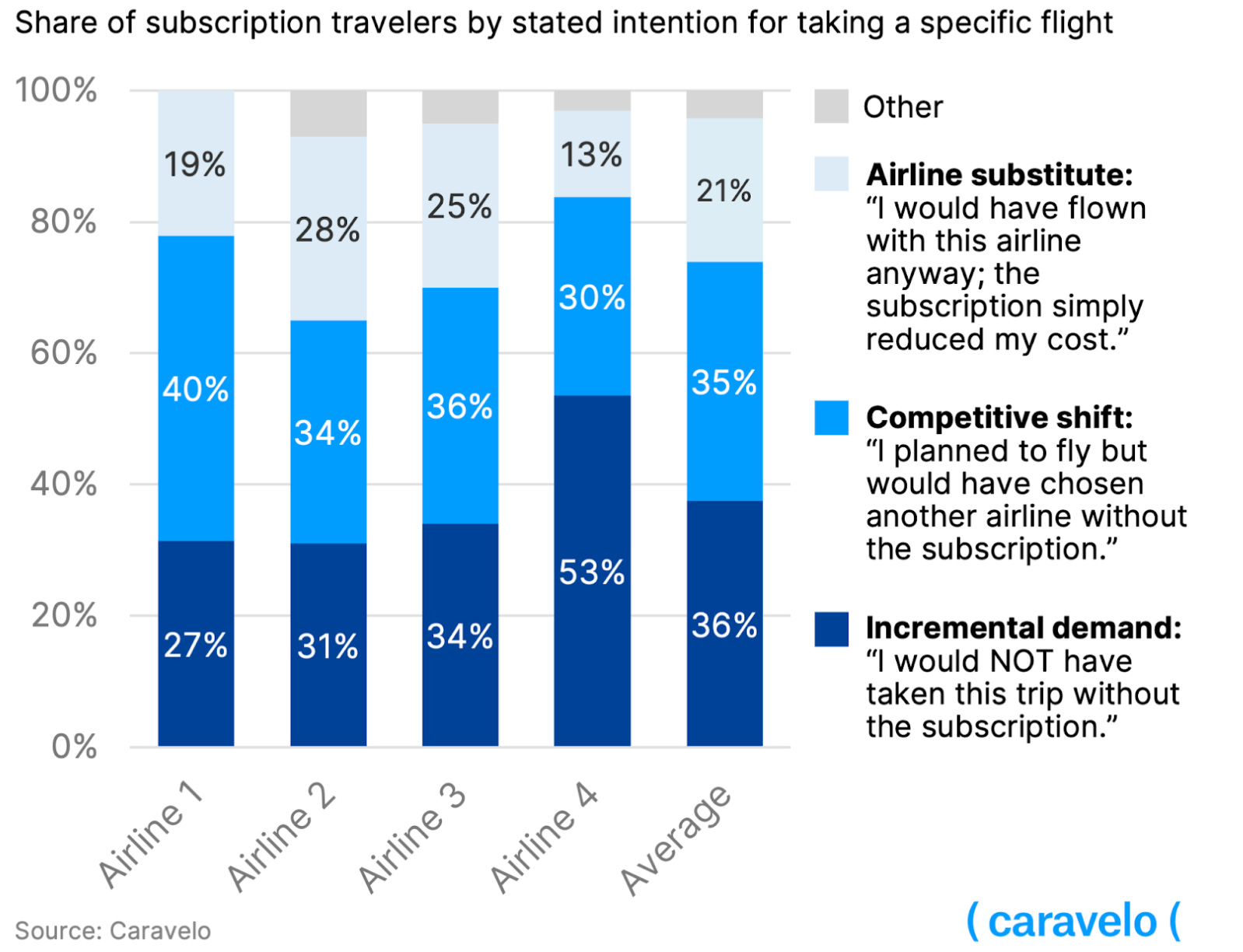
Everyone’s been dunking on Ryanair for killing off its subscription model after less than a year, calling it proof that flight subscriptions don’t work. But as Caravelo points out in this report (based on 600,000+ subscription flights and 200,000+ travelers), the real issue was the execution. According to the report, Ryanair’s version likely didn’t attract new customers or deepen engagement with existing ones. In other words, it didn’t change behavior. People just used it to get discounts on flights they were already planning to take, which looks more like couponing than loyalty.
The report is specific and grounded in actual behavior, rather than vibes or survey answers. Their key takeaway is that when done right, subscriptions build habits, attract under-45s who’ve long disengaged from traditional loyalty, and unlock travel that wouldn’t have happened otherwise. It’s worth a read if you’re in the business of loyalty, subscription models, or trying to understand what modern travelers are actually doing (vs. what we think they might do).
10. This explains a lot
Your privacy settings might be the reason your 2026 wishlist didn’t happen.

Fundraising? Submit your startup to the Travel Investor Network
If you’re raising a round (pre-seed to Series D), complete your profile on our new platform: travelinvestornetwork.pynn.ai. We’re partnering with Pynn, an AI-powered platform used by VCs, accelerators, and innovation hubs to manage deal flow, run events, and evaluate startups. It takes about 5 minutes to complete and helps investors assess opportunities more efficiently.
We review every submission. Even if we don’t follow up directly, your profile may still be discovered by relevant investors.
Travel Tech Essentialist Job Board
→ Explore all 1182 open roles on the Travel Tech Essentialist Job Board now.
-
Airbnb | Senior Staff Data Engineer, Marketplaces DNA | USA | $244k – $305k + Equity
-
Fora | Senior Quality Assurance Testing Engineer | New York City | $110k – $140k + Equity
-
Acai Travel | Founding Marketing Lead | New York City | $60k – $100k + Equity
-
Airbnb | Acquisition Manager, Experiences | Mexico City | MXN $147,000 – $183,000 / month
-
Weroad | Portfolio Development Manager | Milan | €40k-€55k
📩 For monthly updates on the latest roles, subscribe to the Travel Tech Jobs newsletter
If you like Travel Tech Essentialist, please consider sharing it with your friends or colleagues. If you’re not yet subscribed, join us here:
And, as always, thanks for trusting me with your inbox.
Mauricio Prieto