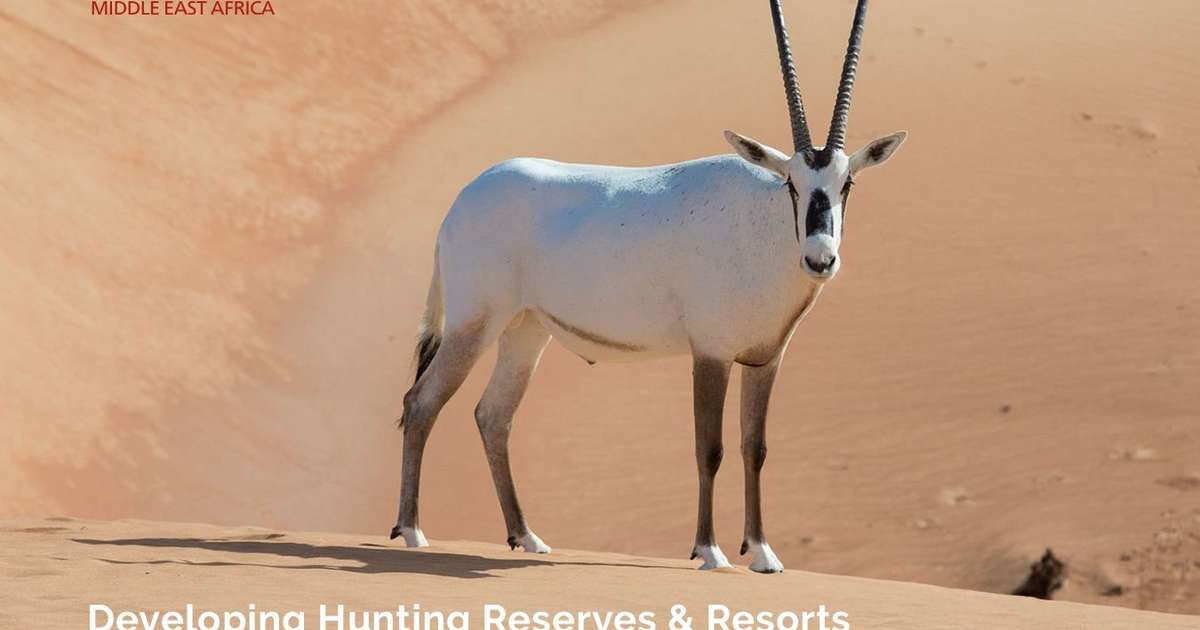
As global travel evolves, experience-led tourism is shaping the future of luxury and niche hospitality. While nature lodges and game reserves are long established in Africa, the Middle East region, though home to properties in natural settings, has not yet developed dedicated game or hunting reserves. This creates an opportunity to introduce carefully designed hunting and conservation reserves, anchored in thoughtful positioning, conservation-driven practices, curated experiences, and sustainable operating models.
Defining the Concept
Hunting reserves differ from traditional nature-based resorts by integrating regulated, sustainable hunting as a core experience. This appeals to a selective yet highly engaged clientele looking for privacy, exclusivity, and tailored itineraries.
At the same time, supporting facilities such as spas, wellness centres, and nature-based adventures (soft or hard) are essential to broaden the appeal and ensure non-hunting companions, including families and leisure travellers, also find value in the stay. In all cases, conservation and habitat stewardship should frame the guest journey, making clear that participation directly contributes to sustaining biodiversity.
Conservation and Wildlife Nurturing at the Core
Sustainability is not an afterthought but the foundation of successful hunting reserves. Regulated hunting, when carefully managed, has been proven to fund wider wildlife protection and habitat preservation efforts.
Well-designed projects typically combine breeding programs to sustain and enhance wildlife populations, habitat restoration initiatives such as reforestation or desert rehabilitation, and revenue reinvestment into conservation through ranger training, anti-poaching patrols, and community partnerships.
For developers, embedding conservation into the DNA of a reserve is both an ethical responsibility and a commercial advantage. Travellers increasingly want to see measurable impact such as hectares of restored habitat, species reintroduced, and rangers supported, which enhances credibility and market differentiation.
Understanding Hunting Guest Segments
Hunters represent a diverse market. Broadly, they include trophy hunters seeking rare or notable animals for prestige, adventure and specialist hunters drawn to exploration, traditional methods, or specific species, international travellers combining hunting with cultural immersion, and leisure hunters who value accessibility, social aspects, and family-oriented recreation.
This segmentation highlights the need for a spectrum of hospitality products, from low-density exclusive retreats to higher-inventory resorts, ensuring broad market appeal while balancing accessibility with exclusivity. Across all segments, transparent communication of conservation impact is vital to maintaining trust and legitimacy.
Packaging Strategy: All-Inclusive or Split Revenue?
In Africa, many reserves operate on all-inclusive models that bundle accommodation, meals, beverages, and experiences. Some even extend to flights and multi-destination itineraries. This simplifies logistics and delivers a seamless journey for guests.
In the Middle East region, however, all-inclusive is still largely an optional booking type, with expectations varying by source market. Operators should have the flexibility to decide whether to adopt a bundled all-inclusive strategy or maintain a traditional split between accommodation, F&B, and experiences. Both approaches are financially viable. The key lies in managing guest expectations so that the chosen model fits traveller preferences and brand positioning.
Whichever approach is chosen, integrating a conservation contribution into the package, for example allocating a portion of fees to wildlife programs, can significantly elevate perceived value and strengthen sustainability credentials.
Positioning and Revenue Potential
Although direct benchmarks do not exist in the Middle East, examples from African lodges and desert eco-resorts demonstrate that unique locations, exclusive experiences, and credible conservation positioning can command premium revenues.
While the region cannot replicate Africa’s ‘Big Five’ safaris, gorilla trekking, or the great migrations, all of which take place in strictly protected, non-hunting areas, it can offer authentic, immersive encounters with native wildlife. Success will depend on designing reserves that highlight local natural and cultural assets while framing any hunting elements transparently as part of a broader conservation funding model.
Designing for Exclusivity and Scale
One of the defining success factors of reserves is finding the right balance between exclusivity and accessibility. Smaller key counts enhance privacy and intimacy, while higher-capacity properties in more accessible locations can broaden market reach and support visitor flow.
Regardless of scale, design should minimize ecological impact, prioritizing renewable energy, water recycling, sustainable materials, and integration with natural habitats.
F&B as a Differentiator
Given the remote setting of reserves, guests typically have few off-site dining options. This creates an opportunity to design F&B as a signature feature. Farm-to-table concepts, curated culinary experiences, and immersive outdoor dining can reinforce the property’s positioning and drive strong ancillary revenue.
Experiential Layering: Beyond the Hunt
While regulated hunting remains a core activity, complementary experiences are vital for broad appeal and conservation impact. These include:
- Wildlife photography and guided observation.
- Conservation programs where guests assist with wildlife counts or habitat restoration.
- Desert soft-adventures and eco-sports.
- Wellness and cultural immersion programs.
By ensuring that more than half of the guest experience is non-hunting, reserves highlight their identity as conservation-led destinations first, hunting venues second.
Operational Efficiency: Single Properties and Clustering
Where multiple properties exist within a reserve, clustering offers efficiency through shared services such as administration, maintenance, and back-of-house operations. This reduces costs and improves margins.
Even if there is only one property, efficiency can still be achieved through flexible back-of-house design, technology for energy and guest management, selective outsourcing, and cross-training staff to handle multiple roles in remote settings.
Anticipating Market Dynamics & Concluding Thoughts
The regional hospitality market will grow increasingly competitive, and while hunting may offer an initial point of differentiation, long-term success will rely on continuous innovation, sustainability, and cultural integration.
For developers, hunting reserves and eco-nature resorts represent an untapped niche in the region, with potential unlocked by balancing authenticity with flexibility, diversifying revenue streams, embedding conservation at the core, and building operational resilience. By drawing on lessons from African reserves and aligning them with regional dynamics, these projects have the potential to introduce a new product category and reshape nature-driven travel in the region, grounded in conservation and long-term sustainability.
Annie Bastin Fernandez
Associate Director, HVS Middle East & Africa, Dubai
HVS