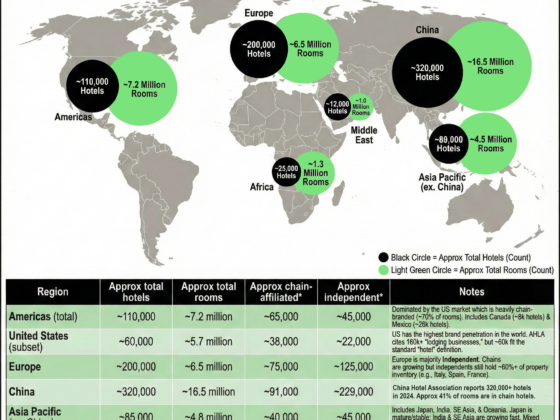

2025 has been an interesting year for hotel industry performance: U.S. profitability dipped for the second straight year; Europe and Asia have been stagnant; the Middle East is growing slightly. A wide array of factors have influenced operational costs, guest demand levels and rates.
Years ago, when I was reviewing and approving hotel budgets, I would not accept anything less than 5% year on year as we would need to cover inflation, and generate more revenue to appease the hotel owner. That typically remains the norm, but if your whole market, city and comp set are barely managing to stay even, what can you do to get to the desired growth levels?
As hotels continue to evolve in every way to meet service standards while facing operational issues, investing in key business areas is crucial for growth. However, this it is not a one-size-fits-all approach.
Technology is available to help hotels stay ahead of the curve. Of course, artificial intelligence, from chatbots to revenue management platforms, is now ubiquitous and being employed at property level. The world is moving forward and operators need to keep up, but doing so in a composed manner that doesn’t result in overspending or adding on too many tools that overwhelm teams. Consider this: If a hotel is on the smaller size, a property-built tech stack driving online distribution and conversion, whether direct or through third parties, should do the trick. Meanwhile, larger, more complicated hotels, is where good old-fashioned sales comes in. Without a solid base to your business levels, it doesn’t matter how much technology and AI you throw at the growth problem. It simply won’t do: You need a base off which to yield; you need different source markets to cover all seasons and days of the week, meetings to fill up those spaces and for them to go and eat lunch in your all-day dining; you need leisure clients to use your wellness facilities and business travelers to buy your executive rooms while entertaining clients with food and drinks at night. A wide range of clients is needed to make a hotel’s business both resilient and optimized for maximum revenue potential.
Globally, the size of sales and events teams has been shrinking in recent years, a global trend driven by the declining share of business they’ve contributed in recent years, along with the rise of high-yielding direct online bookings. But your sales team could be a silver lining, now more than ever. You need salespeople at the top of their game, hunting for leads, developing client relationships, maximizing market share and growing the conversion ratios from all the leads that are coming in. The problem is that many of these teams are understaffed, overworked, undertrained and outgunned by their clients.
The clients that they talk to, whether corporate, leisure, MICE, government, airlines or any other, are far sharper than they were five, 10 or 20 years ago. They are more experienced and have way more choices of destinations and hotels and have access to information that they will use to get what they want. Your clients are harder to catch, harder to keep and harder to please than ever before.
Many salespeople are acting as order takers, budget asking, answering machines, system administrators and proposal sending admins. Because of the constant pressure on them to perform, the many demands on their time, their lack of experience in many cases and also a reduced investment in training, they do not know how to set their priorities right, don’t build rapport in the right way, don’t qualify clients effectively and, as such, end up being less successful.
Investing in this area of business, giving them support, ensuring they are trained and rewarded properly when they exceed expectations, could make a huge difference to your hotel’s commercial success. This, along with your tech stack, will push your numbers higher than your comp set and guarantee that, even if your whole market collapses, your hotel will always outperform others around you.
Story contributed by Tareq Bagaeen, a longtime hospitality consultsnt and founder of aQedina.com.