One of the most exciting technological developments within the travel industry in recent years has been the increased prevalence of robots, with examples ranging from text-based chatbots and front desk robotic assistants to security robots and robotic travel cases. This article takes a closer look at how robots transform tourism, providing eight real-world examples of their use and examining some pros and cons.
Understanding Robots
Although most of us have a concept of a robot, it can be more difficult to define what ‘robot‘ means clearly. Effectively, a robot is a machine designed to perform specific tasks accurately and automatically. This could include physical tasks, such as part assembly in a factory, or text or speech-related tasks.
In terms of appearance, while you may immediately think of a human-like android, robots can take many different forms in reality. They can be completely autonomous or semi-autonomous, operating with some human assistance. Modern robots use technology ranging from collision detection to speech recognition and artificial intelligence. According to the Robotics Industry Size & Share Analysis Report by Mordor Intelligence, the global robotics market size is projected to reach $95.93 billion by 2029.
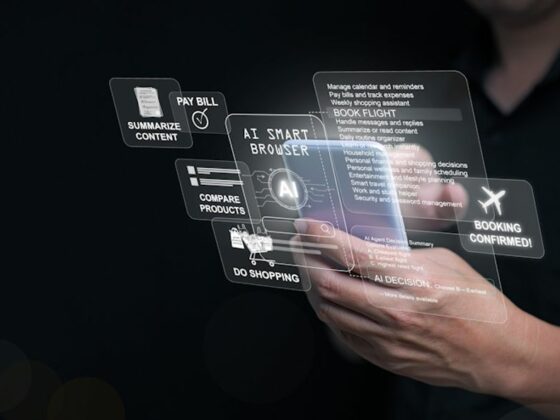
For those in the travel industry, AI is perhaps the most exciting robot-related technology because it can facilitate machine learning and perform more complex tasks, which typically require human cognitive function. Put simply, AI is the ability of a machine to mimic this kind of cognitive ability.

Definitions outlining precisely what counts as artificial intelligence are somewhat fluid. Nevertheless, it is usually agreed that speech recognition, problem-solving, learning from human interactions, completely autonomous movement, and the demonstration of logic and reasoning all fall within this field.
Applications Within the Travel Industry
Robotic technology is rapidly gaining popularity within the travel industry, partly motivated by changing consumer habits concerning tourism. Customers increasingly seek self-service methods, making automation robots appeal to hotels, travel agents, and other businesses.
According to Mordor Intelligence, the global hospitality robots market is expected to reach USD 0.61 billion in 2025 and grow at a CAGR of 24.72% to reach USD 1.84 billion by 2030. The growth shows that hotels, airports, cruises, and attractions are investing heavily in automation.
The travel industry is facing serious staffing problems. Around 67% of hotels report staff shortages. About 72% say they cannot fill open roles. Robots help when you cannot hire enough people or keep losing staff. They take over repetitive tasks like deliveries, cleaning, and basic security, so your team can focus on guests and revenue.
Contrary to worries, guests love robots. Travelers now expect smart, contactless service. Many will pay more to stay at tech-forward properties.
Table: Example of Robots Within the Travel Industry
| Application Area | Functionality | Benefits |
|---|---|---|
| Customer Service Chatbots | Automated responses to customer inquiries are available through websites or apps. | Provides 24/7 assistance, reducing wait times and increasing customer satisfaction. |
| Check-in/Check-out Robots | Automated kiosks for self-service check-in and check-out in hotels. | Speeds up the process, reduces queues, and allows staff to focus on other tasks. |
| Luggage Handling Robots | Robots that transport luggage to and from rooms or within airports. | Improves efficiency and reduces the physical burden on staff and travelers. |
| Cleaning Robots | Automated machines for cleaning floors, windows, and public areas. | Ensures consistent cleanliness, enhances hygiene, and frees up staff for other duties. |
| Delivery Robots | Robots that deliver items like room service orders directly to guests. | Increases service speed and reduces human-to-human contact, which is important for health safety. |
| Informational Kiosks | Interactive robots provide information, directions, and recommendations. | Offers personalized travel advice and information, improving the guest experience. |
| Security Robots | Robots patrolling premises to detect and report unusual activity. | Enhances security measures and provides real-time surveillance, offering peace of mind. |
Real-World Examples of Robots Within the Travel Industry
Let’s explore actual robots serving travelers right now across transportation, accommodation, food & beverage, and entertainment sectors. Each example shows how automation is already reshaping real operations across the travel industry.
Examples of Robots Working in the Transportation Sector
Transportation is where many travelers first meet robots. Airports use robots to help passengers find gates, clean terminals, and move luggage. According to Mordor Intelligence, the global airport robots market is expected to reach USD 1.29 billion in 2025 and grow at a CAGR of 13.87% to reach USD 2.47 billion by 2030. Airlines deploy robots for baggage handling. It is important because U.S. airlines alone lose 2 million suitcases yearly. Cruise ships feature robot bartenders and entertainment systems. These robots work 24/7 in busy, crowded environments, handling millions of travelers annually. They speak multiple languages, never get tired, and make fewer mistakes than humans.
1. Incheon Airport’s AIRSTAR Robot
Incheon International Airport in South Korea is one of the first big airports to use robots. The airport serves around 70 million passengers a year, so clear help and clean spaces matter a lot. AIRSTAR is the friendly guide robot at Incheon Airport. It moves around the terminal on its own, using sensors and indoor maps to avoid people and obstacles. Travelers can ask AIRSTAR for flight information, directions to gates, restaurants, restrooms, and other services. The robot can speak several languages. The airport also uses the robot’s anonymous data to understand how people move through the terminal and to make layout, signage, and staffing smarter over time.
Video: AIRSSTTAR Robot at Incheon Airport
2. Incheon’s AirPorter & AirRide Luggage and Mobility Robots
AirPorter and AirRide are robots designed to make airport journeys easier, especially for families, older travelers, and people with limited mobility. AirPorter is a luggage robot that follows you and carries your bags through the terminal. AirRide is a mobility platform that helps passengers who find walking long distances difficult. Both robots use screens to show directions and simple instructions. They guide travelers from check-in to security or the gate with less stress and less physical effort. Incheon sees these robots as part of a “smart mobility” system that gives travelers door-to-gate support and collects data to improve future services.
Video: Luggage Carrying Robot at Airport
3. CVG Airport and IAG Autonomous Baggage Handling Robots
Cincinnati/Northern Kentucky International Airport (CVG) partnered with International Airlines Group (IAG) and Aurrigo to deploy Auto-DollyTug autonomous baggage tractors. These self-driving baggage tractors replace human-driven tugs that pull heavy luggage carts in harsh weather. The robots move bags between terminals, sorting areas, and aircraft, following planned routes and avoiding obstacles. They work in rain, snow, heat, and at night without getting tired. Using RFID tags and tracking systems, they help reduce suitcase misplacement and delays. According to Fortune Business Insights, the global airport baggage handling system market size is projected to grow from $9.15 billion in 2025 to $15.33 billion by 2032, exhibiting a CAGR of 7.6% during the forecast period. As baggage-handling robots grow worldwide, airports see them as a way to cut labor gaps and improve accuracy.
Video: Auto-DollyTug Autonomous Baggage Tractors
4. Royal Caribbean Bionic Bar: Robot Bartenders at Sea
Royal Caribbean’s Bionic Bar, powered by Makr Shakr, features two industrial robotic arms that prepare cocktails for guests on several ships, including Quantum- and Oasis-class vessels. Royal Caribbean’s press center describes Bionic Bar as a “marvel of modern technology,” capable of shaking and stirring drinks from a menu managed via tablets or mobile apps. Makr Shakr notes that its robotic systems can produce a cocktail in 60–90 seconds, with some installations capable of up to 120 drinks per hour. For cruise operators, robotic bars reduce dependence on hard-to-hire bartenders during peak evening periods, standardize recipes, and create a social media-worthy attraction that draws guests to onboard venues.
Video: Bionic Bar – Harmony of the Seas – Robotic Bartenders (Royal Caribbean)
5. Ottonomy Ottobot Airport Food and Retail Delivery
Ottonomy’s Ottobot is a self-driving delivery robot used in airports like Cincinnati/Northern Kentucky (CVG) and Rome Fiumicino (FCO). Passengers order food or shopping items through an app, and the Ottobot drives through the terminal to their gate or a pickup point. It avoids people and obstacles using sensors and maps. For airport shops and cafés, Ottobot extends its reach without extra staff, supports longer operating hours, and matches traveler expectations for fast, app-based, contactless service.
Video: Ottonomy Mobile Robots
6. Knightscope K5 Security Robots for Airport and Travel Parking
Knightscope’s K5 is a fully autonomous security robot used in malls, campuses, and transport hubs, including San Antonio International Airport. There, K5 patrols parking areas, using 360-degree cameras, license-plate recognition, and automatic alerts to support security teams. The robot follows preset patrol routes, analyzes activity, and flags unusual behavior, such as break-ins or unauthorized access, without needing extra guards on duty. For airports, resorts, and large outdoor venues, K5 helps protect guests and staff while human officers focus on response and investigation instead of routine patrols.
Examples of Robots Working in the Accommodation Sector
Hotels worldwide now use robots to deliver items to guest rooms, greet visitors, and handle check-in. According to HFTP, hotels report 20% higher guest satisfaction and more bookings after adding robots. Hotel robots bring toothpaste, towels, snacks, and anything guests request to their rooms quickly. They navigate hallways, call elevators, and find the correct rooms automatically. Guests love taking photos and videos with hotel robots. Below are a few examples of robots being used in the accommodation sector.
7. Seaview Investors Hotels: First U.S. Chain with Robots Everywhere
Seaview Investors LLC, based in Newport Beach, California, became the first U.S. hotel company to place a Relay delivery robot in every hotel it owns. The group runs eight hotels, and each robot has its own name and personality, like “Hannah” at H Hotel Los Angeles and “Winnie” at Embassy Suites LAX North. These robots deliver toiletries, chargers, snacks, and extra pillows to guest rooms 24/7. A common delivery takes about 10 minutes from request to door. Guests love the experience, share it on social media, and often book again.
8. Marriott’s Mario Robot
Marriott tested humanoid robots with Mario, a small ZoraBots robot working at the Ghent Marriott Hotel in Belgium. Mario stands about 56 cm tall, speaks up to 19 languages, and is used mainly as a friendly host. He welcomes guests in the lobby, helps with simple check-in support, shares information about events and breakfast, and can even read presentations or dance to entertain groups. Marriott and ZoraBots stress that Mario does not replace staff but adds an extra layer of experience. The robot makes guests smile, attracts media attention, and helps position Marriott as an innovative, tech-forward hotel brand.
9. Hilton’s Connie: IBM Watson AI Concierge
Hilton Hotels introduced Connie, an AI-powered robot concierge at select properties. Named after Hilton founder Conrad Hilton, Connie uses IBM’s Watson artificial intelligence, the same system that won Jeopardy against human champions. Connie stands in hotel lobbies answering guest questions. Where’s a good restaurant nearby? What time does the pool close? How do I get to the convention center? What tourist attractions should I visit? By deploying Connie, Hilton reduced average resolution time for guest inquiries by 25%. This frees human staff to handle complex problems requiring empathy, judgment, and personal attention. Connie also creates buzz, with guests taking selfies and sharing on social media.
[embedded content]10. Henn-na Hotel Japan: World’s First Robot-Staffed Hotel
Henn-na Hotel in Nagasaki opened as the world’s first robot-staffed hotel. At the front desk, two dinosaur robots and one human-like robot greet guests and handle check-in in Japanese, English, Korean, and Chinese. Across the property, robots carry luggage, clean, and in-room robots help control lights and answer simple questions. Facial recognition replaces room keys, so your face becomes your key. The hotel now operates ~14 locations and employs around 150 robots, including dinosaur receptionists, humanoid front-desk staff, and in-room assistant robots such as RoBoHoN. Later, the hotel reduced some robots that caused extra work and has settled on a balanced mix of robots for routine tasks and humans for complex needs.
11. Jeno and Jena – Robot Butlers at Hotel Jen (Singapore)
Hotel Jen, part of the Shangri-La Group, became the first international hotel brand in Asia to use Relay robots. Two Singapore properties, Hotel Jen Orchardgateway and Hotel Jen Tanglin, introduced robots named Jeno and Jena. When guests order room service or amenities, staff load the items, and the robot rides the elevator, finds the room, and alerts the guest on arrival. The hotel targets young, tech-loving travelers, so robots fit the brand perfectly. Many guests book just to “meet” the robots and share videos online. Hotel Jen’s success helped prove that service robots work especially well in Asia’s tech-friendly travel markets.
[embedded content]12. Yobot Luggage Storage Robot
YOTEL’s YOBOT is a 20-foot ABB industrial robot that stores and retrieves luggage at YOTEL New York and select properties. When guests arrive, they place their bags in a locker bay. YOBOT then grabs the luggage and stores it in tall, tightly packed compartments, using minimal floor space. To pick up bags, guests scan their claim ticket at a kiosk, and the robot returns the luggage in under a minute. The process is fully automated, secure, and fun to watch. YOBOT saves valuable space in expensive city locations and has become a popular photo and social media attraction for guests.
Examples of Robots Working in the Food & Beverage Sector
Restaurants, hotel dining rooms, and bars increasingly use robots to deliver food and drinks. According to Fortune Business Insights, the global food robotics market is expected to reach USD 14.95 billion by 2034, expanding at a 20.9% CAGR during the forecast period 2026-2034. These robots carry heavy trays from kitchens to tables without getting tired. They work during busy dinner rushes and quiet late-night hours equally well. Restaurant robots free human servers to focus on taking orders, answering questions, and creating great experiences. The robots are fast, reliable, and never drop plates.
13. Pudu Robotics: Global Restaurant and Hotel Deployment
Pudu Robotics is a Chinese company that builds service robots for hotels and restaurants. It now works in more than 60 countries and 600 cities. By 2025, it had shipped over 80,000 robots, most of them to markets outside China. Big brands use Pudu robots, including Marriott, Hilton, McDonald’s, KFC, Burger King, and Japan’s Skylark restaurants. Pudu makes several models. PuduBot carries food. BellaBot is a cute cat-style robot that guests love. HolaBot and SwiftBot work well in busy hotels and dining rooms. New factories in China will triple production, so even more travel businesses can adopt automation.
14. Bear Robotics: Servi Robots for Restaurants and Hotels
Servi, from Bear Robotics (recently majority-acquired by LG), is an autonomous food-running robot used in restaurants, casinos, and hotels. Servi carries dishes and bussing trays between the kitchen and tables, using LiDAR and 3D cameras to navigate crowded dining rooms. Today, over 9,000 Servi robots work in restaurants and venues across North America. Bear makes three main models. Servi Plus is the largest, carrying up to 66 pounds with a 12-hour battery life. Servi is standard size for most restaurants. Servi Mini is for tight places. With Future Hospitality Ventures, Bear is now entering hotels, where Servi robots handle room service, linens, and supplies via elevators.
15. LG CLOi ServeBot – Robotic Food Runners for Restaurants and Hotels
LG CLOi ServeBot is a multi-tray service robot designed to carry dishes and drinks in restaurants, hotel outlets, and cafés. LG’s global newsroom notes that ServeBot can transport up to 24 kg (about 53 pounds) of food or goods and uses LiDAR and 3D cameras to navigate busy environments safely. A US case study at Arirang K, a popular Korean BBQ restaurant near Atlanta often frequented by families and travelers, describes how four ServeBots assist wait staff during peak hours, reducing walking distances and enabling staff to spend more time tableside. For travel-industry operators, ServeBot exemplifies how F&B robots can both ease labor pressure and create a “wow” factor for guests.
Examples of Robots Working in the Entertainment Sector
Casinos, tourist attractions, and entertainment venues use robots for security, service, and guest engagement. Security robots patrol 24/7, watching for suspicious activity and streaming video to control centers. Service robots deliver drinks directly to gaming tables so guests don’t interrupt their play. Cleaning robots maintain floors during off-hours. These entertainment robots create futuristic atmospheres that attract tech-curious travelers.
16. Stuntronics Spider-Man – Aerial Robot Performer at Avengers Campus
Stuntronics Spider-Man is one of the clearest “pure entertainment” robots in the travel industry. An autonomous Spider-Man figure is a flying robot used at Avengers Campus in Disney California Adventure. During the show, a Spider-Man robot is launched about 65 feet into the air. It flips, twists, and poses like a real superhero before landing on a hidden rooftop. The robot uses sensors, gyroscopes, and smart controls to stay balanced and safe in the air. It can repeat the same dangerous stunt many times a day without getting tired or hurt. Guests love watching the show, filming it, and sharing it online, which brings even more visitors to the park.
17. Casino Service and Delivery Robots
Casinos now use service robots to keep guests happy and operations smooth. KettyBot robots move around gaming floors delivering drinks and snacks. They can also show ads or event info on their screens while they work. Players no longer have to leave a slot machine or table to find a bar. They just order, and a robot arrives with their drink. Other robots, like FlashBot and SwiftBot, move chips and valuables securely between areas using locked compartments and UV-C disinfection. These “co-bots” help human staff, not replace them, and are especially useful when casinos struggle to hire enough workers.
Robert Ripee, executive director of UNLV Black Fire Innovation Hub, noted:
“We’re seeing co-bots that assist humans in various tasks, such as restaurants, food and beverage, housekeeping, and security. The capacity and capability of the robot are fairly limited. It’s for a single purpose.”
18. Las Vegas Casinos: Knightscope Security Robots
Knightscope deploys autonomous security robots in casinos and entertainment resorts across the United States. One large entertainment group signed a master agreement to roll out robots to more than 40 properties, including casinos in Las Vegas. The robots patrol gaming floors, parking garages, and outside areas 24/7. They use 360-degree cameras, sensors, and analytics to spot unusual activity and send real-time alerts to security teams. Unlike human guards, they never get tired or distracted and record everything they see. Their visible presence discourages crime, helps guests feel safer, and can even help properties qualify for better insurance premiums.
19. Pudu SH1 Cleaning Robot: Entertainment Venues and Hotels
The Pudu SH1 is a smart floor-cleaning robot used in hotels, casinos, restaurants, malls, and entertainment venues. It won the 2025 iF Design Award, standing out among nearly 11,000 entries worldwide. Since launch, SH1 has been deployed in over 1,000 venues globally. It automatically scrubs and dries floors, replacing hard, slow manual mopping that can cause back and knee pain. The robot works during off-peak hours, so lobbies and corridors are clean before guests arrive. SH1 connects to the internet and creates cleaning reports, showing where and when it cleaned.
20. Pepper – Humanoid Host on Costa and AIDA Cruise Ships
Pepper is a friendly humanoid robot from SoftBank Robotics used on Costa and AIDA cruise ships. Pepper greets guests, answers questions, and helps them find restaurants, shows, and shore excursions. It can speak several languages, including English, German, and Italian, which is ideal for international passengers. The robot helps reduce lines at guest services by handling simple questions. At the same time, Pepper promotes spa deals, drink packages, and excursions. It has been turning information into extra revenue and creating a fun, memorable cruise experience
3. Travelmate: A Robotic Suitcase
Among the most innovative uses of robots within the travel industry so far is Travelmate, a robotic suitcase, which removes the hassle of travel. The suitcase can follow its owner around autonomously, utilizing collision detection technology and 360-degree turning capabilities, removing the need to carry the case.
[embedded content]4. Robot Assistants for Hotels and Airports
Hotels and airports are deploying robotic assistants to fundamentally change the customer experience. Tourists can ask these assistants questions, find out information, and even get them to perform key tasks, like room service. Many of these robotic assistants can also understand and communicate in multiple languages.
[embedded content]5. Robots in Travel Agencies
Another area where robots are being experimented with is within travel agencies, especially to entertain customers at busy times. In this way, the robots can gather important information about what the customer is looking for and then feed it back to a travel agent, improving efficiency.
[embedded content]6. Chatbots for Flight or Hotel Bookings
In much the same way online bookings revolutionized tourism, chatbots have started to do the same. One particularly good example is the SnatchBot Booking Travel Template, which uses AI to guide customers through the booking process, asking intelligent questions along the way.
[embedded content]7. Security Robots for Airports
With a constant need to improve airport security, robots are being deployed in some locations to assist human security staff. For instance, Knightscope robots are used in some airports to detect concealed weapons and other hidden items that are not permitted on flights.
[embedded content]8. Other Examples of Robots in the Travel Industry
Finally, there are a variety of other uses for robots within the travel industry. These include robot luggage porters and butlers, which can navigate hotels and provide valuable customer services, and robots capable of handling check-ins and check-outs, making for a much swifter experience.
[embedded content]Robots vs. Humans: The Pros and Cons
While robots have valid uses within the travel industry, they are controversial to some, and there are pros and cons to be aware of. In general, robots can deliver greater consistency and accuracy than humans and are often quicker than humans, especially regarding calculations.
Unlike human staff members, robots will never get tired or bored and do not require motivation. Additionally, robots do not need to be paid a salary, are not subject to employment regulations, and can be operational 24 hours a day, seven days a week, 365 days a year, without requiring breaks or holidays.
Yet, there are drawbacks, too. An over-reliance on robots could lead to an ‘automation crisis,’ where robots replace humans, leading to a shortage of jobs. Robots cannot adapt to unanticipated events or malfunctions and have high initial and longer-term maintenance costs.
Nonetheless, there are some situations where robots are necessary. A big plus point for using them is their ability to function in dangerous or treacherous environments where people cannot safely work.
Robots in the Travel Industry FAQs
In recent years, robots have become commonplace in the travel industry, providing text-based customer service and more physical interactions. Ultimately, the main benefits are their ability to function 24/7, without needing breaks or motivation, providing greater consistency than humans would be capable of.
Did You Like This Article About Robots in the Travel Industry?
You might also be interested in the following articles:
More Tips to Grow Your Business
Revfine.com is the leading knowledge platform for the hospitality and travel industry. Professionals use our insights, strategies, and actionable tips to get inspired, optimize revenue, innovate processes, and improve customer experience.
Explore expert advice on management, marketing, revenue management, operations, software, and technology in our dedicated Hotel, Hospitality, and Travel & Tourism categories.
This article is written by:

Hi, I am Martijn Barten, founder of Revfine.com. With 20 years of experience in the hospitality industry, I specialize in optimizing revenue by combining revenue management with marketing strategies. I have successfully developed, implemented, and managed revenue management and marketing strategies for individual properties and multi-property portfolios.