For years, urban travellers faced a familiar dilemma. On one end of the spectrum sat hostels: affordable and social, but short on privacy. On the other, boutique hotels promised comfort and design, but often at prices that shut out younger, value-driven guests. CityHub was founded on the belief that this binary no longer made sense, commercially or culturally.
“CityHub was created from the realisation that many travellers were stuck choosing between two imperfect options,” says Remco Gerritsen, chief executive officer of CityHub. “Hostels were affordable and social but lacked privacy, while boutique hotels were comfortable but often too expensive and disconnected from local culture.”
CityHub set out to bridge that gap by offering private sleeping spaces alongside premium shared amenities and social areas designed to encourage interaction. Over time, however, that initial proposition expanded into something more ambitious. “As we’ve grown into new cities, that vision has broadened,” Gerritsen says. “Our focus is no longer about just providing an alternative to hostels or hotels; it’s about rethinking how urban buildings are used.”
That shift, from accommodation concept to adaptive reuse platform, sits at the heart of CityHub’s business model.
While many hotel groups still rely on ground-up development or large-scale refurbishments, CityHub specialises in adaptive reuse. The brand targets empty or underused urban buildings and converts them into high-density hotels, avoiding demolition and lengthy construction cycles.

“We transform empty or underused buildings into hotels rather than constructing new ones,” Gerritsen explains. “Because we work with existing structures, we avoid the financial and environmental cost of demolition, shorten development timelines, and bring dormant buildings back into productive use.”
To date, CityHub has converted a warehouse, an office block, a food market and a legacy hotel – all centrally located assets that had fallen out of active use. These buildings often already possess the structural characteristics required for hospitality: utilities, floor plates and access points that lend themselves to conversion.
By upgrading rather than replacing infrastructure, CityHub also insulates assets against rising energy costs and tightening regulation. “This approach helps historical, legacy and community-value buildings preserve their character and architectural features, while shaping them for modern use,” Gerritsen adds.
The result is a development strategy that improves asset values while reducing capital expenditure, a combination that appeals to both city planners and investors.
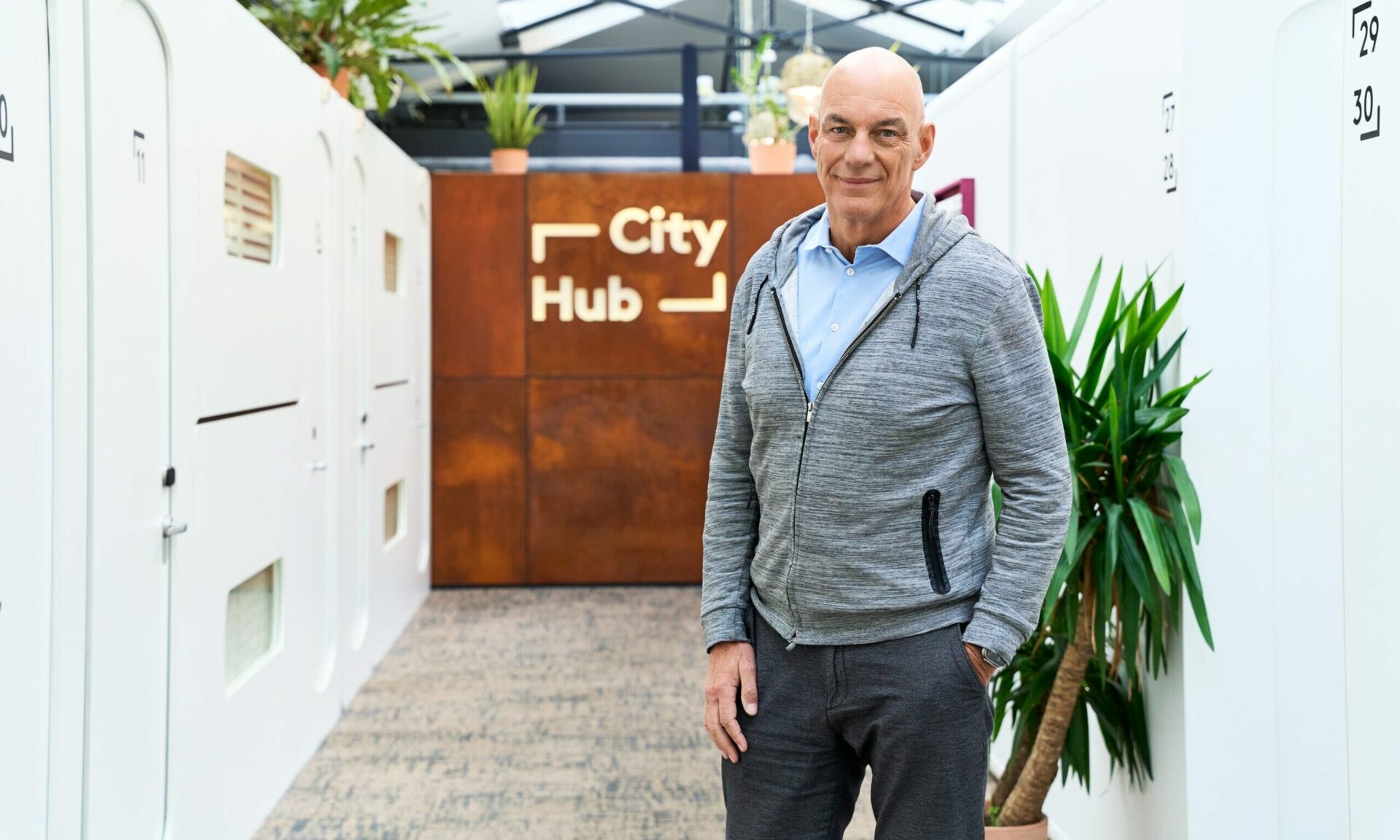
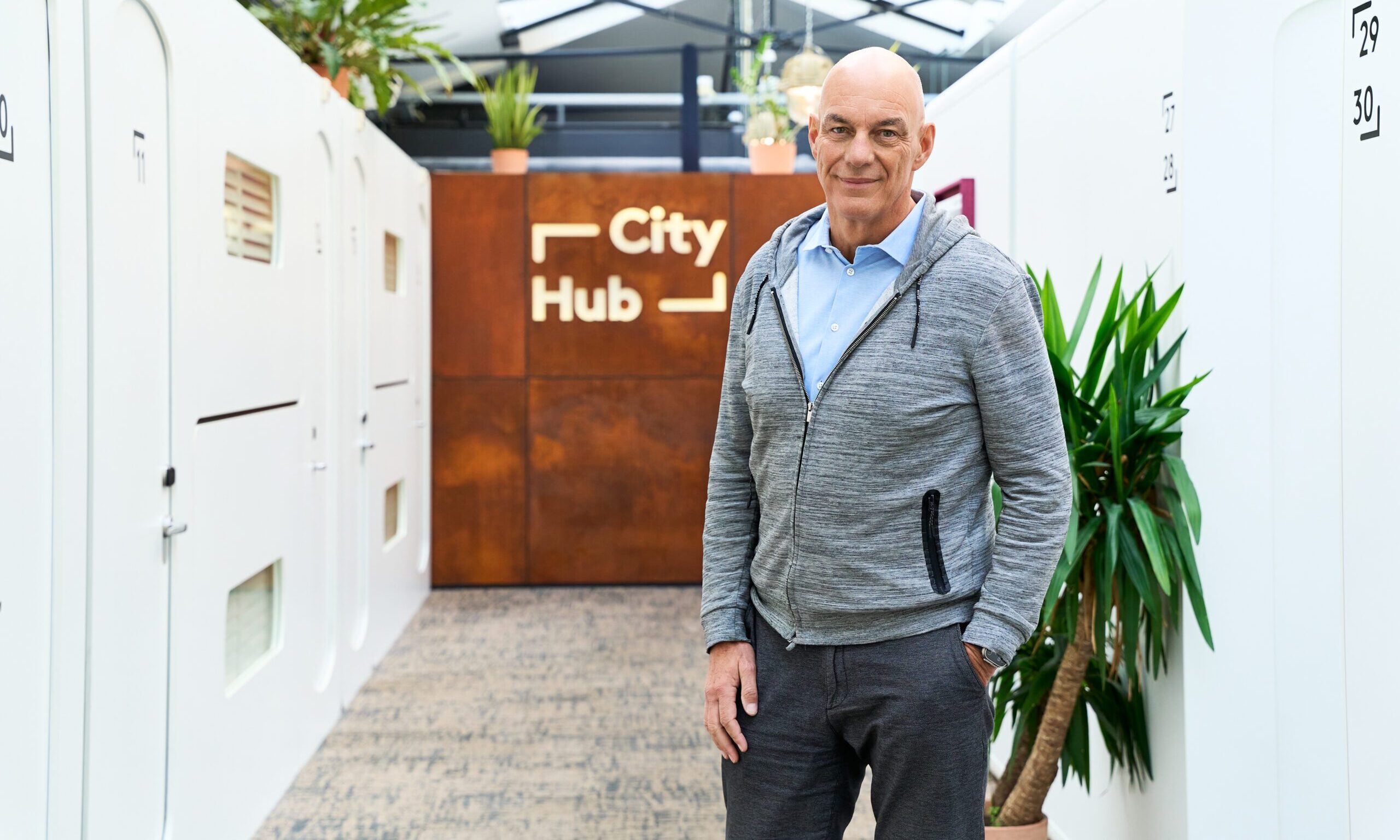
CityHub’s ability to extract more value from existing buildings depends on its prefabricated “Hubs”: compact, modular sleeping units installed within the shell of each site. These units allow the group to dramatically increase room density without altering a building’s external footprint or compromising guest comfort.
“We identify centrally located buildings with strong structural bones and install prefabricated, modular Hubs,” Gerritsen explains. “Smart compact design allows us to double a hotel’s capacity within its own walls, without compromising on guest experience, structural integrity or building character.”
Because the Hubs arrive prefabricated, on-site construction remains limited. Typical conversion timelines range from six to 12 months, depending on local regulations and heritage requirements – far shorter than most new-build projects.
CityHub works closely with municipalities and local communities throughout the process, positioning each project as part of broader regeneration goals. That collaborative approach, according to Gerritsen, helps streamline permitting and ensures each property integrates into its neighbourhood rather than displacing it.
The commercial payoff of this model shows up most clearly in CityHub’s revenue metrics. The brand reports revenue per square metre that sits roughly 130% above midscale hotel averages.
“Our performance is driven by space efficiency and smart modular design,” Gerritsen says. “Compact, high-quality Hubs maximise guest capacity without compromising comfort, while shared facilities replace the need for large private rooms that are rarely used to their full potential.”
CityHub also leans heavily into shared infrastructure. Spa-style communal bathrooms, lounges and social areas reduce the amount of underutilised private space while lowering resource consumption per guest. The brand’s “Hangout” space – part reception, part bar, part lounge – concentrates activity into a single multifunctional zone.
“Sharing is nothing new,” Gerritsen says, “but a communal living approach is one of the best ways to reduce tourism’s carbon footprint and make efficiency gains.”
Automation reinforces those efficiencies. App-led check-in, digital access and cashless payments reduce staffing requirements without diminishing service quality. “In short, we generate more value per square metre by designing every element around actual guest needs and usage patterns,” Gerritsen adds. “We remove the excess, not the comfort or the experience.”
CityHub’s technology stack plays a central role in that strategy, but the company remains careful not to let automation replace human interaction.
Guests check in via the CityHub app and use RFID wristbands to access rooms, lockers and bar tabs, eliminating queues and front-desk friction. “We believe that technology should remove friction, not replace human interaction,” Gerritsen says.
By automating administrative tasks, CityHub frees its on-site teams – known as CityHosts – to focus on guest engagement. “CityHosts are not reception staff; they’re locals who help guests discover and support independent, local venues and businesses beyond tourist zones,” Gerritsen explains.
For a generation of travellers comfortable with digital logistics but still seeking authenticity, that balance resonates.
CityHub’s sustainability credentials extend well beyond guest-facing initiatives. According to Gerritsen, the majority of a hotel’s environmental impact occurs before opening day, through demolition, materials sourcing and construction. “Most of the environmental impact of a hotel happens before it even opens,” he says. “Since our model relies on adaptive reuse, most of our carbon savings take place before opening.”
Each Hub is manufactured almost entirely from recycled materials, and CityHub tracks energy use, waste and emissions on a per-guest basis across its portfolio. As a result, emissions per guest sit up to 89% below the European hotel average.
Crucially, guests achieve that reduction without altering their behaviour. “It means our guests have a lower carbon footprint without having to think about it,” Gerritsen says.
CityHub’s B Corp certification formalises that approach. Rather than treating ESG as a separate initiative, the framework influences decisions across design, supply chains, employment practices and local partnerships. “It keeps sustainability embedded in our daily operations rather than something that sits in a separate strategy document,” Gerritsen adds.
CityHub’s newest opening, CityHub Hamburg, reflects the brand’s selective expansion strategy. Hamburg’s neighbourhood-led culture, creative economy and sustainability-conscious traveller base align closely with CityHub’s positioning.
The chosen site – the former Hotel Pacific – also fits the brand’s adaptive reuse criteria. Centrally located and rich in character, the building once hosted the Beatles in the 1960s. For CityHub, its history enhances rather than complicates the conversion.
Looking ahead, the company plans to expand further across culturally rich, high-density European cities with underused buildings suitable for reuse. Growth remains measured rather than aggressive.
“Growth for us isn’t about the highest possible number of sites,” Gerritsen says. “It’s about ensuring that each new site strengthens both our community impact and our brand experience.”
CityHub’s appeal to investors lies in the alignment between its sustainability goals and its financial performance. Dense layouts, lower construction emissions and automated operations strengthen margins rather than constrain them.
“Our commercial performance and sustainability goals reinforce one another rather than conflict,” Gerritsen says. “That alignment between purpose and profit allows us to scale responsibly while staying true to our values.”
In cities across Europe, London very much included, vacant buildings continue to sit idle because they are deemed expensive to demolish, difficult to repurpose and increasingly out of step with environmental targets. CityHub’s model treats those spaces not as liabilities, but as opportunities: assets waiting to be reactivated, densified and reimagined for a new generation of travellers.