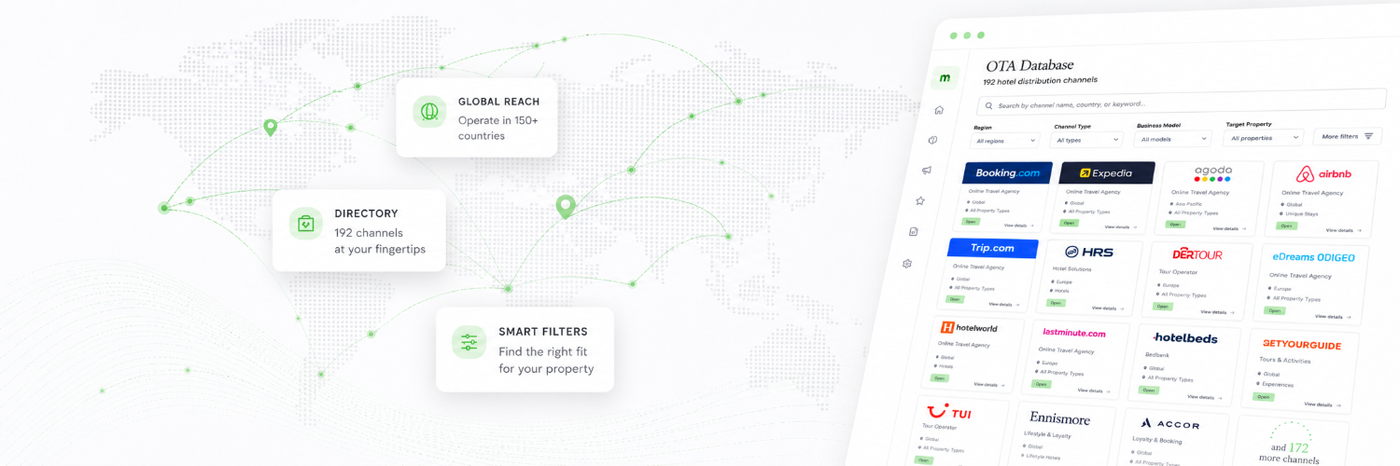
Follow Booking.com without the noise. This hub gathers the latest news, product changes and policy moves around the world’s largest accommodation platform (Booking Holdings, NASDAQ: BKNG), curated by 10 Minutes News. Essential reading for any hotelier who works with the OTA giant.
-
Airbnb’s Pivot: Inside Its New Push Into Hotels
21 September 2026It’s shaping up to be Airbnb’s biggest new business. Hotel operators who’ve joined are liking the new customer pool so far. But how long can it stay exclusive?
-

Google AI Mode Streamlines Hotel Booking, Impacting Visibility for Independent Hotels with No Direct Listings
21 September 2026💻 In 2009, Chris Anderson’s Cornell study found a 9-26% increase in direct hotel bookings when listed on Expedia. A 2011 follow-up showed for each Expedia booking, hotels got 3-9 more on their sites. Google’s AI booking system launched in August, involving 10 companies like Booking.com and Expedia, omitting independent hotels. Research by Tharro (June 23) noted hotels’ own sites as sources in under 10% of AI-assisted bookings. The focus remains on direct-booking strategies for loyalty.
-

European Court Blocks Booking Holdings’ €1.63 Billion Acquisition of Etraveli Despite Lack of Harm to Hotels
21 September 2026📦 Sep 21, 2026: Booking Holdings’ €1.63 billion bid to acquire Etraveli, Europe’s top online flight seller, was blocked by a European court, citing potential market dominance. Despite the absence of direct harm to hotels, concerns about market concentration justified the decision. Booking Holdings sold 36 million airline tickets in 2023, 49 million in 2024, and 68 million in 2025. While extending its Etraveli partnership into 2028, the acquisition remains prohibited.
-

Google’s AI-Powered Hotel Booking Mode Launches with Major Chains, Excludes Independent Properties from Initial Offering
21 September 2026📑 Sep 21, 2026, Markus Busch reports a shift in hotel bookings due to Google’s AI Mode launched in August. Ten companies, including Booking.com, Expedia, and Marriott, feature, excluding independents. Tharro’s June study found under 10% of 695 searches cited hotel websites. Chris Anderson’s 2009 and 2011 research showed a 9-26% increase in direct bookings during Expedia listings. AI reduces comparison shopping, impacting brand recall and loyalty. The return guest, once a soft metric, becomes crucial.
-
Google’s Search Changes in Europe Reduce Direct Hotel Booking Clicks by Up to 30% Amidst DMA Compliance
17 September 2026🌏 Google’s changes to search results in Europe, driven by the Digital Markets Act, have reduced free direct booking clicks for European hotels by up to 30%, impacting guest acquisition costs in 2024. The regulation promotes competition by elevating platforms like Expedia and Booking.com. Hotels must reassess their strategies, focusing on website usability, first-party data, and understanding true acquisition costs to maintain control over guest relationships and optimize channel mix. Monitoring these metrics is crucial amid evolving distribution dynamics.
-
Study Finds Booking.com Dominates 62.57% of Travel Ads in ChatGPT’s U.S. Prompts, Offering Single Sponsored Line
16 September 2026📊 On July 23, 2026, SE Ranking ran 50,006 US commercial prompts through ChatGPT across 20 categories, revealing that ads appeared in about 25% of cases. In the travel category, Booking.com dominated 62.57% of the ads. All ads appeared as a single sponsored offer below the response, without competition, unlike Google’s multi-ad setup. On August 31, OpenAI enabled self-service ad buying in Europe. Ad presence was thin, appearing in roughly 1 out of 7 travel prompts.
-

Booking.com Counts Separate Bookings as Connected Trips, Leaving Hotels to Handle Customer Service Issues
16 September 2026🛫 Sep 16, 2026, a guest arrived at a hotel late due to a 6-hour flight delay in Frankfurt. She booked a Connected Trip via Booking.com, expecting seamless service. However, she made two separate bookings, leading to service issues. Booking.com reported low double-digit percentage of connected transactions in Q2 2026. The lack of unified service falls on hotels, as travelers expect coordinated service, while hotels see no backend integration or alerts for connected trips.
-
State of Distribution 2026 Report: Over 50% AI Adoption in Hotels, Less Than 10% See Significant Impact
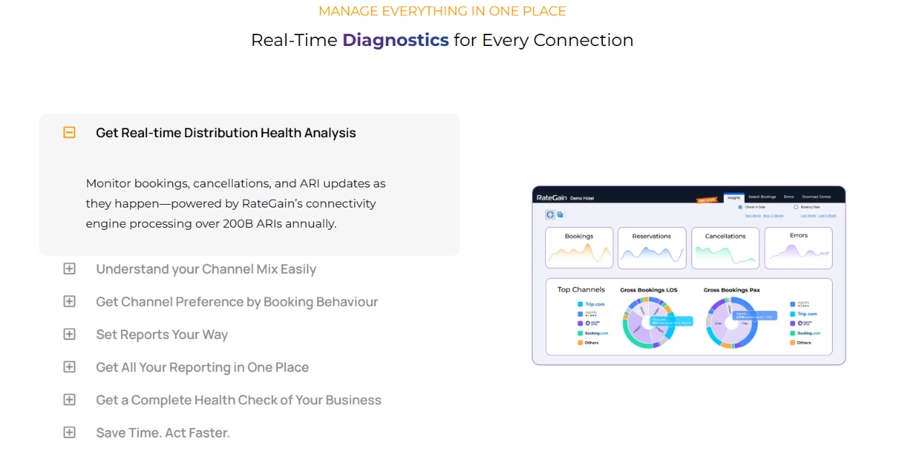
15 September 2026📈 In 2026, AI adoption in hotel distribution exceeds 50% among 58,000 properties, yet transformative impact remains below 10%, with OTAs maintaining dominance. Key barriers include fragmented data architecture and unclear success metrics. Only 7% of PMS vendors provide fully public API documentation, hindering AI performance. Despite a 4.4% RevPAR increase due to the World Cup, U.S. hotel GOP margins lag behind 2019 levels. Rio de Janeiro hotels achieved a decade-best August RevPAR at BRL612.29 driven by major events.
-

NYU, RateGain, and HEDNA Release 2026 Hospitality Report Highlighting AI Adoption and OTA Booking Dominance
15 September 2026📊 Based on insights from 270 hotel brands and 58,000+ properties across 141 cities in 53 countries, the “State of Distribution 2026” report reveals that over half of hotels use generative AI, though less than 10% see over 30% reduction in manual work. While OTAs generate twice the bookings of hotel-owned channels, technology budgets are rising, focusing on optimizing existing systems. Mid-sized hotel chains show the strongest AI governance and reporting automation. The survey covers hotel operations from December 2024…
-

AI and Automated Systems Now Shape Hotel Reputations by Analyzing and Summarizing Guest Reviews Across Platforms
15 September 2026Here’s your concise blog post excerpt: 📑 Since October 2024, Booking.com’s Property Q&A has been transforming guest reviews into answers across the US, UK, Australia, New Zealand, and Singapore. Google’s AI Mode uses reviews to book rooms directly. In 2024, Tripadvisor saw 31.1 million reviews, with 87.8% automated screening. A fifth of its business shrank this spring. 214,000 reviews were removed for AI assistance. AI-curated highlights and summaries shift influence from readers to algorithms, impacting reputation management and room sales.
-

Only 11% of Hotels Have Fully Integrated Tech Stacks; 27% Use Over Seven Separate Platforms
14 September 2026📶 Only 11% of hotel operators have a fully integrated tech stack, while 27% use over seven separate platforms. Reliable two-way integrations across systems like PMS and CRS are crucial to prevent costly sync failures like overbookings. A proper channel manager setup, possible within 1-2 weeks, emphasizes two-way data flow, reliable API connections, and ongoing monitoring to enhance efficiency and revenue potential. RateGain’s UNO Channel Manager supports over 3,400 hotels, processing 2.3 billion updates annually, improving RevPAR by 2-7%.
-

HEDNA Report Highlights Hotel Challenges in Switching Channel Managers Due to Integration and Skill Gaps
14 September 2026📈 HEDNA’s 2025 State of Distribution Report highlights challenges in hotel channel manager migrations due to technology gaps. Key issues include mapping errors, integration challenges, overbookings, and data loss. Cloud-based systems that offer ease of integration are growing rapidly. UNO Channel Manager, with real-time sync and certified integrations, helps mitigate these risks. Migration timelines vary: small properties take under a week, while larger chains require a staggered approach. RateGain’s UNO Channel Manager aided GHL Hoteles in achieving a 32% reservation…
-

HOTEL SUITES: WHAT AN ANALYSIS OF 30,000 SUITES AROUND THE WORLD REVEALS
14 September 2026From Junior Suites to private villas, LASUITE.COM analysed 30,000 suites across 4,500 hotels and resorts in 45 countries. The study reveals a hospitality category with no universal standards, making suites difficult for travellers to compare, just as AI begins to transform the way people search for accommodation. Paris, September 2026 — What really distinguishes a Junior Suite from a standard suite? How large should a Penthouse be? And why is it still so difficult to find a suite with two…
-
Hotel and Hospitality Channel Manager Market Projected to Grow from $2.64 Billion in 2025 to $5 Billion by 2035
14 September 2026📈 The hotel and hospitality channel manager market is projected to grow from $2.64 billion in 2025 to $5 billion by 2035, with a 6.6% CAGR. Channel managers increase ROI by synchronizing availability, rates, and inventory, capturing 0.75% incremental revenue ($199,000 for a 10-property group), and saving $78,000 in labor annually. Overbooking incidents reduced by real-time updates save $7,200. With a $90,000 annual cost, the ROI reaches 349%. Cloud-based systems, valued at $1.06 billion in 2024, are key growth drivers.
-

The Imperial Bloomsbury Hotel Opens in London with 357 Rooms and Reimagined Interiors by Trevillion and Keane
14 September 2026🏨 The Imperial Bloomsbury hotel in London, designed in 1905 by Charles Fitzroy Doll, features 357 rooms with interiors by Trevillion Interiors and Keane Brands. It combines Edwardian and modernist styles. Arcus, the hotel’s bar on the tenth floor, offers panoramic views and a snack-focused menu. The gym is well-equipped, and the Bell Room provides relaxation space for premium guests. The hotel is located at 61, 66 Russell Sq, London WC1B 5BB, UK.
-
Spotnana Integrates Directly with Marriott to Enhance Corporate Booking with Real-Time Rates and Bonvoy Features
14 September 2026📈 Sep 14, 2026: Spotnana and Marriott International announced a direct integration with Marriott’s reservation system, impacting 10,000 properties. Travelers can now manage bookings directly, synchronizing loyalty through Marriott Bonvoy. Navan identified challenges with conflicting room data across 2.6 million properties, prompting a unified model for room descriptions. Marriott ensures loyalty benefits display at booking. Despite changes, GDS remains integral with Marriott’s strategy. Hilton executed similar integration in July, marking a significant trend in hotel booking management.
-
Airbnb Targets $1 Billion in Revenue from Sponsored Listings for Independent Hotels Seeking Lower Commissions
14 September 2026💰 Sep 8, 2026, at Goldman Sachs’ Communacopia conference, Brian Chesky revealed that half of the world’s hotels are independent and pay higher commissions on Booking.com and Expedia compared to chains. Airbnb aims to attract these hotels with lower commissions and sponsored listings, targeting a billion-dollar opportunity. Nearly 90% of Airbnb visitors have a destination in mind, facilitating low commissions. Sponsored listings for hotels have been discussed since 2023 but remain unimplemented.
-
Level 2 and 3 Genius Members Now Account for Over 50% of Booking.com Room Nights, Increasing Year-over-Year
14 September 2026📈 On September 14, 2026, Booking.com reported Level 2 and 3 Genius members booked over 50% of room nights, up from the previous year. These members make up more than 30% of active customers, securing discounts of up to 20%. Level 2 and 3 require 5 and 15 bookings over two years, respectively. Discounts range from 10-20%, impacting hotel earnings, with €200 nights resulting in reduced earnings: €144.50 for Level 2 and €136 for Level 3.
-

AI Now Utilizes Hotel Reviews to Influence Bookings, Despite Fewer Travelers Reading Them Directly
14 September 2026🗺 Sep 14, 2026. Guest reviews now serve multiple roles in the hotel industry: answering traveler queries, influencing booking decisions, and shaping AI recommendations. Booking.com’s Property Q&A has been active since Oct 2024 in several countries, while Agoda and Google integrate AI-curated reviews into their platforms. Despite their importance, reviews are increasingly summarized by companies to reduce the need for travelers to read them. In 2024, Tripadvisor published 87.8% of 31.1 million reviews automatically, blocking AI companies without partnerships.
-
Google Introduces AI Mode Booking Capabilities in the U.S., Streamlining Hotel Discovery and Booking Process
11 September 2026📈 On August 27, 2026, Google launched its AI Mode booking feature in the U.S., enabling travelers to explore hotels and book through a conversational interface. This move aims to streamline the booking process by collapsing discovery, comparison, and transaction into one conversation. Significant partners include Booking.com, Expedia, Hilton, and Marriott. AI recommendations depend on accurate hotel data. Accurate content, rates, and availability are crucial for hotels to capitalize on this AI-driven discovery and booking trend.
-
Google Discontinues Vacation Rental Search in Europe, Citing DMA, Impacting Direct Bookings by Up to 30%
11 September 2026🛠️ Google has removed vacation rental search in Europe due to the Digital Markets Act (DMA), affecting EEA travelers and European suppliers, who have lost up to 30% of free direct-booking clicks. The DMA prohibits Google from prioritizing its own services over others like Booking.com, HomeToGo, and Airbnb. This change favors intermediaries and complicates direct bookings. The shift emphasizes AI visibility over Google Ads. The dependence shifts towards Maps and integrations with PMS partners.
-

AI Impacting Hotel Discovery: Only 6% of Hotels Consistently Featured in AI-Generated Recommendations, 82% Sourced from OTAs
11 September 2026📰 By 2026, AI substantially changes hotel booking, with only 6% of hotels consistently appearing in AI recommendations. 82% of AI-generated hotel data comes from OTAs and editorial media. Marriott and Hilton have implemented conversational AI tools, while Accor and Hyatt are still testing. AI-driven hotel distribution affects independent hotels significantly, as they lack AI-ready data. Google’s AI summaries face legal challenges for inaccuracies. AI is reshaping hotel discovery, emphasizing the need for structured, trustworthy data.
-
Google Introduces AI Mode Booking Capabilities in the U.S., Revolutionizing Hotel Discovery and Booking Processes
11 September 2026📱 On August 27, 2026, Google announced AI Mode booking in the U.S., allowing travelers to discover, compare, and book hotels via a conversational interface. Major brands like Hilton, Marriott, and OTAs such as Expedia and Booking.com are involved. AI compresses the travel booking process but raises questions about who controls guest relationships. Hotels need accurate content and direct booking paths to compete effectively in AI-driven environments.
-

New EU Rules Enforce Proof for Environmental Claims, Impacting Booking.com Listings and Hotel Websites from September 27
11 September 2026🌱 **What? When? Where? How?** New EU rules on environmental claims start on September 27, 2026, affecting all EU countries without a grace period. The Empowering Consumers for the Green Transition Directive, formally Directive (EU) 2024/825, bans generic terms like “eco-friendly” unless backed by evidence. Booking.com preemptively removed its Travel Sustainable badge from over half a million listings in March 2024. Fines can reach up to 4% of turnover, but enforcement varies by country. Hotels must substantiate claims or face…
-

Google Revamps Hotel and Flight Search in Europe Following EU Antitrust Decision, Adds Aggregator and Supplier Units
10 September 2026🌏 Google updated its hotel and flight search results in Europe this week. The change follows a European Union antitrust decision. The revamped interface includes two units: an “aggregator unit” displaying third-party sites like Booking.com and Agoda, and a “supplier unit” with direct providers like hotels and airlines. For example, searches for Madrid hotels from Spain now show how this interface looks within the EU. This update enhances transparency and user experience for European travelers.