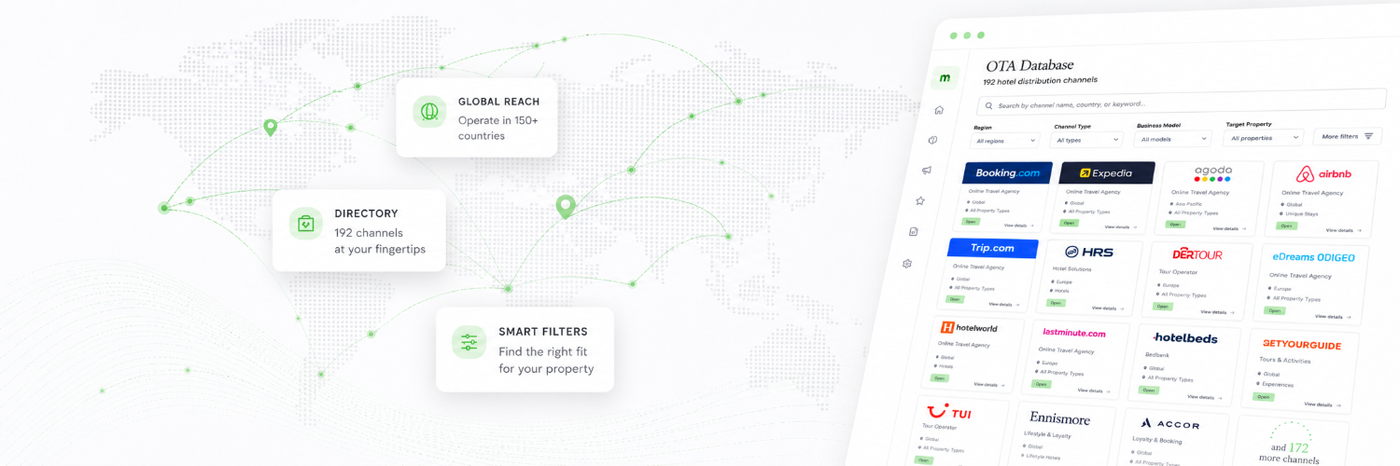
This page is a curated collection of articles exploring how UCP (Universal Context Protocol) is shaping the next generation of AI in the hotel industry. In simple terms, new protocols are emerging standards that help AI systems connect to the right tools, data sources, and workflows, so they can actually do useful work rather than just generate text. Across these articles, we break down what UCP and MCP mean, why they matter for hospitality technology, and how they can enable smarter integrations between hotel systems like PMS, CRS, RMS, CRM, and guest experience platforms.
-
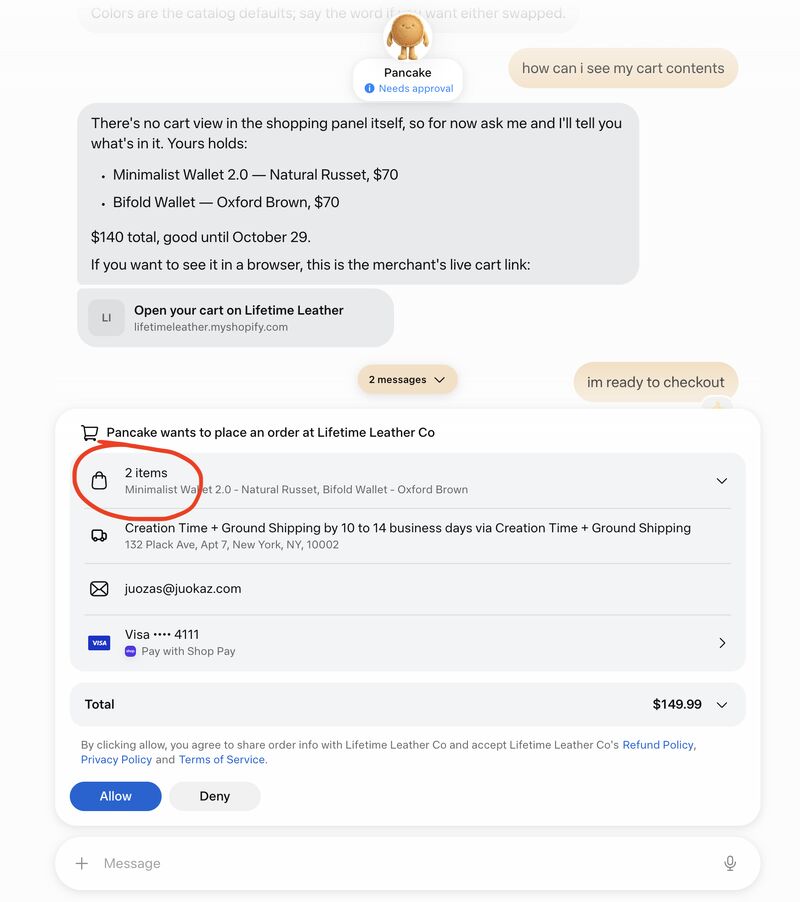
Meta’s Muse and Instinct Support Multi-Item Carts with Google UCP | Juozas Kaziukėnas posted on the topic | LinkedIn
20 October 2026Personal agents are first to launch level 4 agentic commerce with shopping carts. I found that both Meta’s Muse and Instinct can now do multi-item …
-

Scandic and Hilton Announce Multi-Year Development Agreement for New Hotels Across Nordic Countries, First in Copenhagen
19 October 2026📈 Today, Scandic and Hilton announce a multi-year development agreement in Sweden, Norway, Denmark, and Finland. This aims to expand hotel development opportunities in the Nordics. The collaboration leverages Scandic’s Nordic expertise with Hilton’s global brand reach. The first project is a 284-room Hilton Hotels & Resorts at Scanport, near Copenhagen Airport, set to open in 2029. This partnership builds on their existing cooperation in Finland.
-
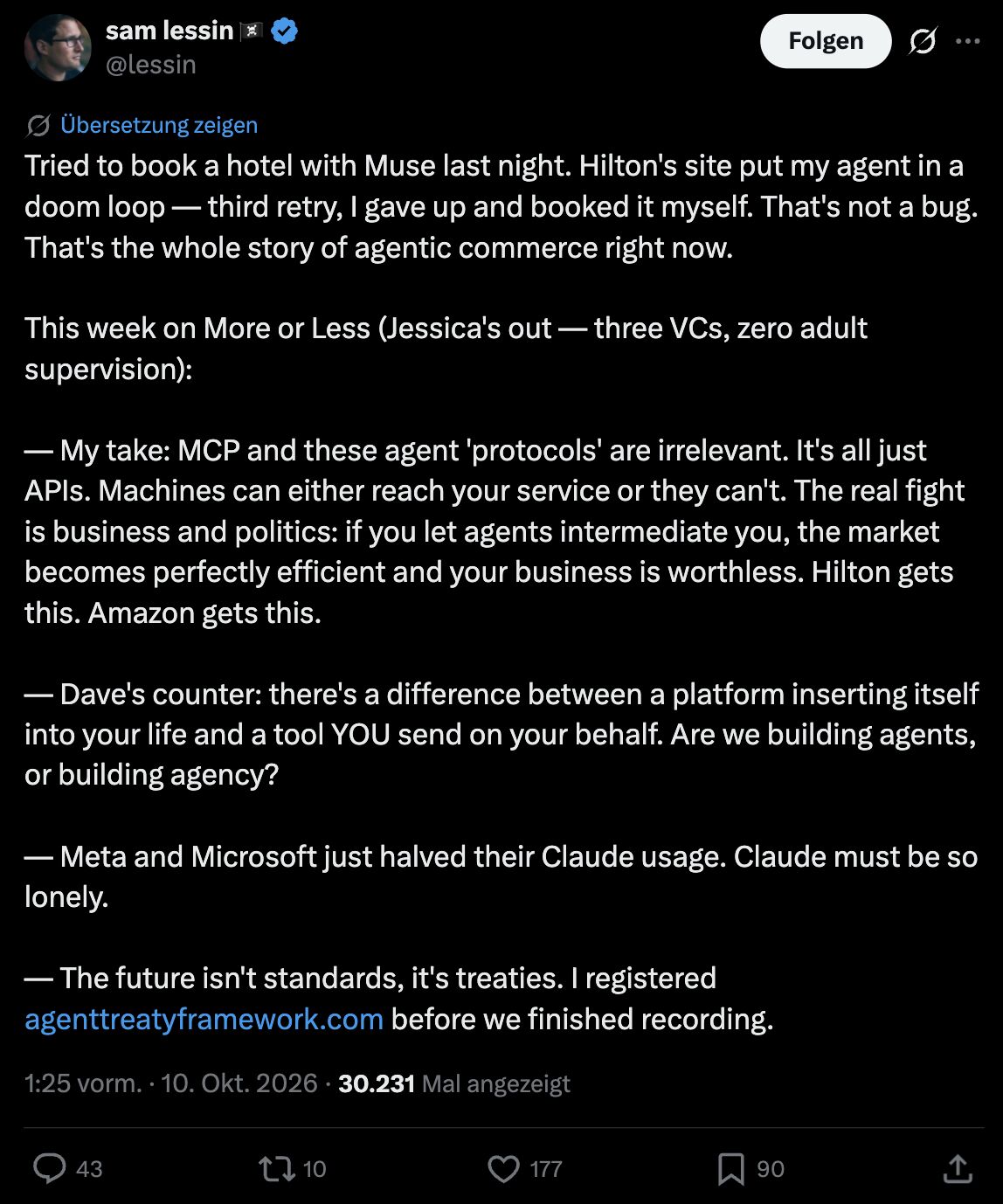
Bluerails Advocates for Hotels Owning Booking Infrastructure in Transition to Headless Travel Marketplaces
12 October 2026🗺 Sam Lessin challenges marketplace protocols like ACP, UCP, MPP, and x402, arguing they don’t impact sellers. For 30 years, hotels have paid 15-25% per booking to platforms. Now, travel is evolving; travelers use assistants instead of storefronts. Hilton’s agent blocking illustrates big brands securing dominance, which smaller hotels can’t replicate. Future booking systems will be headless, with hotels controlling infrastructure. Bluerails aims to build this new model for hotel ownership of booking processes.
-
Radisson’s ChatGPT Plugin Converts at 1.5 Times the Rate of Organic Search, Shows Promising Results
8 October 2026🗺 On October 6, 2023, Southwest Airlines launched a ChatGPT plugin in collaboration with OpenAI and AWS, allowing flight discovery via ChatGPT while bookings occur on Southwest.com. Radisson’s ChatGPT plugin, released in July, converts at 1.5 times the rate of organic search. Propellic’s study found 71% of U.S. travelers direct-booked with operators, but over 75% of handoffs failed to transfer booking details. Via.ai reported AI-driven conversion increases 3-5x, with a 30% larger average basket size.
-
h2c Study Shows Hotel AI Adoption Rises to 91%, But Only 13% See Measurable Returns
8 October 2026📚 AI adoption in hotels increased from 78% to 91% in a year, but only 13% reported measurable returns. Aven Hospitality is introducing Hopper’s “Cancel for Any Reason” for increased booking flexibility. Google collaborates with major companies on a Universal Commerce Protocol for lodging to standardize AI systems’ interactions. Meanwhile, AI’s role in hotel distribution is expanding, as discussed by Amazon Web Services and Hilton at the Destination AI Summit.
-
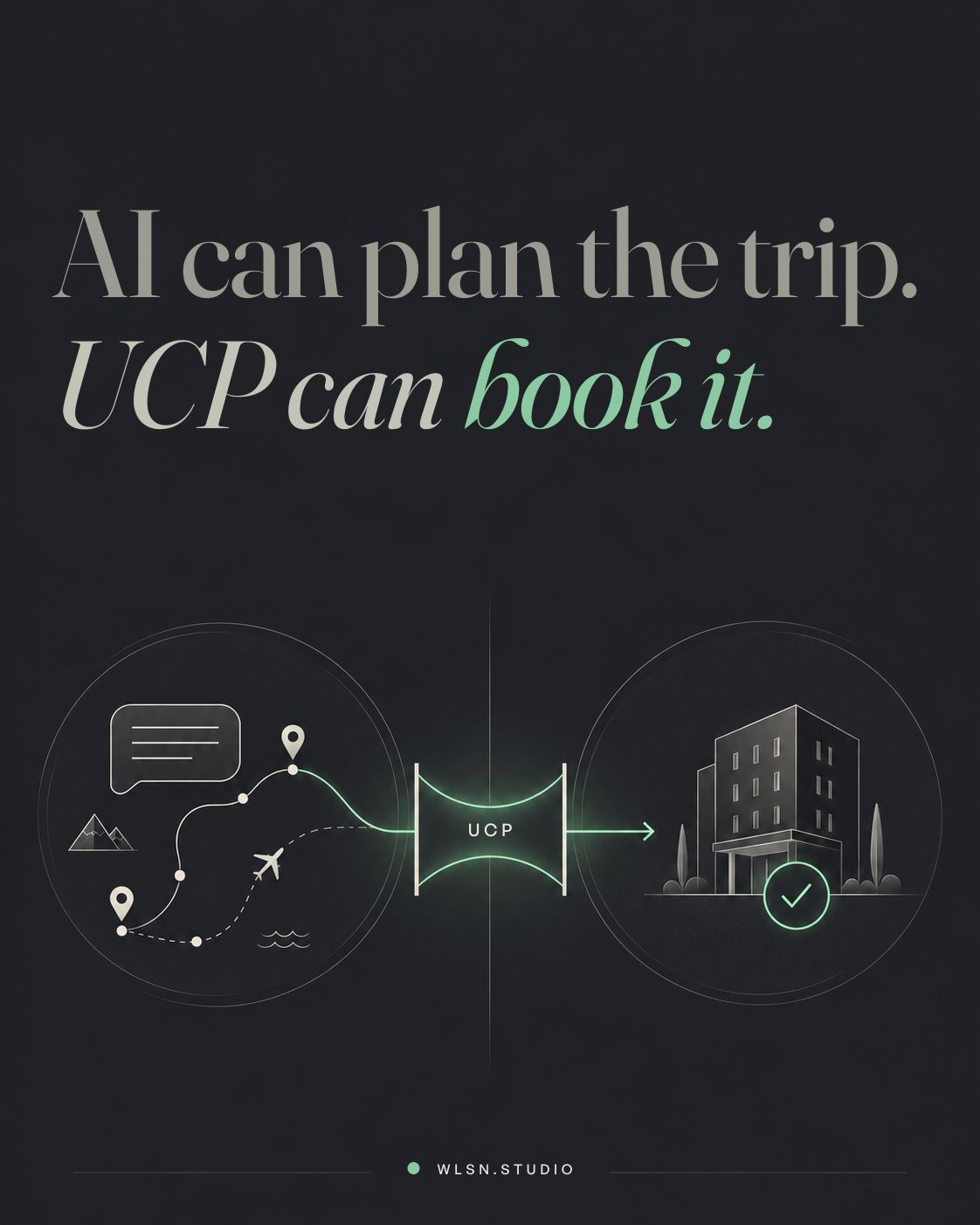
Google Announces Universal Commerce Protocol for Lodging, Enabling AI to Directly Book Hotels with Major Partners
7 October 2026💻 Google announced the Universal Commerce Protocol (UCP) for Lodging, enabling AI to directly book hotels by accessing live availability and pricing. Companies like Booking.com, Expedia, Hilton, Marriott, Amadeus, and Trip.com have agreed on this booking language. UCP allows operators to stay the merchant of record, keeping guest data. Menizei adopted UCP within two days, bypassing vendor roadmap delays. Operators using SaaS can participate if platforms support UCP or provide necessary APIs.
-

Google’s AI Hotel Booking Standard Merged by Council with Three OTAs, Excludes Post-Purchase Management
7 October 2026🏨 On September 24, 2026, the Universal Commerce Protocol merged its AI lodging booking draft, a standard initiated by Google in January. This draft defines booking elements like room type and pricing but excludes post-purchase management, such as modifications. The council includes Google, Amadeus, Booking.com, Expedia, Hilton, Marriott, and Trip.com. The draft’s focus ends at confirmation issuance, and while it aims for broader accessibility, independent hotels must engage via platforms like OTAs or reservation systems.
-

Google to Adopt Open Standard for AI Hotel Booking, Excluding Traditional Agency Features and Group Business
6 October 2026📅 September 2026: Universal Commerce Protocol’s lodging draft was merged, missing travel agency fields. Google plans to adopt it for AI-powered hotel bookings. The draft, created by a 16-member council, lacks group bookings, which constitute roughly 25% of Marriott’s room nights. The protocol doesn’t account for commissions or post-purchase modifications. AI assists in venue sourcing, but group business remains complex. Industry needs standardized group terms for future integration. Four council seats are open for new members to address these gaps.
-
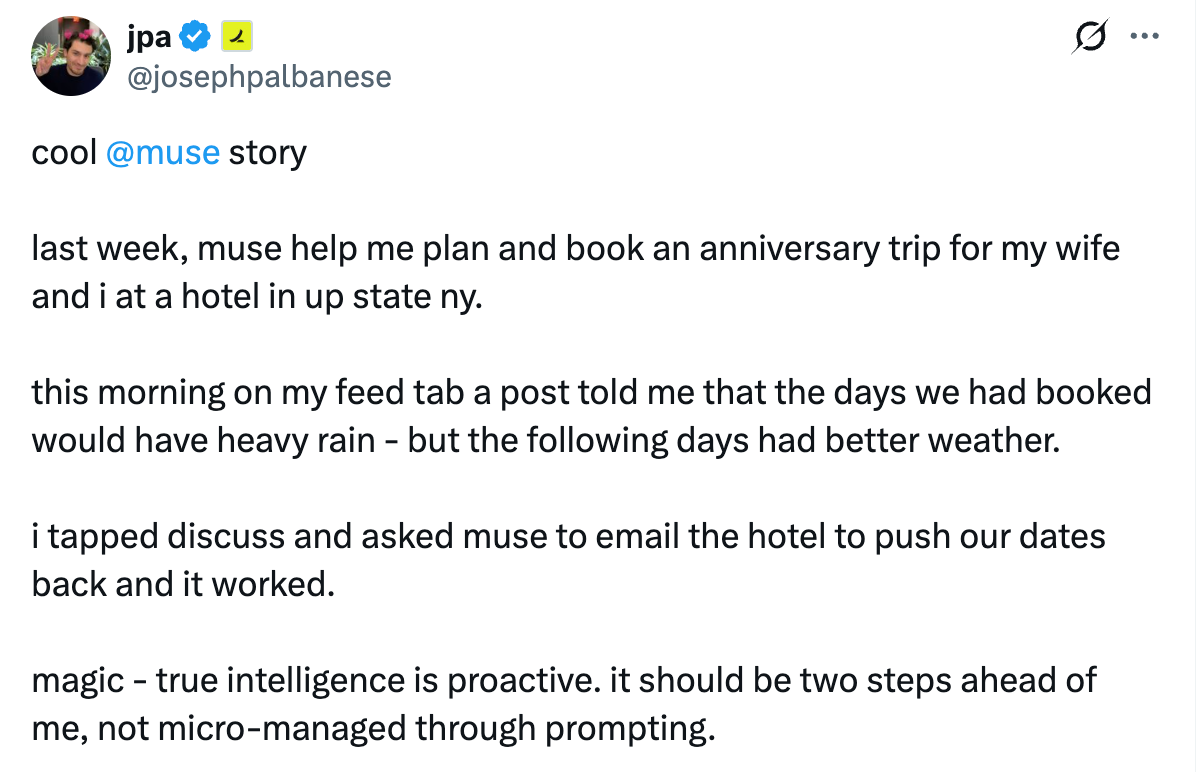
Meta’s Muse AI Agent Blocked by Hilton, Redirects Booking Attempt to Expedia in Washington, D.C.
2 October 2026📅 On September 29, 2026, Gaurav Sharma used Meta’s AI, Muse, to book a Hilton hotel in Washington, D.C., for under $250, but was blocked by Hilton’s site. In September 2026, over 70% of travelers used AI for research, yet less than 16% booked with AI. Google’s AI Mode began hotel bookings with major partners. AI referrals to hotel sites grew fourfold, though AI bookings remain low. Younger travelers, especially Gen Z, lead AI usage.
-
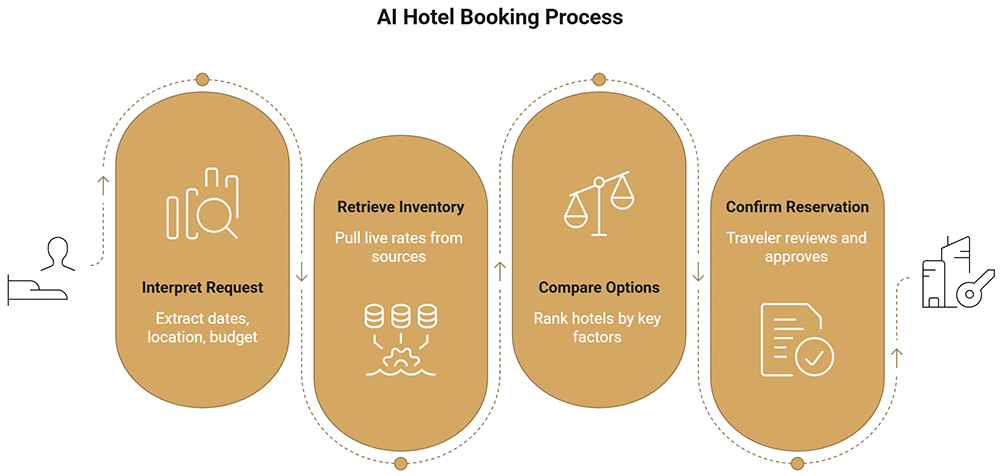
Google Launches AI Mode for Hotel Booking in U.S., Enabling Chat-Based Reservations with Traveler Payment Approval
29 September 2026💻 In August 2026, Google launched AI Mode hotel bookings in the U.S., enabling AI agents to reserve rooms with payment approval from travelers via Google Pay. AI queries for planning grew 80% faster over six months, but 68% prefer trusted brands. The system uses the Universal Commerce Protocol to improve AI hotel bookings, accessible to hotels via OTAs. Careful pricing and consistent information are crucial to success in this competitive landscape.
-
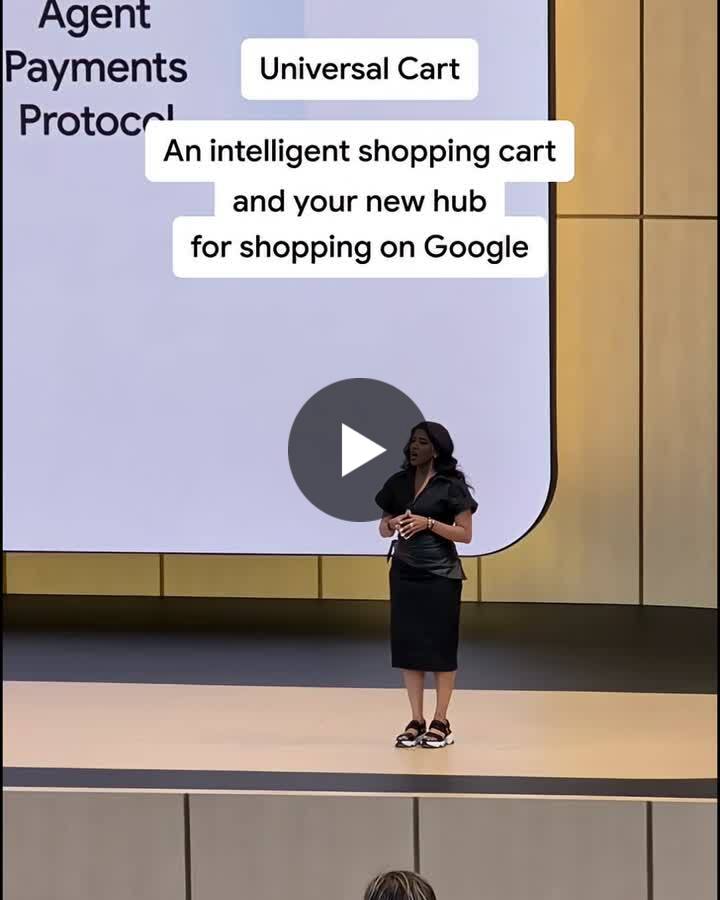
Google’s Universal Shopping Features, Announced for Summer, Still Not Live Despite Testing with Limited Users
14 September 2026💳 Four months ago, Google announced plans for agentic commerce with features like a universal shopping cart, deal tracking, and product compatibility, set for a summer launch. Despite testing with a small user base, none of these features are currently live. Meanwhile, excitement shifts towards AI innovations from Meta and others. Google’s new Universal Card aims to enhance shopping by tracking deals and compatibility issues, utilizing Google Wallet and UCP for seamless checkouts, initially rolling out in the US.
-
Google’s AI Mode Allows Reservations with OTAs as Merchants of Record, Ensuring Customer Data Retention
14 September 2026📅 Sep 14, 2026: Google’s UCP for Lodging ensures the Merchant of Record keeps customer relationships. Since Sep 1, U.S. travelers can book hotels via AI Mode using Google Pay with 10 launch partners. Choice and Hilton differ in approach: Choice retains the transaction, while Hilton redirects to its website. Integration specifics remain unclear, costs unknown, and guest data ownership limited. Joining Google’s waitlist is free, with details awaited.
-

Hoshinoya Nara Prison Hotel Opens Transforming Historic 1908 Prison into Luxury Retreat with Museum Access
11 September 2026🏨 Completed in 1908, Nara Prison in Japan, designed by Keijiro Yamashita, now houses Hoshinoya Nara Prison Hotel and Nara Prison Museum. The hotel, transformed by Rie Azuma and Hiroki Hasegawa, opened after its closure in 2017. It offers 48 suites, including 11-cell deluxe ones, and unique dining experiences. Notable nearby attractions include Todai-ji Temple and Nara Park. The property balances historic design with contemporary amenities, offering a unique heritage stay.
-

Jihlava Municipal Arena Opens After €80 Million Investment, Designed by CHYBÍK + KRIŠTOF to Host 5,650 Spectators
7 September 2026🏟 Jihlava, Czech Republic, has unveiled the Jihlava Municipal Arena, a project by CHYBÍK + KRIŠTOF, costing 80 million EUR. The arena, nicknamed “The Hedgehog” due to its spiky facade inspired by Gothic architecture, accommodates 5,650 spectators. Features include a 230-meter running track, 29-room hotel, and gym. Designed for public accessibility, construction spanned six years, creating a new urban landmark embracing sport and community gathering.
-

Google Expands Universal Commerce Protocol to Enable Direct Hotel Bookings via AI, Maintaining Merchant Control
28 August 2026🏨 Google Marketing Live 2026 reveals that 40% of travelers use AI for trip planning, reshaping search and booking. Google’s Universal Commerce Protocol now allows hotel bookings directly in AI Mode, retaining guest data for properties. However, only 10% of hotel sites have structured data, lagging behind OTAs like Booking.com. As AI systems influence brand perception, defining a consistent brand voice is crucial. Google’s Magic Pointer integrates AI into browsing, impacting how hotels market themselves.
-
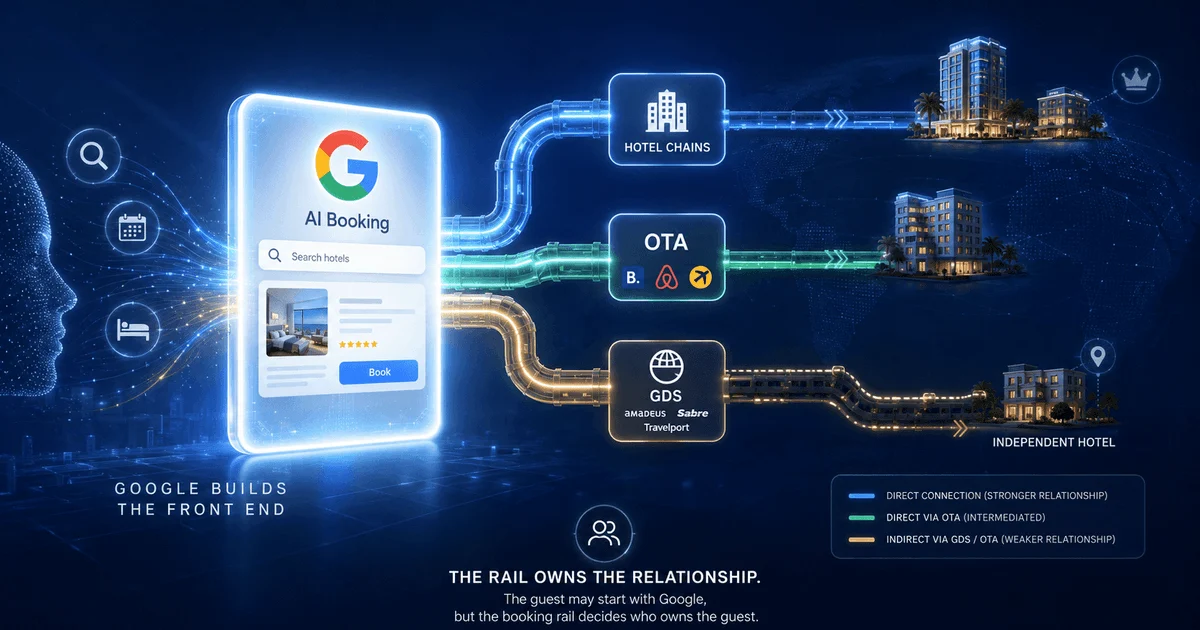
Google Begins Limited Test of AI-Driven Hotel Booking in the U.S., Integrating with Global Distribution Systems
24 August 2026🌐 Google began testing agentic hotel booking in the U.S., enabling travelers to book stays via AI without leaving Google’s page. This limited test involves partners like Booking, Expedia, Marriott, and Amadeus, the first infrastructure partner. Independent hotels access this through OTA or GDS, not directly. Google’s AI booking isn’t fully automated yet, as bookings may transfer to partner sites. The initiative focuses on integrating existing travel systems, not replacing OTAs. GDS offers independents alternative access.
-
Google Initiates AI-Driven Hotel Booking Test in the U.S. with Amadeus, Partners with Booking Holdings
10 August 2026🌐 On August 7, 2026, Google confirmed a limited test of AI agent hotel booking in the U.S., partnering with Amadeus. The Ask Maps feature provides actual prices and availability. Booking Holdings, a partner, sees less than 1% of bookings from conversational agents. Studies show a 10-25% drop in Google referral traffic from May-June 2025. Despite traffic declines, AI-assistant bookings remain stable. Hotel loyalty programs like Marriott’s Ask Bonvoy and IHG’s ChatGPT apps aim to maintain customer relations.
-
Google Tests AI-Driven Hotel Booking in US with Booking, Expedia, Marriott; Partners with Amadeus and Sabre
10 August 2026💼 August 10, 2026: Google is testing agentic hotel booking in the US with partners like Booking, Expedia, Marriott, Wyndham, and IHG. This allows users to book hotels directly through AI search. Amadeus and Sabre are working with Google to integrate global distribution systems (GDS) into this process, providing a pathway for independent hotels. The test is limited, focusing on integrating existing booking channels rather than becoming an OTA. The independent hotels gain access via OTAs or GDS.
-
Amadeus and Google Highlight AI’s Influence on Travel, with 25 Million Hours of Travel Videos Watched Daily
30 July 2026💻 Last week in Mountain View, Amadeus and Google hosted an industry seminar. Key insights: 25 million hours of travel videos are watched daily; travelers spend 45 days and over 300 queries researching trips, even with AI; brand.com enhances conversion rates; digital ads must provide answers; and SEO still matters, though AI is changing keyword importance. Digital wallets, UCP, and AI are reshaping travel dynamics. Special thanks to Jill B., Joe Spirito, and Lalit Gupta for hosting.
-
Google AI Max for Search Launched, Boosting Hilton Bookings by 58% and Booking Value by 55%
1 July 2026🌐 Google’s Ailish English shared insights at Travolution Connects. Google search initiates 78% of travel journeys, dropping to LLMs before 62% return. Search evolved with AI, shifting from keywords to conversations. A 10% rise in extensive queries in top European markets noted. Google AI Max for Search, launched in May 2025, boosts ad relevance. Hilton’s case saw a 58% booking increase and 55% rise in booking value. Google plans agentic experiences in search for seamless bookings.
-

Gemini Leads AI Chat Interfaces in Agentic Commerce Readiness, Microsoft Copilot Adopts UCP Protocol
15 June 2026💸 Gemini leads major AI chat interfaces in agentic commerce readiness with UCP protocol. Microsoft’s Copilot also adopts UCP. Perplexity introduced shopping features but ended them in May. ChatGPT had ACP protocol and Instant Checkout but stopped in March, now at level 2. Anthropic’s Claude shows no activity. Google’s upcoming shopping carts place it at level 4. ReFiBuy’s levels range from basic web search (level 1) to auto-buying (level 5).
-
Hotels Must Navigate Three Visibility Layers to Appear in AI Assistants like ChatGPT and Gemini
2 June 2026🏨 Hotels are navigating the visibility landscape on AI platforms like ChatGPT, Gemini, and Claude. Key visibility layers include model memory, web search, and dynamic sources. Hotels can enhance their presence by maintaining strong SEO, structured data, and brand consistency. Real-time information from dynamic sources, like MCP, is critical for answering specific queries and transactions. While visibility in general searches remains challenging, detailed, accurate data offers opportunities in user decision-making and booking stages.
-
DirectBooker Announces Supply Agreements with Best Western and Radisson, Boosting AI Connector Role in Hospitality
1 June 2026💻 Hospitality Net’s World Panel explores AI connectors, which are “digital bridges” linking AI platforms (like ChatGPT or Claude) to external apps, enabling access to hotel ARI data (Availability, Rates, Inventory). DirectBooker, founded by former Tripadvisor and Google Travel execs, announced deals with Best Western and Radisson. Google partners with OTAs and hotel chains. Independent hotels can use B2B AI connectors for AI integration. AI platforms seek monetization through partnerships, leveraging brand loyalty.
-
Google I/O 2026 Introduces Gemini AI Suite, Enabling Direct Hotel Bookings and Transactions within Google Ecosystem
28 May 2026📄 Google I/O 2026 introduces a shift with Google Search integrating with the Gemini AI suite, comprising Gemini Flash and Gemini Spark. UCP and APP enable AI agents to book hotels directly, maintaining hotels as Merchants of Record. Payment systems like Visa, Mastercard, and Stripe are compatible, with integrations from Affirm and Klarna planned. Google aims for direct hotel bookings via AI, impacting OTAs and requiring real-time data from reservation systems, while Google handles dynamic pricing.
-

Google Introduces Universal Cart for Hotel Checkouts, Prioritizing Ad Placement Over Transaction Revenue
28 May 2026💸 May 28, 2026, Google announced at I/O that they built a Universal Cart checkout using Google Pay, without taking transaction cuts. The cart uses UCP, a free, open standard, and brands remain the merchant of record. Google focuses on auction placements, not transactions, leveraging AI Max for ads. In April, Google expanded AI-powered ads into travel, integrating booking links. This strategy positions Google to profit from surface placement fees, not commissions, shifting auction dynamics and increasing demand for ad…