Property management systems (PMS), all in one feed. This hub aggregates the latest news, launches and trends around the systems that run hotel operations, curated by 10 Minutes News from trusted sources. Your shortcut to the fast-moving PMS landscape.
-

Hotel Management Agreements: Owners Often Lose Leverage Through Fine Print, Says RAR Hospitality’s Bob Rauch
15 October 2026🏨 Hotel management agreements typically entail a base fee of 2-4% of total revenue and an incentive fee of 10-20% of cash flow above a set return. Operators often seek contracts of 10+ years, with rights to terminate only for cause. Owners are advised to negotiate terms to protect financial interests, such as realistic incentive hurdles and performance-based termination rights. Proper contract management ensures profitability and control over operations and data.
-
ClearCourse Strengthens Hospitality Technology Offering with Acquisitions of SK Chase and Elina PMS
15 October 2026This article was written by Luxury Hospitality Mag. Click here to read the original article ClearCourse, the provider of industry-specific software and embedded payment solutions for SMEs, today announces the acquisitions of two hospitality brands: SK Chase, a leading digital voucher platform, and Elina PMS, a cloud-based reservation management software platform. The deals take ClearCourse’s total acquisitions in 2026 to four, and reflect the group’s continued strategy of backing specialist software businesses with the resources and expertise to help them…
-

AI Disrupts Marketing Attribution: Only 8% of Marketers Can Track AI’s Full Impact Despite 91% Acknowledging Change
15 October 2026📈 AI is transforming search, impacting website visits and marketing attribution. Zero-click searches and AI answers are reducing online booking trails. Despite persistent room demand, tracking sources of bookings is challenging. Current systems are failing, necessitating a return to intuitive marketing strategies. Only 8% of marketers can track AI’s full impact, despite 91% acknowledging its influence. Marriott’s 9-year partnership with Alibaba exemplifies AI integration in hospitality, while Meta’s AI agent faced rapid blocking, highlighting tensions in digital commerce.
-

Shiji’s Markus Schmiedhofer Shares Insights on Effective Hotel PMS Migration Strategy Through Stakeholder Engagement
15 October 2026💻 Markus Schmiedhofer of Shiji shares insights on hotel PMS migrations, highlighting the need to start with people rather than technology. Key steps include defining clear project ownership, involving stakeholders early, and building internal support months before go-live. Schmiedhofer’s experience includes leading migrations for 110 Fletcher Hotels properties and Grand Resort Bad Ragaz. Shiji provides cloud-based solutions for over 91,000 hotels globally, enhancing hotel operations and guest engagement through data intelligence and seamless systems integration.
-

Shiji Integrates Hotel Trader into Book&Pay, Connecting 20,000 Hotels to Enhance Global Distribution Efficiency
15 October 2026💻 Shiji partners with Hotel Trader, integrating its 20,000+ hotel inventory from The Hotel Trader Exchange into Book&Pay. This expands choices for travel buyers by providing real-time availability, rates, and inventory across international markets, including Asia-Pacific. Hotels benefit from enhanced global reach and simplified commercial processes through centralized contracting and invoicing. With a setup time of under 8 minutes, the platform aims to streamline hotel distribution, making it more accessible and efficient for leisure and corporate travel.
-

AI Transforming Hotel Operations: Insights from Gilad Berenstein on Enhancing Guest Experience and Efficiency
15 October 2026💻 In a recent discussion, Gilad Berenstein highlighted the transformative potential of AI in hospitality. He suggested hoteliers should integrate AI into daily tasks for gradual innovation. AI swarms, like interconnected concierge agents, could enhance service, leveraging existing data. Case studies include Shashi Hotel’s noise-tracking sensors and Atlantis The Royal’s location beacons. Personalized upgrades, like a €30 custom trip for €300, exemplify AI’s value. Gilad emphasized AI’s role in allowing staff to focus on genuine hospitality.
-

Hotel Trader joins Book&Pay by Shiji Horizon Distribution, unlocking direct hotel access for Travel Buyers
15 October 2026Partnership strengthens Book&Pay’s growing supply ecosystem, providing demand partners with expanded access to The Hotel Trader Exchange while simplifying commercial connectivity and distribution. Barcelona, Spain, October 15, 2026– Shiji, the global leader in hospitality technology, today announced that Hotel Trader has joined Book&Pay by Shiji Horizon Distribution as an international supply partner. The partnership brings hotel inventory from The Hotel Trader Exchange into Book&Pay, expanding accommodation options for its global network of travel demand partners while simplifying commercial relationships, transaction…
-
Four Prices Need Four Reasons. Your Revenue Manager Has None.
15 October 2026This article was written by Demand Calendar. Click here to read the original article Most hotels sell the same stay at every price they publish, so the higher prices look like markups and the lower ones look like discounts. The reasons that make different prices work are operational: checkout times, room choice, breakfast, the things your hotel can give away for almost nothing on the right night. Here is where to find them, what one of them is worth, and…
-

EHM Cambodia Upgrades to Hotelogix’s Multi-Property System to Streamline Operations Across 16 Properties
15 October 2026💻 Hotelogix, a global leader in cloud-based hospitality technology, announced on October 15, 2026, that Elite Hospitality & Management Cambodia has upgraded to its multi-property management system. This upgrade aims to centralize operations across its 16 properties in Cambodia, enhancing efficiency and guest experiences. EHM plans to expand in Southeast Asia and adopt AI to boost operations. Cambodia’s hotel sector is projected to grow by 9.2% CAGR through 2028, prompting more regional chains to adopt modern cloud-based systems.
-
Airbnb Faces Competition from Over 27 Global and Regional Vacation Rental Alternatives in 2026
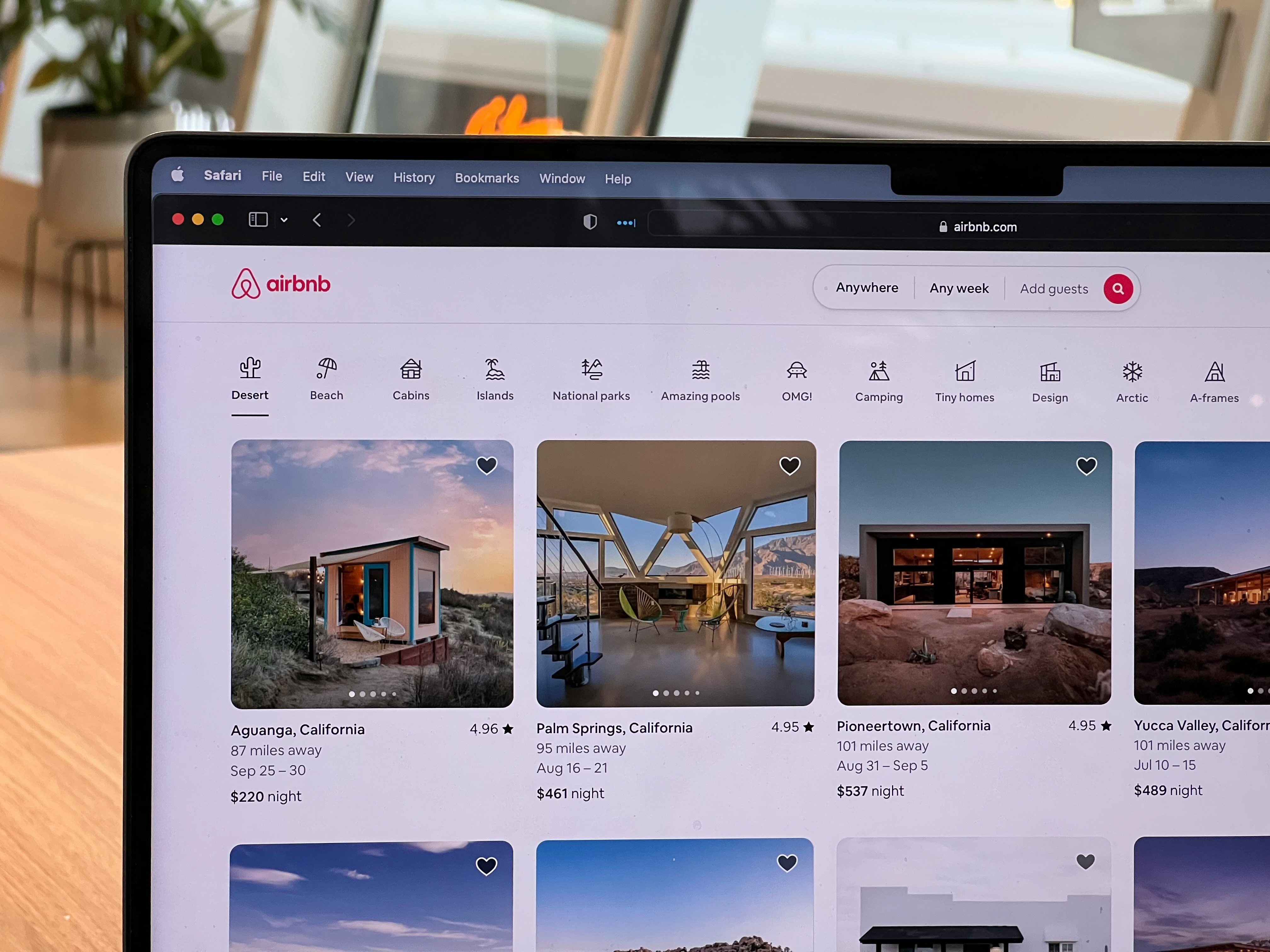
15 October 2026🏡 Airbnb, founded in 2007, connects 5.5 million hosts in 220+ countries, allowing unique stays and local experiences. Hosts can earn up to $25,000/month and benefit from AirCover insurance. Airbnb charges guests a 14.1%-16.5% service fee; hosts pay ~3%. Competitors include Vrbo with 2 million listings, Booking.com in 227 countries, and TripAdvisor with 7.3 million listings. Airbnb’s 2026 updates added Airbnb Experiences, AI features, and boutique hotels, enhancing guest services and options.
-

Union Square Plaza Hotel Utilizes Cloudbeds API to Develop AI-Driven Rate Management and Operational Tools
14 October 2026💻 Union Square Plaza Hotel, San Francisco, leverages Cloudbeds’ open API to customize its operations. With 85 rooms, it enhances inventory and rate management using AI, simplifying tasks like pricing decisions. Owner Sal Patel, lacking an engineering background, utilizes AI tools to bridge technical gaps without needing a developer. Cloudbeds, founded in 2012 and operating in over 150 countries, offers integrated hospitality management solutions, and has been named a top system by Hotel Tech Report for eight years.
-

Independent Hotels Should Focus on Understanding Guest Value Beyond Room Revenue for Long-Term Success
14 October 2026📆 In the 2026 holiday season, independent hotels focus on guest relationship value rather than occupancy rates. Hoteliers should identify guest spending patterns to enhance experiences and profits. A unified guest view integrates reservations, dining, gift cards, and more, potentially increasing revenue and loyalty. Operators must act on real-time insights and collaborate across departments. Maestro PMS aids by connecting guest data and facilitating meaningful direct bookings. Success is measured in guest relationship longevity, not just December revenue.
-

Revinate Launches Pathways and Revinate Chat to Enhance Hospitality Data Activation and Guest Engagement
14 October 2026💻 Karen Stephens, CMO at Revinate, and Dylan Cole, Managing Director EMEA at Revinate, discussed the hotel industry’s shift from CRM/CDP to data activation on the Hotel Moment Podcast. They emphasized leveraging guest data from various sources (PMS, spa, dining) for personalized marketing, leading to more direct bookings and fewer OTA commissions. Revinate launched “Pathways,” a marketing automation platform, and “Revinate Chat” for enhanced guest communication. This evolution aims to maximize guest data utility while reducing marketing complexity.
-

How to Build Buy-In for a Successful PMS Migration
14 October 2026This article was written by Shiji Insights. Click here to read the original article Most PMS migration articles tell hotels they need stakeholder buy-in. But if you’re a hotel GM staring at a migration project, that’s not particularly useful. Who should you talk to first? How many people need to be involved? Do you start with IT or operations? When should the PMS vendor join the conversation? Who actually owns the project? These are the questions hotel teams ask when…
-

Otelier Integrates with Avalara to Automate Lodging Tax Compliance for Hotel Finance Teams in Atlanta, Georgia
13 October 2026💸 Otelier announced a two-way integration with Avalara in Atlanta, Georgia, to automate lodging tax compliance. The integration enables hotel finance teams to resolve tax discrepancies and automate tax return processes. Daily revenue summaries are sent to Avalara, and discrepancies are flagged for correction. This reduces manual errors and audit risks while ensuring compliance across multiple jurisdictions. The streamlined workflow enhances tax data validation and minimizes the burden of manual filing.
-

Cactus Cove Inn’s Remarkable Transformation: Using Mews Technology to Quadruple Revenue and Enhance Guest Experiences
13 October 2026💻 In 2021, Matt Marrs revamped the Big Texan Motel using a Property Management System to quadruple revenue. His Cactus Cove Inn in Amarillo, Texas, offers unique family experiences like breakfast with a dinosaur. Migrating to Mews helped manage hotels and RV parks efficiently, minimizing disruption with a staggered onboarding process. Marrs emphasizes adaptable tech stacks, guest personalization through automation, and a willingness to experiment for evolving business strategies. Mews powers 15,000 customers in 85 countries.
-

One Drake Road reports 58% booking growth after unifying its hybrid accommodation portfolio on eviivo
13 October 2026TAVISTOCK, UK, 13 October – One Drake Road, an independent accommodation operator in Devon and Cornwall, has reported 58% growth in bookings over the past three years after bringing its expanding portfolio of B&B rooms, self-catering apartments and holiday homes together through eviivo Suite. As One Drake Road expanded beyond its original boutique B&B, co-owners Iain and Jack White-Duncan found managing their increasingly varied portfolio more complex. Finding suitable technology also proved difficult, as many of the systems they considered were designed either…
-

Hoxell Unveils New Identity in Rimini, Aims to Become Central Operating System for Hospitality Industry
13 October 2026💻 Hoxell unveiled its new identity in Rimini, Italy, on October 13, during Hospitality Day, followed by the TTG Travel Experience from October 14-16. Hoxell aims to transform into a central operational system linking data, people, and processes. Research conducted in 2026 with various industry stakeholders supports this repositioning. The updated identity emphasizes clarity in operations, with plans to incorporate agentic AI for enhanced decision-making. The new logo centers on the “O,” representing operations and connectivity.
-
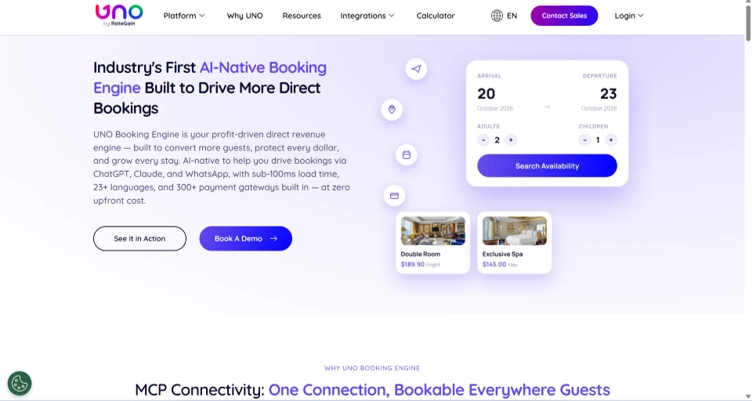
HOTREC Study Reveals Direct Hotel Bookings Lead in Europe at 51.3%, OTAs Control 29.9% Market Share
13 October 2026🏠 In January 2026, HOTREC’s study reported direct hotel bookings at 51.3%, with OTAs at 29.9%. Booking Holdings and Expedia dominate 85.4% of the OTA market share. The UNO Booking Engine leads in resort-ready packaging and distribution, supporting independent resorts and groups. Eight booking engines were evaluated based on criteria such as integration, package handling, and payment security. Direct booking engines like UNO increased Donatello Hotel Dubai’s website conversion from 1.2% to 3.6%, driving AED 19,000 in incremental revenue.
-
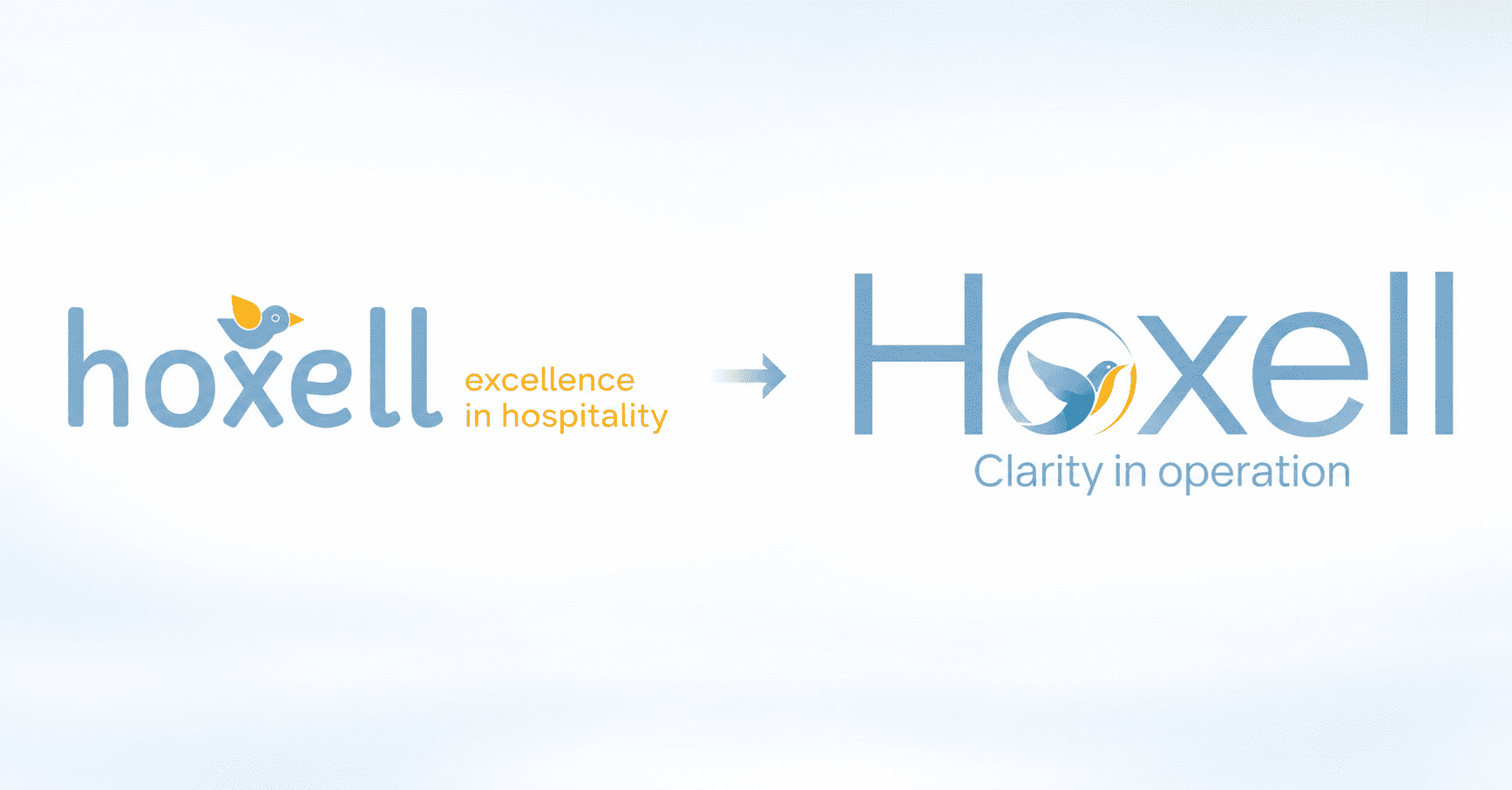
Hoxell unveils its new identity in Rimini and accelerates towards the Digital Worker model
13 October 2026The new positioning marks Hoxell’s evolution from operational software to the digital heart of operations: a single source of truth connecting data, people, departments and decisions Rimini, 13 October 2026 – Hoxell has chosen Rimini to unveil its new identity and to explain the role it intends to play in hospitality. The launch takes place during one of the most important weeks for the Italian industry: Hospitality Day on 13 October at the Palacongressi di Rimini, followed by TTG Travel…
-

Hotels Risk Losing Up to €86,400 Annually from Ineffective Pricing Fences, Study Finds
13 October 2026📈 Hotels can boost revenue using “fences” in pricing strategies, not discounts. Four fence types include physical, transaction, customer, and volume. A test comparing lead time, length of stay, country, and day of arrival can reveal if fences are effective. A leaking fence costs €86,400 annually if half the bookings match the best-available profile, suggesting poor segmentation. Effective fences should distinguish between customer profiles, preventing unnecessary discounts and ensuring better revenue management.
-

Otelier and Avalara Launch Industry-First Integration to Automate Hotel Tax Compliance Across Multiple Jurisdictions
13 October 2026📈 Otelier announced a groundbreaking integration with Avalara in Atlanta and Durham, N.C., enhancing hotel tax compliance. This connection automates tax return preparation, filing, and remittance, reducing errors and audit risks for hotel finance teams across multiple jurisdictions. With Avalara processing over 54 billion AvaTax API calls annually, this integration helps manage complex tax obligations efficiently. Trusted by more than 10,000 hotels, Otelier’s platform now offers streamlined tax compliance, minimizing manual work and compliance risks.
-

Technology Firms Launch Advanced Booking Engines for Hotels, Boosting Direct Booking Conversion Rates and Cutting Costs
13 October 2026💻 Technology companies are revolutionizing hotel bookings. Tambourine One melds website design and a booking engine into a single platform, doubling desktop and nearly tripling mobile conversion rates. Aven Hospitality’s revamped engine, now part of its SynXis CRS, increased revenue over 30% for pilot partners. Oracle’s OPERA Cloud targets independent hotels with integrated booking, payments, and property management. Innovations aim to lower costs and enhance the guest experience across the hospitality industry.
-

Integration Issues Between Hotel PMS and RMS Can Significantly Impact Revenue Due to Data Inaccuracies
12 October 2026📈 PMS and RMS integration issues can lead to costly revenue problems for hotels. Key challenges include delayed reservation data, incorrect inventory, and problems with rate updates. During high-demand events, these errors can result in rooms being priced incorrectly. Monitoring these systems through regular data comparisons and alerts is crucial. Integration complications, if unaddressed, lead to distorted revenue projections and missed opportunities. RevOptimum emphasizes the importance of accurate data for effective revenue management.
-
Channel Managers for Serviced Apartments Must Address Specific Needs Beyond Generic Software Solutions
12 October 2026📑 A 47-night minimum stay was set in a central system but failed to reach one channel. Channel managers for serviced apartments synchronize rates and availability across various booking channels, supporting durations from nightly up to monthly stays. Different channel types, such as OTAs and corporate platforms, have specific billing models and stay lengths, e.g., corporate platforms favor 30-180 nights. For serviced apartments, integrating GDS and TMC connectivity is crucial to tap into untapped revenue streams.