Welcome to our Revenue Management feed. Here you’ll find the most interesting revenue management articles we’ve aggregated from around the world, all in one place. Posts are sorted with the latest at the top, so you can quickly stay up to date with what matters most.
Hotel Budgeting Focuses on Stable Patterns and Per-Guest Growth, Less on Room Night Increases
📋 In hotel budgeting, most destinations display consistent yearly patterns. For a 100-room hotel with 65% occupancy, adding €10 per room night from upgrades and additional guest spending can boost revenue by €237,250 annually, translating to approximately €190,000 in profit. This profit is achievable without new guests, unlike the 1,950 extra room nights necessary to garner similar profits from room sales alone, highlighting the value of focusing on per-guest revenue growth.
Share

Expedia Reports 25% Increase in Last-Minute Travel Searches, Highlighting Importance of Hotel Pickup Monitoring in 2026
💸 Expedia data from January to March 2026 shows a 25% increase in searches for trips 7-13 days away. A study of over 4,000 European hotels found higher RevPAR for hotels maintaining prices above competitors. A hotelier in Cascais, Portugal, reallocated rooms to boost revenue, highlighting the value of focusing on key signals like pickup and cancellations over constant rate changes. Effective pricing depends on strategic attention to these signals and thoughtful competitor analysis.
Share

Independent Hotels Urged to Focus on Total Guest Revenue Beyond RevPAR to Enhance Overall Profitability
📈 Independent hotels can enhance revenue by looking beyond RevPAR. By focusing on Total Revenue Per Available Room (TRevPAR), hotels can capitalize on additional revenue streams like room upgrades, early check-in/late checkout, food and beverage, and paid experiences. Personalized offerings and well-designed packages increase guest spend, without needing to increase room inventory or occupancy. This approach transforms standard reservations into more profitable stays, maximizing the total value of every guest reservation.
Share

Increasing Importance of Certainty in Luxury: Businesses Compete by Reducing Customer Uncertainty and Risk
📊 In an era of information overload, the new luxury is about certainty rather than abundance. Customers now pay for predictable outcomes, termed the "Certainty Premium." This premium reflects value placed on reliability, reducing risk, and minimizing uncertainty in transactions. In hospitality and beyond, consistent delivery, transparent communication, and ownership of problems enhance customer confidence. Businesses excelling in these areas, making interactions effortless and risk-free, gain a competitive edge by fostering trust.
Share

Hotels Can Optimize Revenue by Offering Value-Based Pricing on Quiet Nights to Enhance Guest Satisfaction
🏨 On a quiet Sunday, a 120-room hotel earns €31,000 annually by selling 4 pm checkouts at €25 to 20% of Saturday guests, translating to 24 checkouts weekly. This leverages unused resources, requiring no extra costs. Guests receive varied services based on the day: highest rate on Saturday with perks, discounted Sunday stays, and senior-focused midweek offers. Three strategies are suggested to optimize this, requiring minimal time investment without additional systems.
Share

HAMA Survey Reveals 97% of Asset Managers Expect RevPAR Growth into 2027 Despite Rising Costs and Geopolitical Concerns
📈 HAMA's Fall 2026 Industry Outlook Survey, held during their Annual Fall Meeting in Scottsdale, AZ, surveyed 72 asset managers, representing one-third of membership. Key insights: 97% expect RevPAR growth into 2027; major concerns include demand, wage hikes, and labor shortages. Insurance costs resurface as a worry. Notably, 71% of hotels use AI for reporting/analysis. Despite geopolitical worries, 2026 saw increased RevPAR and GOP, though rising costs strain margins.
Share

Newport Hospitality Group Advocates Maximizing Revenue from Existing Guests and Events, Not Just Room Bookings for Fall 2026
🏨 As we move through the final quarter of 2026, hotel operators should focus on maximizing revenue beyond room occupancy. Analyze existing guest and group opportunities for added value. Consider wedding event add-ons, corporate gatherings, and local community engagements. Initiate early holiday sales in September and October. Collaborate across departments for comprehensive strategies. Evaluate total revenue per occupied room and ancillary sales for 2027 planning. Newport Hospitality Group manages mid-scale and full-service hotels across the U.S. under major brands.
Share

Hotels Risk Losing Up to €86,400 Annually from Ineffective Pricing Fences, Study Finds
📈 Hotels can boost revenue using "fences" in pricing strategies, not discounts. Four fence types include physical, transaction, customer, and volume. A test comparing lead time, length of stay, country, and day of arrival can reveal if fences are effective. A leaking fence costs €86,400 annually if half the bookings match the best-available profile, suggesting poor segmentation. Effective fences should distinguish between customer profiles, preventing unnecessary discounts and ensuring better revenue management.
Share

Integration Issues Between Hotel PMS and RMS Can Significantly Impact Revenue Due to Data Inaccuracies
📈 PMS and RMS integration issues can lead to costly revenue problems for hotels. Key challenges include delayed reservation data, incorrect inventory, and problems with rate updates. During high-demand events, these errors can result in rooms being priced incorrectly. Monitoring these systems through regular data comparisons and alerts is crucial. Integration complications, if unaddressed, lead to distorted revenue projections and missed opportunities. RevOptimum emphasizes the importance of accurate data for effective revenue management.
Share

Google Maps Often Shows Lower Third-Party Rates for Hotels, Undercutting Their Own Prices in Six Cases
🏨 On October 12, 2026, Markus Busch reported that six out of 11 independent hotels in Europe had their Google Maps room rates undercut by third-party sellers, like trivago DEALS and Vio.com. trivago appeared on 7 of 17 hotel cards, offering lower prices than the hotels' own rates, like at Hotel Torbräu in Munich, where trivago listed CHF 181 against the hotel's CHF 261. Google's policy shows the lowest price on hotel cards, often benefiting online travel agencies.
Share

TRevPAR Declines 8.8% in U.S. Hotels in 2025, Highlighting Broader Revenue Opportunities Beyond Room Sales
💵 HotelData's 2025 report reveals a 6.3% decline in RevPAR and an 8.8% decrease in TRevPAR among U.S. hotels. In a CBRE analysis of 1,343 full-service U.S. hotels, 83% reported growth in non-room departments from 2019 to 2024. Plusgrade's Guest Experience Study shows 87% of 2,000 respondents are willing to pay for extra services. Coordinated upselling increases total revenue by 2% to 5% across Plusgrade’s network.
Share
Understanding Average Daily Rate (ADR): Key Metric for Hotel Revenue and Performance Optimization
💸 ADR, or average daily rate, is a crucial metric for hotels, indicating the average revenue earned per occupied room. It's calculated by dividing total room revenue by rooms sold, excluding complimentary and staff use. For example, a hotel with $20,000 revenue and 100 rooms sold has a $200 ADR. Factors like market demand, location, and amenities influence ADR. Tools like Lighthouse's AI-driven pricing can optimize rates up to 365 days in advance, helping hoteliers boost their ADR.
Share

U.S. Hotels Face $2.3 Billion Revenue Capture Loss in 2025, Highlighting Critical Talent Shortage in Hospitality
💸 U.S. hotel RevPAR reached $99.47 in 2025, up from $87.50 in 2019. However, revenue capture fell to 79.22% in 2025 from 80.33% in 2024, leading to a $2.3 billion loss and a $29.2 billion drop in asset value. There is a shortage of skilled professionals to handle this, as traditional hospitality training doesn't attract data-literate individuals needed to address these challenges. Promotional bookings rose 19% in 2026, while full-rate bookings fell 5%.
Share

Ineffective Revenue Management Systems Could Lead Hotels to Underprice Rooms, Missing Significant Revenue Opportunities
🏨 Hotels using Revenue Management Systems (RMS) face pricing challenges due to outdated data, incorrect competitive sets, premature response to occupancy, conservative pricing rules, and missed special event demand. A comparative pricing example shows Hotel A with 95 rooms at $150 generating $14,250, while Hotel B with 80 rooms at $190 yields $15,200, $950 more. Focus on occupancy, ADR, RevPAR, and profitability for optimal revenue. Proper RMS configuration and strategy ensure capturing demand effectively.
Share

Tripadvisor’s Hotel Revenue Drops 23% in Q2 Due to Decline in Free Search Traffic; Bookings Expected to Fall Further
📈 Tripadvisor's hotel revenue dropped 23% in Q2 2026 to $117.9 million due to decreased free search traffic. Marketing costs increased as Tripadvisor paid for visitors. Hotel metasearch usage fell from 71% in 2013 to 44% in 2023; 83% now use Google. Tripadvisor expects a further 20-23% Q3 decline. While hotel clicks are costlier, reviews remain influential. Viator bookings grew 10%. Tripadvisor's split between hotels and OTAs remains unclear.
Share

Hoteliers Adapt to Unpredictable Last-Minute Bookings with Diverse Strategies, Including Flash Sales and Channel Selection
💰 Late demand is challenging hoteliers, with bookings often made within 14 days of arrival, making previous booking patterns unreliable. Jon Siberry of Z Hotels and Sarova Hotels suggests more than one strategy, like flash sales, to fill rooms. Flash sales target impulse buyers via platforms like Secret Escapes and Travelzoo, but careful channel selection is crucial due to commission costs and audience fit. Focusing on cost, customer fit, and rate integrity helps navigate changing booking behaviors.
Share

Integrated Hotel Systems Enhance Revenue Management by Linking Sales, Catering, and Operations During Peak Season
📊 During peak season, hotels undergo stress tests for people, processes, and tech, exposing silos that risk revenue loss. Integration of sales, catering, and operations data is crucial to managing group bookings and events. Hotels should leverage data from busy periods to enhance revenue management strategies, aiming for a holistic view of group value and better decision-making. By analyzing historical patterns, hotels can anticipate demand, refine strategies, and drive predictable year-round revenue.
Share
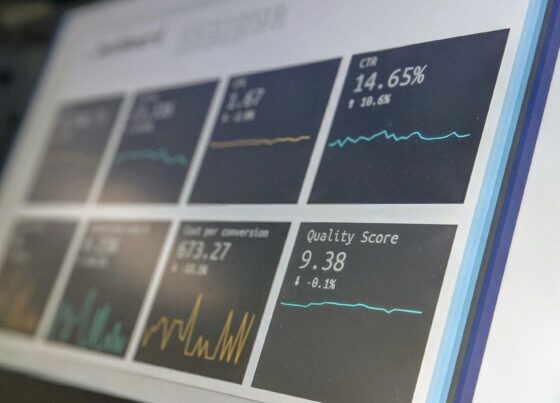
AI Enhances Revenue Management in 2026, But Core Traits of Revenue Managers Remain Unchanged
📈 2026, AI transforms dating a revenue manager! Forecasting evolves with AI making predictions in 14 seconds. A distribution audit now decides dinner plans, optimizing reservation platforms. Inventory management remains crucial—claim calendar slots early! Revenue managers still search for the best prices, delaying purchases. They maximize Total Relationship Value, analyzing every interaction. AI analyzes relationship KPIs, but context remains key. Real-time flexibility and boundaries like floors and ceilings are essential. Despite tech advances, revenue managers remain data enthusiasts, seeking optimal value.
Share

Top UK Restaurant Groups Achieve 9.6% Growth in At-Home Sales for August 2026, Outpacing Inflation
🍽 Britain's top restaurant groups in August 2026 saw a 9.6% increase in at-home sales compared to August 2025, driven by expanded delivery and takeaway services. This growth rate surpasses the inflation rate by over three times, highlighting the successful adaptation of restaurants to changing consumer preferences for dining convenience.
Share

Luxury Hotels Explore Opportunities to Attract Non-Resident Visitors with Destination F&B Despite Resident Guest Promises
🏠 Luxury hotels can expand revenue by attracting non-staying guests to facilities like restaurants or beach clubs. A CBRE report shows a 4.3% rise in food & beverage revenue in 2025, compared to a 1.1% growth in room revenue. The Chemin à la Mer restaurant at Four Seasons Hotel New Orleans moved from the fifth to the first floor on September 23 to target locals. It highlights the importance of strategic partnerships and adapting venues to attract external audiences.
Share

Food and Drink Prices in Hospitality Sector Increased by 0.4% in August, Says Foodservice Price Index
🍽 Food and drink prices in the hospitality sector increased by 0.4% month-on-month in August, according to the Foodservice Price Index from Prestige Purchasing and NIQ. The price rise highlights ongoing inflationary pressures in the supply chain, influenced by global commodity markets and weather-related issues. High inflation was particularly noted in the sugar, jam, syrups, and chocolate categories.
Share

Hotel Revenue Management Needs Psychological Insight to Complement Data-Driven Strategies for Optimal Guest Experience
🏨 Sarah Chen faced a choice between a $189 non-refundable hotel rate and a $340 refundable rate, opting for the latter due to anxiety and control needs, despite low cancellation likelihood. Approximately 90% of European hotels use dynamic pricing, yet ignore behavioral factors like anchoring and loss aversion. Integrating psychology with AI-driven pricing could enhance trust, loyalty, and revenue by addressing consumer behavior more effectively.
Share

Hotels Must Prove Profit Impact of Deliberately Low Occupancy to Avoid Misinterpretation as Poor Performance
📈 Three points of occupancy loss in a 200-room hotel at 180 euros per night results in approximately 2,190 fewer room nights and about 394,000 euros in lost room revenue, ultimately costing around 256,000 euros after accounting for acquisition costs and room service expenses. Standing still costs about 7 euros of extra guest spend per occupied night. Without profit evidence, strategic shifts in guest mix appear as bad years during owner evaluations.
Share

Lighthouse Reports 21% RevPAR Increase for Hotels Switching to Dynamic Pricing from Static Pricing
💰 Most independent hotels thrive with dynamic pricing, which adjusts rates based on real-time data, preventing missed opportunities and boosting competitiveness. Static pricing sets fixed rates, leading to potential revenue loss during demand fluctuations. Dynamic pricing tools, costing around €100/month, offer an ROI over 50 times the subscription cost and can increase RevPAR by 21%. While some hotels combine both strategies, dynamic pricing generally offers better adaptability in the hospitality market.
Share

RevPAR Combines Occupancy and ADR to Provide a Key Performance Metric for Hotel Revenue Management Strategies
💸 RevPAR is a crucial metric in hospitality, combining occupancy and ADR to measure room revenue efficiency. It is calculated by dividing room revenue by available rooms or multiplying ADR by occupancy rate. To illustrate, a 100-room hotel with $10,000 in revenue results in a RevPAR of $100. Comparatively, a property with an ADR of $250 and 40% occupancy yields a RevPAR of $100. A RevPAR index above 100 indicates outperforming competitors.
Share

Houston Hotels See 5.8% ADR Increase During FIFA 2026 Despite Flat Occupancy Levels
🏆 Houston hosted seven FIFA World Cup matches from June 14 to July 4, 2026, drawing 500,000 visitors. Despite high visitor numbers, hotel occupancy remained flat at 61.6%. However, average daily rates (ADR) rose by 5.8% to $131.67, with peak increases of up to 53% around match dates. Downtown, NRG, and Uptown saw significant ADR growth, while other areas experienced more modest changes. The event enhanced Houston's global profile and offered room rate benefits for the lodging market.
Share

New Framework for Hotels Focuses on Guest Profiles, Revenue Share, and Acquisition Costs to Enhance Profitability
🏨 Hotel market segmentation struggles to identify guests' purpose despite categorizing bookings into corporate, group, and other segments. Profiling focuses on guest needs instead of demographics, with two Ideal Guest Profiles recommended. Key metrics are guest profile revenue share and acquisition cost, with the latter ideally at 15-25% of room revenue. A 200-room hotel at 70% occupancy can generate €9.2M annually, spending €1.8M on marketing. Mismatched guests increase costs, as the most expensive error is targeting the wrong audience.
Share

U.S. Hotel Revenue Per Available Room Rises 5.7% in Q2 2026, Driven by 0.8% Occupancy Increase
🏨 In Q2 2026, U.S. hotel occupancy rose 0.8%, with ADR up 4.4%, boosting RevPAR by 5.7%. Demand grew 1.7%, surpassing supply growth of 0.4%. Niagara Falls attracts 14 million annual visitors, with peak tourism from July to September. Changing tech impacts booking patterns, leading to dynamic strategies. A Virginia Tech study shows tech allows flexible booking closer to stay dates. Successful revenue strategies require integrated cross-functional insights beyond mere occupancy numbers.
Share

Marriott’s System Struggles to Price 100 Unique Room Types at London Autograph Hotel, CEO Capuano Reveals
🏨 On September 9, 2026, Marriott CEO Anthony Capuano discussed a London Autograph hotel with about 100 unique room types at a Bank of America conference. Currently, these rooms can't be priced individually due to an outdated system. Marriott is developing a new reservation system to address this. Nearly half of Marriott's 2025 signings in Europe, the Middle East, and Africa were existing hotel conversions. The new system's implementation date remains unspecified.
Share

Hoteliers Should Analyze Peak Season Data for Profitability Beyond Occupancy Rates, Suggests Lighthouse’s Femke Nollet
🏨 Independent hoteliers can optimize revenue by analyzing peak season performance. Monitoring early sell-outs and late gaps helps adjust room rates, while evaluating room types highlights profitable areas. Direct bookings reflect guest loyalty and lower commission costs compared to OTAs. Operational reviews during peak periods reveal key areas for improvement. Solidifying cash flow by tightening deposit and cancellation policies is crucial. Extending peak pricing strategies and targeting valuable guests in shoulder seasons can enhance overall profitability.
Share