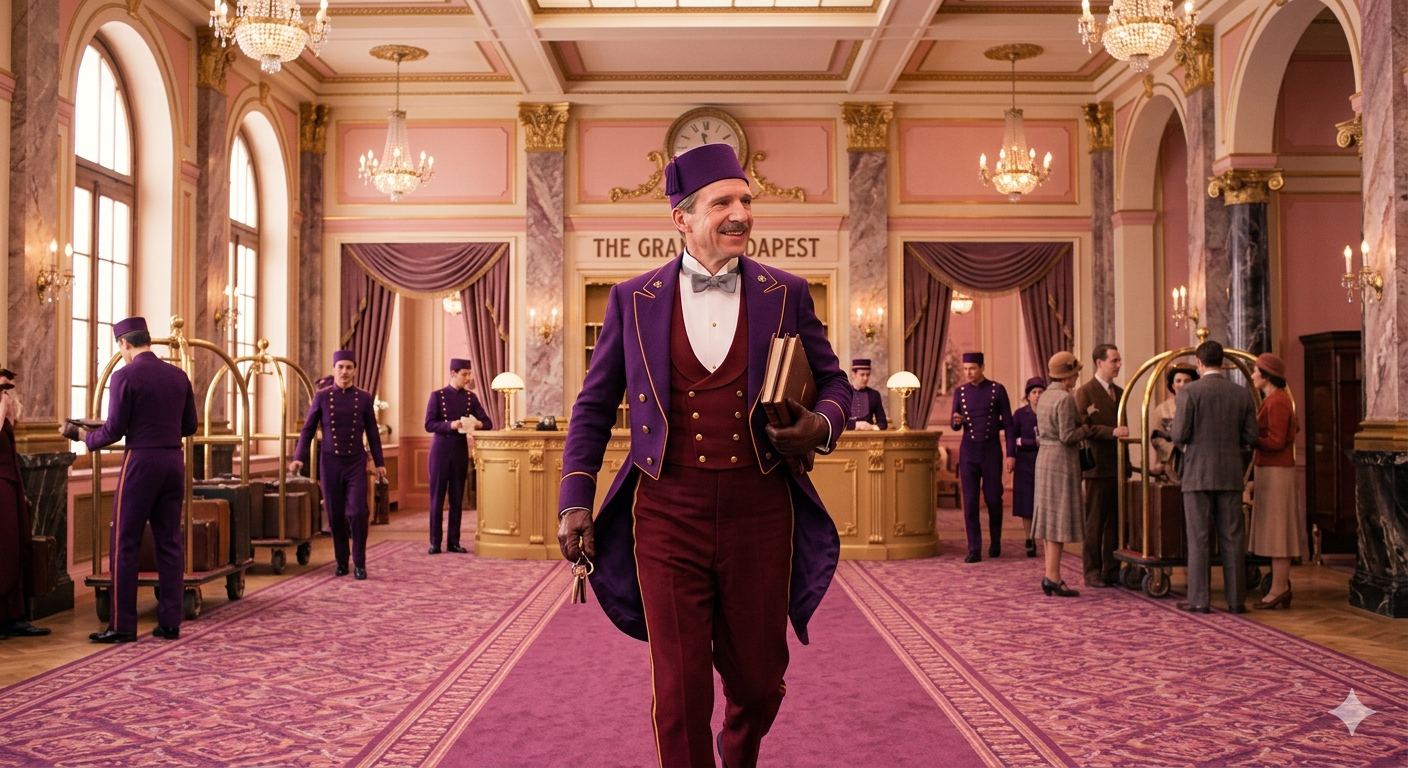
It is a deceptively simple question, and one that rarely gets a satisfying answer. From the outside, the role appears composed, almost theatrical. A well-dressed figure moving through the lobby, greeting guests by name, stepping into meetings, resolving issues before they surface. Everything looks smooth, deliberate, under control. But that surface hides a reality that is far more complex, fragmented, and, at times, chaotic.
To move beyond the clichés, we gathered dozens upon dozens of firsthand accounts from General Managers across the industry. Boutique hotels, independent properties, mid-sized operations. Not the polished corporate narratives, but the real stories. The early morning checks on overnight performance. The constant tension between guest satisfaction, team management, and financial targets. The unexpected crises that reshape an entire day in minutes. The small wins that rarely get noticed, and the pressures that never quite switch off.
What emerges is not a single “day in the life,” but a pattern of constant adaptation. A role defined less by routine and more by judgment. Less by visibility and more by responsibility.
This article brings those voices together into one continuous narrative. A day that starts before most guests wake up and ends long after the last issue has been resolved. A day that looks structured on paper, but rarely unfolds as planned.

Here is a glimpse into the Hotel General Manager’s world.
The 24-Hour Conductor: Entering the world of a Hotel General Manager
Running a successful hotel is akin to conducting a live, 24-hour orchestra where the instruments are constantly changing, and the audience is sitting right on the stage. The role of a General Manager (GM) is rarely confined to a desk or a standard 9-to-5 schedule; it is a lifestyle that demands total commitment, a highly tuned sense of empathy, and an unrelenting eye for detail. From the silent, pre-dawn hours to the bustling energy of a midnight lobby, a GM’s day is a masterclass in multitasking and crisis management.
The Dawn Patrol: Preparation and First Impressions (6:00 AM – 9:00 AM)
Long before the majority of the guests have even opened their eyes, the General Manager’s day has already begun. For many GMs, the workday initiates at home. By 6:48 AM, automated food and beverage financial reports from the previous night are already arriving in their inbox, setting the tone for the day ahead. Before stepping foot on the property, a dedicated GM will review the Daily Business Report (DBR) and the Manager on Duty (MOD) log to catch up on any overnight anomalies, occupancy metrics, and revenue figures,.
Upon arriving at the property, the immediate priority is transitioning into what many in the industry call the “Inspector Hat”. The GM embarks on a thorough property walk, greeting the front desk agents and ensuring the breakfast staff has everything they need for the morning rush,. Justine McCleery, General Manager of The Dominick Hotel, applies a culinary concept she learned in her early career to this morning routine: Mise en place, meaning “everything in its place”. She notes that just like a chef preparing a station for a busy service, a GM must mentally and physically prepare the hotel for the day, ensuring backups are ready and the environment is perfectly set,.
As daylight emerges, GMs like Yvan Bailbled use this quiet time to walk through the lobby, straighten magazines, turn on the televisions, and ensure the atmosphere is perfectly tuned for the first guests coming down for coffee.
It is during these early hours that the GM and their team set the standard for guest care, which often requires going far above and beyond standard protocols. Tobias Arff, a hotel manager for Davidson Hospitality Group, shared a heartwarming anecdote about an early morning crisis detailed in the MOD report. A family had checked out the previous day, and their four-year-old daughter was devastated after leaving behind her beloved stuffed sloth. The housekeeping heroes not only found the toy, but they placed a hotel reusable water bottle in its arms and took a series of adorable photos to send to the family, proving the sloth was having a wonderful vacation before being safely shipped home via FedEx. This level of care transforms a potential disaster into a lifelong positive memory for the guest.
The Command Center: Strategy and Alignment (9:00 AM – 12:00 PM)
As the morning progresses, the hotel awakens fully. Around 9:00 AM or 10:00 AM, the GM leads the daily operations stand-up meeting. Representatives from every department—housekeeping, engineering, front office, and culinary—gather to align their priorities. They review the day’s VIP arrivals, group events, labor trends, and guest satisfaction scores,.
Following the stand-up, the GM must shift gears into administrative and strategic work. This involves approving purchase orders, answering corporate emails, analyzing forecasts, and evaluating revenue management strategies. However, a great GM knows that their job is not necessarily to come up with every brilliant idea, but to recognize one when they hear it and empower their team to execute it.
Adam Sperling, General Manager of The Charles Hotel, shared a brilliant anecdote regarding this exact philosophy during his early career at a DoubleTree property. DoubleTree is famous for handing out fresh chocolate chip cookies at check-in, but Sperling noticed that while guests loved them in the first hour, the cookies lost their magic once they cooled down. He suggested to his GM that they place a bread warmer under the front desk to ensure every cookie handed out was perfectly warm. His GM immediately submitted the idea to corporate; Sperling received a $150 check for the “bright idea of the quarter,” and to this day, bread warmers under the front desk are a brand standard,.
The Midday Pivot: Visibility and Unpredictable Chaos (12:00 PM – 4:00 PM)
Lunch for a GM is rarely a quiet affair; it is usually a working lunch, an opportunity to entertain a client, or a moment to dine with a high-performing employee. By the early afternoon, the focus shifts heavily back to active operations. The GM will often conduct detailed room walks alongside the directors of housekeeping and engineering to identify preventative maintenance needs.
Modern GMs understand that visibility is their greatest tool. Bryan Davern, General Manager of The Dean in Dublin, famously avoids having a traditional office altogether. Instead, he chooses to “hot desk” from the lobby so he can see everything, meet everyone, and even jump in to carry bags up to the guest rooms.
The afternoon is also when unexpected crises tend to strike. In the hospitality industry, the GM must be the calm center of the storm, absorbing chaos so the guests never feel a ripple of panic. Iain McCormack, General Manager of Vakkaru Maldives, shared an incredible anecdote of crisis management. On December 14th, just days before the hotel’s peak festive season, an electrical fault burned their over-water restaurant and bar to the ground. It was a disastrous situation. Demonstrating immediate, decisive leadership, McCormack set up a sunset cocktail lounge on the beach offering complimentary drinks so the guests wouldn’t complain. He then completely shifted an on-site contractor, tasked the team to work 24 hours a day in three shifts, and miraculously rebuilt the entire bar in just 10 days, reopening it to the amazement of guests on December 27th.
An even more extreme example of remaining calm under pressure was shared by Jeroen Werdmölder, General Manager of the Waldorf Astoria Amsterdam. During his youth, he began an internship at the Waldorf Astoria in New York City. His second day on the job was September 11, 2001. In the midst of unimaginable tragedy and confusion, the hotel was completely locked down; guests were not allowed to leave, and the young trainees had to navigate a terrifying reality,. The experience forged his understanding of leadership in a crisis: a GM must maintain composure, have the courage to make hard decisions, and above all, take care of the safety and emotional well-being of the staff and guests,.
The Evening Shift: Socializing and Creating Magic (4:00 PM – 8:00 PM)
As late afternoon bleeds into the evening, the energy of the hotel shifts from business and check-ins to leisure, dining, and socializing. Between 4:00 PM and 5:00 PM, the GM steps back onto the floor. They might host a “Banker’s Hour” craft beer reception to mingle with guests, or check in on a large banquet setup in the ballroom. It is highly vital for the GM to ensure that the transition to the evening shift goes smoothly and that the arriving guests are receiving a stellar first impression.
This time of day is often when the magic of the hospitality industry truly reveals itself. Hotels are crossroads of humanity, and the GM has a front-row seat to extraordinary moments. Jeroen Werdmölder recounted a spectacular anecdote from his time working as a banquet manager in New York. His parents were visiting from the Netherlands, and wanting to show his father the grandeur of the hotel, he took him into the ballroom. To their absolute shock, the Rolling Stones were inside, casually rehearsing. The look of pure astonishment on his father’s face was a priceless memory, embodying the thrilling, exclusive access that a career in luxury hotels can provide.
Working with VIPs, celebrities, and royalty also requires a GM to be infinitely adaptable and exceptionally discreet. Tiberio Biondi, General Manager of the Grand Hotel Majestic in Bologna, shared a memorable anecdote regarding Princess Diana, who visited his hotel in 1995 to attend a charity concert with Luciano Pavarotti. Amidst the frenzy of photographers and adoring fans, the Princess made a highly specific, late-night request: at 1:00 AM, she asked the hotel for a traditional plate of lasagne. The team happily obliged, and upon her departure, she warmly thanked the staff, remarking that she had felt “Bolognese for one night”. To this day, Biondi proudly shares this story with guests staying in the suite where she slept.
The Night Watch: Reflection and the Bottom Line (8:00 PM onwards)
By 8:00 PM or 9:00 PM, the GM may finally retreat to their office to review the agenda for the following day, check the evening entertainment, and brief the night manager. Even as they leave the property to go home to their families, they are never truly off the clock. A hotel never closes, and a GM remains permanently tethered to the property, keeping their phone close at hand for any late-night emergencies.
Why do they do it? Why subject themselves to 12-to-14 hour days, relentless operational hurdles, and the immense pressure of managing multimillion-dollar real estate assets?
The answer, universally, is the people. The hospitality industry is not ultimately about buildings, thread counts, or profit margins; it is about human connection. As Jeroen Werdmölder wisely pointed out, a hotel can boast all the gold, marble, and luxury linens in the world, but without a passionate, dedicated team of human beings, it is completely worthless.
The allure of becoming a General Manager lies in the unique ability to curate an environment where guests create lifelong memories and where employees are empowered to grow into leaders themselves. It is an exhausting, demanding, and incredibly complex profession, but for those who have caught the hospitality bug, the opportunity to serve as the conductor of this beautiful, chaotic orchestra is the greatest privilege in the world.