Luxury hospitality has a branding problem. Not because it is losing relevance, but because too many people misunderstand what actually makes it work.
There is a growing narrative that luxury is about personalization, surprise, and emotional storytelling. And while those elements matter, Stuart Greif from Forbes Travel Guide cuts through the noise with a far less glamorous truth. The difference between a good hotel and a truly exceptional one is not creativity. It is consistency.
This article is our excerpt from this episode of the Travel Trends podcast.
“The truth is, the simple truth is it’s about consistency.”
That single line reframes how hotels should think about operations, marketing, and even technology. Because if luxury is defined by consistency, then the real battleground is not the wow moment. It is everything that happens when the hotel is under pressure.
Greif makes a clear distinction between service and hospitality. Service is the system. It is the standards, the processes, the execution. Hospitality is the human layer. It is warmth, empathy, instinct. Most hotels lean too heavily toward one or the other. The highest performers manage to institutionalize both. They make excellence repeatable without making it robotic.

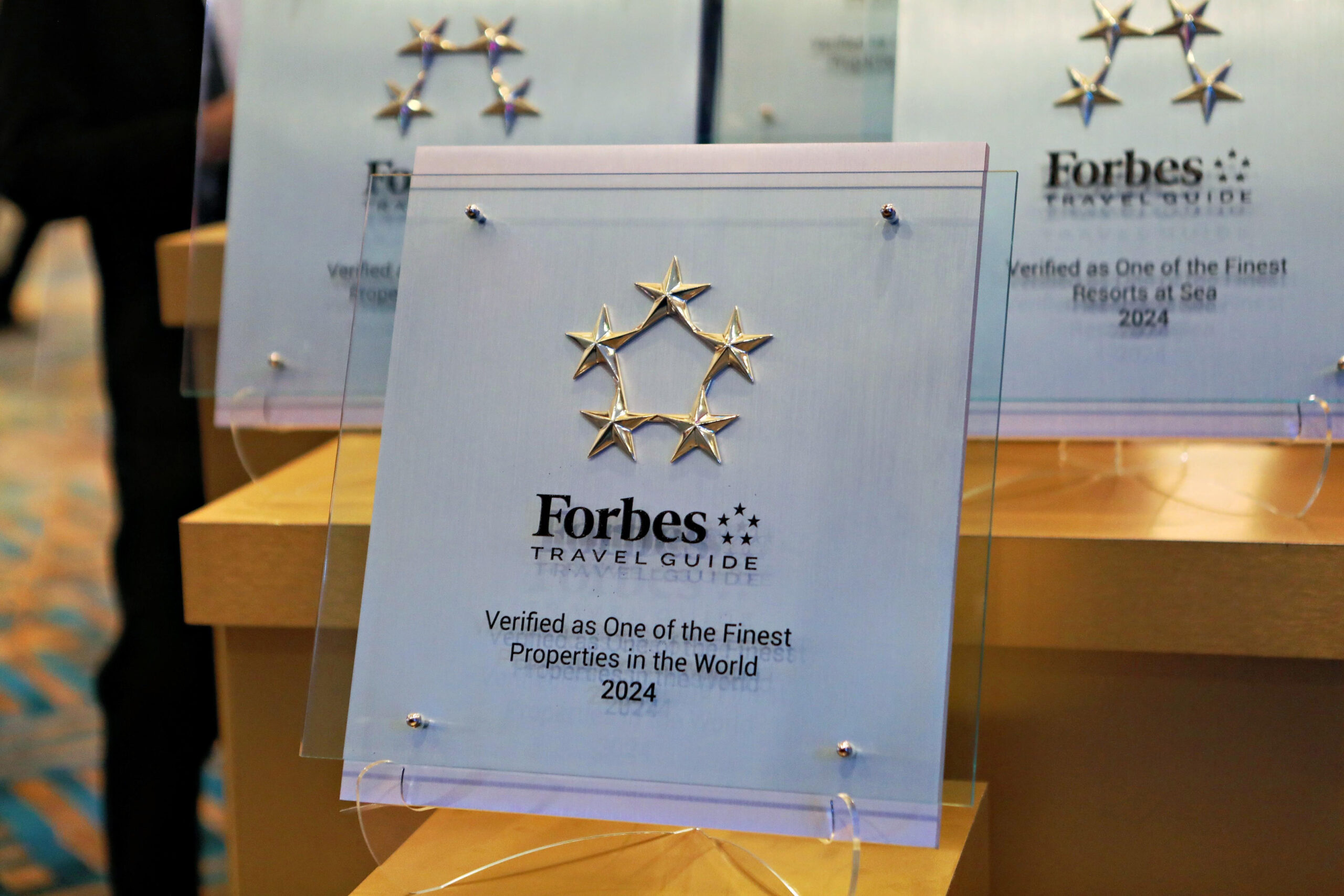
This is where Forbes Travel Guide’s model becomes particularly revealing. Their inspections are incognito and based on 900 standards across hotels, restaurants, and spas. Crucially, 75% of the score is driven by service. Not design. Not brand. Not price point. Service.
That weighting tells you everything about where value is actually created.
Greif also pushes back on the idea that ratings are something to chase. “Don’t chase the output,” he says. In other words, do not build your strategy around earning stars. Build your operations around delivering consistently high quality experiences, and the recognition will follow. For hotel marketing teams, this is a critical shift. The story should not be the badge. The story should be the behavior that earned it.
There is also a harder, more structural issue that Greif highlights, one that most hotel groups underestimate. Luxury is growing fast. He expects the segment to double globally within five to six years. But the limiting factor is not capital or demand. It is people.
“You can’t clone a five star GM. You can’t clone a head of rooms or a head of F&B.”
Scaling a luxury brand is not about replicating a concept. It is about replicating judgment, leadership, and culture. And those do not scale cleanly. The implication is that talent development is not an HR function. It is a core growth strategy. Hotels that want to expand without diluting their experience need to invest in deep, cross-functional training and build leadership pipelines that can carry culture from one property to the next.
Culture itself is not abstract in Greif’s view. It is visible almost immediately if you know where to look. His advice is simple. Ask for a back of house tour. Watch how employees interact. Pay attention to the small details. “You feel it very quickly,” he explains.
He links strong culture to empowerment, empathy, and psychological safety. The opposite is just as clear. Environments where employees feel belittled or micromanaged cannot sustain high levels of service. This becomes even more important as workforce expectations shift. Younger employees are far less tolerant of poor leadership styles, and hotels that fail to adapt will struggle to retain talent.
“If you have that approach, you might be right,” he says of outdated management styles, “but it’s going to wind up leading to you not having much of a business because you can’t attract top talent.”
AI acts as a pressure valve. It absorbs volume where consistency would otherwise break down.
Technology enters the conversation in a surprisingly grounded way. Greif is not dismissive of AI, but he is cautious about where it fits. Luxury hotels, he argues, tend to adopt technology later, once it has proven itself in other segments. The goal is not to lead on innovation. It is to protect the guest experience.
That does not mean there is no role for AI. In fact, he points to several clear use cases. Handling repetitive guest inquiries. Supporting overnight concierge coverage. Reducing congestion during peak check-in periods. In these areas, AI acts as a pressure valve. It absorbs volume where consistency would otherwise break down.
He references implementations where call handling automation reduced costs by around 300 basis points, or roughly 3%, while improving response consistency. Importantly, he does not position this as replacement. “It doesn’t replace the human in the loop.” It supports it.
This distinction matters. The most effective hotel technology is not the kind that tries to reinvent hospitality. It is the kind that quietly removes friction.
On the demand side, Greif also challenges how hotels think about their guests. Travel, he says, is increasingly driven by passion rather than location. “People travel for passion first, location often secondary, and sometimes brand third.” This is not universal, but it signals a shift.
For marketing teams, that means moving beyond property-centric storytelling. The focus should be on why the guest is traveling. What they are trying to experience. Who they want to be during that trip. A business traveler may simply want to be their best professional self. A leisure guest may be chasing something far more personal. The opportunity lies in aligning the hotel experience with that motivation.
At the same time, Greif is clear that great hospitality is not exclusive to luxury. He points to Drury Hotels, a midscale brand that consistently ranks at the top of guest satisfaction studies. The reason is not product. It is execution relative to expectation.
Everyone can offer eye contact. Everyone can offer a genuine welcome. The fundamentals are not expensive. They are disciplined.
Finally, there is a broader point about trust. Hospitality, Greif reminds, is a long-term relationship business. It sits within an industry that represents roughly 11% of global GDP. And yet many operators still approach it transactionally.
That is a mistake.
Strip away the aesthetics, the language, the positioning, and what remains is a system. A system built on people, culture, discipline, and selective use of technology.
Trust is built over time through consistent delivery. Through reputation. Through human interaction. It cannot be manufactured through marketing alone. It has to be earned operationally.
Taken together, Greif’s perspective is less about redefining luxury and more about grounding it. Strip away the aesthetics, the language, the positioning, and what remains is a system. A system built on people, culture, discipline, and selective use of technology.
Luxury, in that sense, is not a category. It is an outcome.
And for hotels trying to scale, compete, or simply stay relevant, that may be the most useful insight of all.
Watch the complete episode on the Travel Trends Podcast with Dan Christian