Changing a PMS is one of the most disruptive decisions a hotel can make. It touches every department, every workflow, and often exposes how much of daily operations rely on habit rather than design.
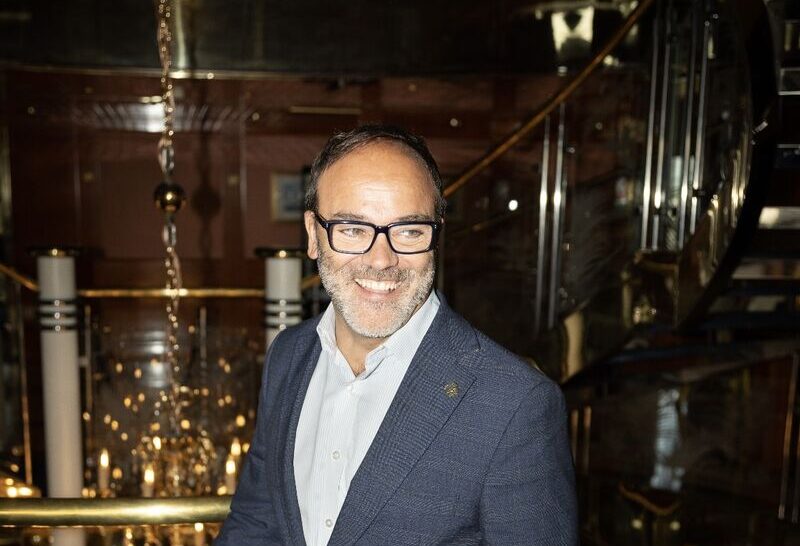
At Sunborn London, the trigger was not innovation for its own sake, but constraint. “We always felt that what’s stopping us from growing was the system,” says General Manager Francisco Ventura. That framing matters. PMS changes are rarely driven by opportunity first. They are driven by accumulated friction.
The selection process followed a familiar pattern. A longlist of seven or eight vendors narrowed to three. What stood out was not feature differentiation, but operational clarity. The priority was reducing fragmentation. “We didn’t want to be sent between two suppliers trying to find who is going to fix it,” Ventura explains.
This reflects a broader shift in the industry. Integration is no longer a technical discussion. It is an operational risk decision.
The timeline was relatively compressed. Initial exploration began mid-2024, with a contract signed early the following year and full implementation by late May. Notably, the change happened just before peak season. “There’s no good time,” Ventura says . This is a recurring reality across PMS projects. Waiting for a quiet period often delays change indefinitely.
What becomes clear from the experience is that the real challenge is not system configuration. It is behavioral change. Ventura points to one of the most common pitfalls. “You need to stop operating how the old system used to operate” . In practice, many hotels attempt to replicate legacy processes inside new systems, limiting the impact of the transition.
Training is where this tension becomes visible. Hotels often underestimate both the time and the strategic importance of it. “Spend the time… if you don’t do the training, you’re going to regret it afterwards,” Ventura notes. In this case, department heads were directly involved in shaping workflows, rather than simply adapting to them after the fact.
The operational impact is incremental rather than dramatic, but accumulative. Check-in speed improves, but more importantly, variability reduces. In a property with concentrated arrival patterns, even small gains matter. Saving two to three minutes per guest during peak arrival windows can translate into several hours of staff time per day. Over a month, that becomes operational capacity that did not exist before.
Other changes are less visible to guests but more significant internally. Payment flows become automated, reducing manual intervention and compliance exposure. Housekeeping shifts from paper-based updates to mobile workflows, tightening communication loops. Point-of-sale integration removes steps that were previously taken for granted.
None of these are new ideas. What changes is their consistency.
Ventura frames the outcome in terms of friction rather than efficiency. “The amount of time wasted fixing things that shouldn’t be problems… that’s what disappears,” he says. This is where many PMS discussions fall short. The cost of inefficiency is often hidden in small interruptions rather than measurable delays.
From the guest perspective, the change is subtle. Fewer queues, fewer repetitions, fewer points of failure. But the larger shift happens behind the scenes. Staff spend less time navigating systems and more time interacting with guests. Or, at minimum, less time correcting avoidable errors.
There is also a generational layer to consider. Ventura highlights that modern systems need to align with how younger staff engage with technology. “Systems need to talk to people who are used to having a mobile phone in their hands all the time,” he says . Legacy interfaces are not just inefficient. They are increasingly misaligned with the workforce.
For hotels considering a PMS change, the lessons are consistent with what many operators experience but rarely articulate clearly.
The difficulty is unavoidable. The timing will never feel right. The technology matters less than the workflows it enables. And most critically, the success of the project depends on whether the organization is willing to abandon how it used to operate.
Perhaps the most telling reflection comes after the fact. “I can’t remember the system we had before,” Ventura says .
In an industry where systems tend to linger long after they stop being fit for purpose, that is not a trivial outcome.
Few decisions in hotel operations carry as much risk, disruption, and long-term impact as changing a PMS. As Francisco Ventura, General Manager of Sunborn London, puts it bluntly: “The PMS is the brain of your business.” Get it wrong, and everything slows down. Get it right, and the gains compound across every department.
Sunborn’s decision started with a simple realization. Their existing system was holding them back. “We always felt that what’s stopping us from growing was the system,” Ventura explains. That moment is critical. Most hotels wait too long, optimizing around limitations instead of removing them.
The selection process itself is rarely about features alone. Sunborn reviewed seven to eight vendors, narrowed to three, and prioritized a single integrated system. Not for convenience, but for accountability. “We didn’t want to be sent between two suppliers trying to find who is going to fix it,” he says .
The implementation timeline tells another story. From initial consideration in mid-2024 to go-live in May, the full cycle took under a year. There was no perfect window. They launched just before their busiest month. “There’s no good time,” Ventura admits. The lesson is simple. Waiting for calm periods often means never moving.
Where most PMS projects fail is not technology. It is behavior. Ventura highlights a key mindset shift: “You need to stop operating how the old system used to operate” . Hotels that replicate old workflows inside new systems lose most of the upside.
Training becomes the real investment. Not optional, not compressed. “Spend the time… if you don’t do the training, you’re going to regret it afterwards,” he says . This is where many projects quietly break. Teams are trained just enough to function, not enough to transform.
The operational gains are tangible. Faster check-in is the visible one, but the real value is cumulative. If check-in time drops by even 2 minutes per guest in a 138-room hotel, that can easily translate to 4 to 5 staff hours saved per day at high occupancy. Over a month, that is more than 120 hours redirected from admin to guest experience.
Automation extends beyond the front desk. Payments are fully integrated, removing manual handling and reducing PCI risk. Housekeeping moved from paper to mobile, accelerating room readiness and communication. In restaurants, payment happens directly at the table, eliminating back-and-forth delays.
The real KPI is not speed alone. It is friction removed. “The amount of time wasted fixing things that shouldn’t be problems… that’s what disappears,” Ventura explains .
Guest impact is subtle but powerful. Fewer queues, fewer errors, fewer interruptions. More importantly, staff have more time to engage. As Ventura puts it, “The less time we spend on technology, the more time we can spend with guests” .
For hoteliers considering a PMS change, the playbook is clear. Accept that it will be difficult. Involve department heads early. Challenge legacy workflows. Invest heavily in setup and training. Choose systems based on operational fit, not price.
And most importantly, move before your system becomes your biggest constraint.
Because once the change is done, the perspective shifts quickly. “I can’t remember the system we had before,” Ventura says .
That is usually the best sign you made the right decision.