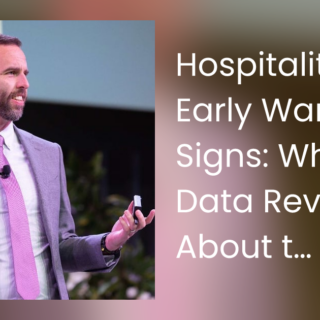
Tariffs, Unfolding Travel Trends, and San Francisco’s Comeback – Zach Demuth, JLL
📌 In the hospitality industry, optimism peaked in late 2022 due to interest rate cuts beginning in September and strong performance in urban travel, particularly international group and business demand. However, by 2023 and 2024, geopolitical developments and potential trade wars introduced uncertainty. While the fundamentals of travel demand remained robust, hotel investment decisions faced increased uncertainty from tariffs, immigration policies, and inflation, which could lead to higher interest rates.
Despite global concerns, the success of individual hotels or hotel collections largely depends on local market conditions. Detailed market knowledge, understanding demand drivers, and leveraging third-party resources like STR and CoStar are essential. Immediate impacts from tariffs include increased construction costs and supply chain disruptions, while longer-term impacts might include reduced consumer discretionary spending, affecting travel demand.
San Francisco's hotel market, hit by multiple challenges including the loss of conventions, tech company relocations, and a decrease in Asian travel, particularly from China, saw further declines in 2023 and 2024. Yet, JLL anticipates a recovery starting in 2025, with strong events returning, tech companies reestablishing offices, and investor interest rising, positioning San Francisco for potential growth. Overall, navigating uncertainty requires focusing on controllable factors, understanding local markets, and seizing opportunities during uncertain times.
Share