10 Minutes News for Hoteliers 10 Minutes News for Hoteliers
  • Top News
    • Airbnb news
    • AI News in Hospitality
    • Marriott news
    • Booking.com news
    • OTA News
    • UCP news
    • PMS news
  • The Columns
  • Posts
    • Hotel Marketing
    • Revenue Management
    • CSR and Sustainability
    • Events
    • Hotel Openings
    • Hotel Operations
    • Human Resources
    • Innovation
    • Market Trends
    • Mergers & Acquisitions
    • Regulatory and Legal Affairs
  • 👉 Sign-up
  • 🌎 Languages
    • 🇫🇷 French
    • 🇮🇹 Italian
    • 🇪🇸 Spain
  • 📰 More
    • Largest Hotel Brands by Traffic
    • Hotel Brands of the World
    • OTAs of the World
    • Most read Articles
  • About us
10 Minutes News for Hoteliers 10 Minutes News for Hoteliers
  • Top News
    • Airbnb news
    • AI News in Hospitality
    • Marriott news
    • Booking.com news
    • OTA News
    • UCP news
    • PMS news
  • The Columns
  • Posts
    • Hotel Marketing
    • Revenue Management
    • CSR and Sustainability
    • Events
    • Hotel Openings
    • Hotel Operations
    • Human Resources
    • Innovation
    • Market Trends
    • Mergers & Acquisitions
    • Regulatory and Legal Affairs
  • 👉 Sign-up
  • 🌎 Languages
    • 🇫🇷 French
    • 🇮🇹 Italian
    • 🇪🇸 Spain
  • 📰 More
    • Largest Hotel Brands by Traffic
    • Hotel Brands of the World
    • OTAs of the World
    • Most read Articles
  • About us

Posts by author

10minhotel.com

1059 posts
10minhotel.com est le premier site web français dédié aux professionnels de l'hôtellerie, offrant une centralisation d'informations, de nouvelles, de tutoriels et de meilleures pratiques dans le secteur. La plateforme, intuitive et conviviale, donne accès à des conseils pour améliorer différents aspects de la gestion hôtelière. En complément, le site propose le podcast "10 min pour un hôtelier", proposant des analyses, des interviews d'experts et des conseils pratiques. Le but de 10minhotel.com est d'aider les hôteliers à rester informés et compétitifs sur un marché en constante évolution.
View Post
  • 0 min

CHMWarnick Expands Proph+IT Platform with New Performance Analytics and Select-Service Capabilities

  • 10minhotel.com
  • 4 June 2026
CHMWarnick (CHMW), the leading hotel asset management and owner advisory services company to the hospitality investment community, today announced the expansion of its proprietary Proph+IT™ business intelligence platform, with the introduction of a new Performance Quadrants Dashboard and Proph+IT™ Select, a purpose-built module designed specifically for select-service hotel portfolios. These enhancements represent the next phase in CHMW's evolution toward a more data-driven, AI-enabled asset management and advisory model, combining four decades of operating experience with advanced analytical capabilities to support more informed investment decisions. Asset management requires speed, precision, and the ability to identify performance opportunities across a portfolio in real-time. Our continued investment in Proph+IT™ reflects our focus on equipping owners with the tools and insights needed to drive stronger performance, optimize returns, and make informed strategic decisions Chad Sorensen, CEO, CHMWarnick The new Performance Quadrants Dashboard provides a portfolio-wide visualization of asset performance by plotting every property in a portfolio across two key performance metrics, Revenue and GOP margin. This approach enables owners, asset managers, and lenders to quickly identify overperformers, underperformers, and outliers across mixed-brand, mixed-tier portfolios. Proph+IT™ Select extends the platform’s capabilities to the select-service segment, offering a tailored solution aligned with the unique operating model and cost structure of these assets. The module incorporates key performance indicators such as flow-through, GOP per occupied room, brand contribution, and focused labor productivity metrics, providing owners with a more relevant and actionable benchmarking tool. Profit Select™ is pre-mapped to the chart of accounts for all major brands and leading select-service management companies, enabling rapid onboarding and seamless integration for multi-property portfolios. These enhancements to Proph+IT™ are about giving owners and operators faster, clearer insight into portfolio performance. Performance Quadrants highlights where to focus immediately, while Proph+IT™ Select delivers analytics tailored to how select-service assets actually operate Jonathan Newbury, EVP and Proph+IT™ lead, CHMWarnick These enhancements advance CHMWarnick’s integration of analytics and automation across its platform, simplifying data and performance analysis while enabling faster, more informed decision-making for hotel owners and investors. Proph+IT™ currently provides portfolio analytics and performance benchmarking across hotels representing approximately 22,000 rooms and $12 billion in asset value under CHMW's management and is available to the broader investment and management communities. To see Proph+IT™, the Performance Quadrants Dashboard, or Profit Select™ in action, visit prophitplus.ai or email [email protected] to schedule a demo.
View Post
Share
View Post
  • 0 min

Remington Hospitality Expands Managed Portfolio with New Belize Resort

  • 10minhotel.com
  • 4 June 2026
Remington Hospitality, a dynamic hotel management company providing genuine hospitality and deep operational expertise, announced today it has assumed management of Aruna Resort & Villas in Ambergris Caye, Belize, further expanding the company’s presence in the Caribbean and Latin America (CALA) region. The addition supports Remington’s ongoing strategy to grow its portfolio in high-demand leisure and resort markets, where professional management, revenue optimization, and strong owner partnerships can enhance asset value. Located 1.3 miles west of San Pedro, Aruna Resort & Villas features a collection of canal-front and beachfront villas and studios. The resort offers onsite dining at Akasha Restaurant, which presents a globally inspired menu using locally sourced ingredients, as well as spa services, open-air living spaces, and access to a wide range of island activities. Aruna represents a strong opportunity to bring Remington’s operational expertise to a distinctive independent resort in a growing CALA destination. Our focus will be on enhancing operational efficiencies, strengthening revenue performance, and supporting ownership in maximizing the property’s long-term growth and competitive positioning Keith Oltchick, Chief Development Officer, Remington Hospitality With the addition of Aruna Resort & Villas, Remington continues to scale its independent and boutique portfolio while broadening its reach in resort-driven leisure markets. The Belize resort marks a strategic step in expanding the company’s management footprint in the broader CALA region.
View Post
Share
View Post
  • 0 min

Hilton Unveils New Workplace Research Showing That Even as AI Is Reshaping Work, the Real Advantage Is Human

  • 10minhotel.com
  • 4 June 2026
Hilton’s latest Trends Report special section “The Hospitality Mindset: A New Blueprint for Culture and Performance for Any Industry ,”blends research on what workers are seeking most in 2026 and insights from Hilton leaders to prove the power of a people-first culture to drive performance and retention. Shift return-to-office towards connection and community: 94% of workers say the office still serves a purpose, primarily as a hub for workplace relationships and connection. AI anxiety in the absence of AI agency: 52% of workers feel anxious about AI’s impact on their jobs, while 55% expect employers to provide AI tools, skills and workplace training, creating an AI skills gap. Human ‑ centered leadership outweighs other perks: Job security (57%), feeling valued (50%), career growth (46%), flexibility (46%) and strong workplace relationships (~40%) rank as top drivers of worker engagement and loyalty while 71% say they would be more likely to stay at their job if their manager offered flexibility for personal needs. The creation of purpose and agency is the formula for worker retention: 88% say purpose influences career decisions and 85% say that work that makes a difference influences their career decisions, while 52% of workers say a good day is defined by a sense of accomplishment (like checking off a to-do list) and 77% more likely to stay when purpose is paired with trust belonging and autonomy. Drive mentorship and personalized development: 74% of workers say mentorship opportunities are important, 77% say mentorship opportunities improve happiness at work and 75% are more likely to stay when employers invest in personalized development. MCLEAN, Va. – As work becomes more digital, fast-paced and increasingly disconnected, a critical driver of workplace performance in every sector is being overlooked: human-led hospitality. Today, Hilton unveiled “The Hospitality Mindset: A New Blueprint for Culture and Performance for Any Industry,” a new report where workers overwhelmingly cite human-centered factors as the strongest drivers of productivity and satisfaction at work. The report combines new workforce research from Ipsos and Morning Consult among U.S. workers with insights from leaders at Hilton’s top-performing hotels to identify the emerging behaviors shaping the future of work and examine how hospitality-inspired leadership can strengthen workplace culture across industries. Recently named the World’s Best Workplace by Great Place to Work and Fortune, Hilton offers a real-world view into the leadership behaviors that drive connection, retention and performance at scale as it operates a global business with hundreds of roles and team structures in 144 countries and territories. That perspective is especially relevant as the business case for employee engagement continues to grow: According to Gallup , companies with high employee engagement experience 18% more productivity and 23% more profitability than those with low engagement. The project challenges current assumptions about workplace culture, revealing that workers continue to seek connection, trust and belonging in a hybrid world, with nearly 50% of early-career workers reporting feeling lonely at work (Ipsos). At the same time, as organizations navigate rapid AI-driven change, work is becoming more transactional,
View Post
Share
View Post
  • 0 min

Swapping lobby lines for revenue climbs: fixing the front desk

  • 10minhotel.com
  • 4 June 2026
You’ve arrived at a hotel straight from your flight. The queue has ropes, as if you were back at the airport. By the time you reach the front desk, the receptionist can't find your booking. The confirmation number doesn't work in their system, and they don't accept contactless payment. Sound familiar? This is exactly what happened last month to Matt Welle, Mews CEO and host of Matt Talks Hospitality. Matt spent time as a front office manager at a large hotel about 20 years ago, running a DOS-based system on busy convention days with 400 to 600 check-ins. His view, having just lived through a painful arrival from the guest side, is that there's no excuse for it in 2026. Here's what he'd do differently if he were running that hotel today. The queue starts in housekeeping The afternoon surge doesn't start at the front desk. It starts hours earlier, when early arrivals are told their room isn't ready and asked to come back at 3pm. In most large hotels, housekeepers work from a printed sheet with no real-time prioritization and no visibility into which guests have actually left. Departure rooms and stay-overs get treated roughly the same. The fix: give housekeepers a mobile app that reprioritizes their task list as the day moves. Flexkeeping, part of Mews Operating System, does exactly this. When a guest checks out, that departure room moves to the top of the nearest housekeeper's list. Technology is one part of the equation; the other is culture. If every housekeeper returns four departure rooms before mid-morning, the property suddenly has inventory it didn't have before. That inventory lets front desk teams offer early check-in as a paid service – typically around €25 – rather than turning guests away. Most guests take it. The revenue adds up. And a meaningful share of that afternoon queue disappears because those guests are already in their rooms. Online check-in does most of the work before arrival The average hotel check-in takes around five minutes. Most of that time is admin: finding the booking, printing a registration card, taking payment details. The upsell, if it happens at all, is often an afterthought. Cloud-native systems move those steps online, before the guest arrives. With Mews, the moment a booking lands in the system, the guest gets an email to check in online. A reminder follows two days before arrival. Hotels that add an SMS reminder one day out see conversion increase noticeably. Mews SMS reminders led to a 25% engagement boost with online check-in, with a 164% ROI. In other words, people read their messages. The online check-in flow handles profile completion, room upgrade and ancillary upsells, and secure card tokenization. By the time the guest arrives, most of the work is already done. For properties without digital keys, the only remaining step is cutting a physical key card – seconds, not minutes. Hotels doing high-volume arrivals have the most to gain. Getting 25 to 40 percent of guests through online check-in
View Post
Share
View Post
  • 0 min

When Two Worn-Out Systems Meet: Maria Haggo on the Neuroscience of Hospitality

  • 10minhotel.com
  • 4 June 2026
At the EHL HumanX Summit in Lausanne, Simone Puorto sat down with Maria Haggo, founder and CEO of Transform8, for a conversation that began with an unsettling claim: reality is not what we think it is. Haggo is a brain health strategist with an MSc in Psychology and Neuroscience from King's College London, and her work rests on a single idea, that the brain is core business infrastructure. She spent fifteen years in hospitality before moving into neuroscience, and over the interview she brought that idea back to the industry she came from. The full conversation is available to watch below. Reality is a prediction, not a recording We tend to assume our eyes work like cameras, capturing the world exactly as it is. They do not. The brain takes in a constant stream of input and makes predictions based on what it has experienced before, on memory and on established patterns. We then experience the world through that lens. When the prediction is right, no harm done. When it is wrong, it becomes a bias that pulls us away from what is true. Haggo's example was ordinary. Two people walk into the same restaurant. One finds it warm and cosy, the other finds it loud and unpleasant. Same room, two different realities, each shaped by the state the person walked in with. The state you arrive in decides what you see That state is not fixed. Sleep, food, hydration and rest all feed it. Arrive worn out and the brain runs below its potential. You become less tolerant and quicker to anger. Ordinary situations start to read as threats. Her point for hospitality is that guests rarely arrive in a good state. They have flown for ten hours, lost a night's sleep, eaten badly and run through a difficult schedule before they reach the desk. The complaint about the temperature of the soup is rarely about the soup. It is about everything that came before it, and how little energy the guest has left to deal with what is happening now. A career that wears the system down Hospitality, she argued, is built to wear down the people who work in it. The hours are long and out of step with normal life. Staff skip meals, forget to drink, and spend the shift on their feet. She described the old mindset plainly, the 1980s Wall Street idea that a nine to five is a part time job, that sleep is an afterthought, that "lunch is for wimps." It is possible to push through all of it. The cost is that staff operate well below their potential, make more mistakes, and lose the chance to meet guests from a rested, grounded place. In fifteen years in the industry, she said, rest and recovery were almost never discussed. Burnout sat closer to a badge of honour. When two worn-out systems meet This is where the argument lands hardest. A guest arrives dysregulated. They are met by an employee who is also
View Post
Share
View Post
  • 0 min

Empathy Is Something You Design, Not Something You Hope For: Adrienne Boissy on What Healthcare Can Teach Hospitality

  • 10minhotel.com
  • 4 June 2026
At the EHL HumanX Summit in Lausanne, Simone Puorto sat down with Dr Adrienne Boissy, Chief Medical Officer at Qualtrics, a neurologist who still treats patients with multiple sclerosis, a former Chief Experience Officer of the Cleveland Clinic, an ethicist, and, by her own account, a washed-up ballerina who can also bartend. She brought healthcare's harder-edged view of experience to a room full of hoteliers, and the contrast between the two fields ran through the whole conversation. The full conversation is available to watch below. What healthcare knows about empathy Simone asked whether hospitality still misunderstands empathy and experience. Boissy started with what makes healthcare different: the gravity of it. People come to her for testing, for bad news, sometimes for the best moments of their lives, and that raises the stakes on trust. In healthcare, experience is not treated as politeness or warmth. It is counted as part of the quality of care, and in the United States hospitals are rated and reimbursed on how patients say they were treated. Underneath all of it, she said, trust is foundational, which is why she spends her clinical time listening closely, working out what the person in front of her values, and earning their trust. She reached for a framework from Harvard's Frances Frei, who describes trust as resting on three things: authenticity, competence and empathy. The point is that they only work together. You cannot be an empathic but incompetent surgeon, and you cannot be empathic while delivering sloppy service. All three corners have to hold. The framework transfers to hospitality, she thinks, even if what competence means is different. One line she drew will sound strange to hoteliers raised on the opposite creed: in healthcare, the customer is not always right. She is focused on a patient's safety and the quality of their care, which sometimes means telling them what they do not want to hear. That led her to a way of rescuing the word luxury, which she thinks implies a comfort healthcare rarely has, with fifty patients waiting in the corridor and no time for lunch. Reframe luxury, she suggested, as being deliberate about which human-to-human moments you protect and which you hand to technology to scale and make consistent. She credited a talk she once heard from the chief executive of Hyatt, called Reversing Perspective, which argued that the hotel is not so much the host of the guest as a guest in the visitor's life. She found it beautiful, and it is close to how she sees healthcare, where people rarely choose to be there and it is a privilege to be let in to witness their suffering. Her closing point here was practical. If conferences want human-centric leadership, they should name the specific skills that produce it, train people in them and check whether they are there, rather than leave humanity as a nice word. Burnout is a system problem Boissy's sharpest argument was that empathy can be built into a system rather than
View Post
Share
View Post
  • 0 min

Independent Hotels Face a Revenue Management Paradox

  • 10minhotel.com
  • 4 June 2026
For many independent hotels, revenue management happens in the gaps. Between the morning briefing and the first check-in, on a quiet afternoon, or at the end of a long day when someone finally has time to look at next month’s numbers. The person making those pricing decisions is often also managing the front desk, handling supplier relationships, and overseeing the guest experience. In that context, a revenue strategy typically means checking what nearby competitors are charging, adjusting rates when occupancy looks thin, and leaning on last year’s booking data to anticipate what’s ahead. That approach is built on genuine experience and local knowledge. It also leaves a significant amount of revenue on the table. (Read more: 5 Signs It’s Time to Stop Relying on Spreadsheets (Or Replace Your Current RMS) ) The independent hotel paradox There is a common assumption that revenue management systems are built for large chains with dedicated commercial teams. Independent hotels and small groups arguably need RMS technology more than large chains, precisely because their margin for error is smaller. A pricing mistake cannot be absorbed across hundreds of transactions. One underpriced weekend, one missed compression event, one rate that failed to adjust before a block of rooms sold at the wrong price. Each has a measurable impact on a property running lean. For independent hotels, access has always been the real obstacle. The access barrier has changed For years, enterprise RMS platforms were priced and designed for chains, with investment levels that put them out of reach for most independent properties. That dynamic has shifted. What was once an enterprise investment of $30,000 to $50,000 is now accessible at a fraction of that cost, with setup fees typically between $7,000 and $10,000 and ongoing fees structured around room count rather than flat enterprise pricing. The technology has been redesigned for smaller teams, with interfaces built around ease of use. A GM or front office manager with no formal revenue management background can operate these systems effectively from day one. What actually changes For a property where one person manages pricing alongside everything else, the time recovered by automating rate management is not abstract. Industry data puts that recovery at 20 to 40 hours per month, the difference between a week spent on commercial decisions and a week spent on data entry. Beyond time, the change is one of visibility. A small team managing rates manually is always working from a partial picture: what competitors charged yesterday, what last year looked like at this point in the season. An RMS replaces that partial picture with live demand signals, adjusting rates automatically within parameters the team defines, across every channel and without requiring manual oversight. When a local event creates unexpected demand three weeks out, the system responds. When booking pace accelerates or slows, the system adjusts. For a property with limited buffer against pricing errors, that accuracy compounds with each booking cycle. A transition designed for small teams The concern most often heard from independent hoteliers
View Post
Share
View Post
  • 0 min

Actabl Hires Global Hotel Engineering Leader as SVP of AI Asset Management

  • 10minhotel.com
  • 4 June 2026
Actabl today named Rob Bahl Senior Vice President, AI Asset Management, a move that puts decades of hotel engineering leadership experience behind the company's work to help owners and operators use AI to extend asset life, cut energy and labor costs, and run their buildings with excellence at scale. Bahl joins from Marriott International, where, over four decades, he rose from property engineering to global responsibility for engineering, facilities, sustainability, capital management, and regulatory compliance at the world's largest hotel company, most recently serving as Global Vice President of Engineering and Environmental Impact. “We are honored that Rob chose to join us, and excited about what we can build together,” said Steven Moore, CEO of Actabl. “He has spent his career making hotels run better, and that is exactly the experience we want guiding how we bring AI to asset management and other areas of a hotel operation.” Bahl knows Actabl well. He spent 15 years as one of the most active customer collaborators on Transcendent, Actabl's asset management platform, which Marriott uses at thousands of properties. Together with Transcendent founder and Actabl Chief Innovation Officer Jerimi Ford, he helped design the gamification and associate engagement programs that changed how engineers at Marriott hotels measure their work and take ownership of their results. “Tools matter, but so do the talent and the philosophy behind them,” said Ford. “Rob shaped how we think about engineering as a discipline. We look forward to helping those across the industry understand what it takes to operate with excellence.” Bahl's hire builds on the foundation of Actabl's AI strategy . Hotel properties have access to valuable asset and operational data, and the owners and operators who outperform will be the ones who can turn it into action with AI. Getting more out of physical assets is exactly the challenge Bahl spent four decades solving at Marriott. At Actabl, he will work across the company’s entire platform of business intelligence, labor management, and operations tools, and help shape how it partners with customers to put AI to work in their properties and portfolios. "Actabl has an incredibly talented and dedicated team moving with real purpose," said Bahl. "Joining this organization at such a pivotal moment is something I'm truly energized by. I look forward to helping shape what AI innovation looks like for the hospitality industry." Bahl's career began as a cook in Colorado restaurants. He joined Marriott in 1983, worked evenings at hotels while studying electrical engineering and finance, and served in the Naval Reserves on F/A-18 avionics systems. Over the next four decades, he opened hotels across Colorado, California, Washington, and Arizona, then moved into regional and corporate leadership before taking on global responsibility for engineering and environmental impact from Marriott's Bethesda headquarters. In that role, he led a global team across more than 50 countries, maintaining consistent engineering and asset standards in different markets and cultures. “Marriott is an exceptional organization,” said Bahl. “I felt privileged to have worked alongside incredible people throughout
View Post
Share
View Post
  • 0 min

Meliá Restructures Its Operations in Cuba Following Risk Assessment and Current Context Review

  • 10minhotel.com
  • 4 June 2026
The measure, effective immediately and in line with the decision communicated on May 26, responds to the urgent need to ensure an orderly and sustainable operational framework, consistent with our responsibility as a company The Company expresses its appreciation to all stakeholders for their understanding and trust and will continue to monitor developments in order to reassess its presence in Cuba In the context of the evolving geopolitical, social, legal, and economic environment in the Republic of Cuba, Meliá Hotels International announces that, as part of its ongoing and rigorous risk assessment process, it has taken the decision to immediately cease the provision of management and commercialization services, as well as the licensing of its hotel brands, in relation to fifteen (15) hotels located in the country: Gran Hotel Bristol Habana Vieja Member of The Meliá Collection INNSiDE Catedral Habana Meliá Buena Vista Meliá Cayo Santa María Meliá Jardines del Rey Meliá Las Dunas Meliá Península Varadero Paradisus Los Cayos Paradisus Princesa Mar Paradisus Río de Oro Paradisus Varadero Sol Caribe Beach Sol Cayo Santa María Sol Río de Luna y Mares Sol Varadero Beach This decision, which had previously been communicated to the respective ownership entities on May 26 and is formally confirmed today, has been adopted under a strong commitment to responsible business conduct. It reflects a combination of external circumstances beyond Meliá's control, which have materially affected the operational, legal, and security conditions necessary to ensure the proper delivery of services at these properties. The overall impact of this decision is limited, as the majority of the hotels listed are currently non-operational due to ongoing energy constraints and reduced demand affecting the Cuban market. Notwithstanding this, the Company is implementing specific action plans to ensure an orderly and structured disengagement process. In parallel, appropriate communication protocols are being activated to ensure transparent and timely information is provided to all suppliers, partners, and customers. Meliá Hotels International reiterates its commitment to maintaining the highest standards of operational integrity and will continue to closely monitor the situation to reassess its future position in the destination.​
View Post
Share
View Post
  • 0 min

The hotel with no staff gave me better hospitality. Here’s why that matters.

  • 10minhotel.com
  • 4 June 2026
A few months ago, I checked into a full-service hotel in midtown Manhattan. It had a doorman, a concierge, and multiple staff behind the front desk. I'd just flown in from London and, like any English person, I needed a cup of tea. When I booked, I'd checked there was a kettle in the room, as I always do. When I got there, there wasn't one. I called down to reception. "Of course, we'll send one up." An hour passed and no kettle arrived. I called again. Eventually, I went downstairs myself, and four hours after the first call, I had my tea. A few weeks later, I stayed at an aparthotel in London. The building had no staff on site. I booked through an app, checked in online, and received my door code through the guest communication portal. Everything was great for the first night, but on the second night I had a problem. My door code didn't work and I was locked out. When I booked, I'd received a WhatsApp from the brand's virtual concierge saying: "If you need anything during your stay, just let us know." I'd almost forgotten about it, but I texted back saying "help, I'm locked outside." Within 30 seconds, someone replied. A minute after that, I was inside. Even though it went wrong, I felt looked after. So which stay delivered better hospitality? The fully staffed hotel, or the building with no staff on-site? The answer reveals that we've been asking the wrong question. The industry has spent years debating how to keep up with technology: which platforms to adopt, which systems to integrate, when to automate and when to hold back. But that framing puts technology at the centre of the story, and technology was never supposed to be the story. The real question is: what does good hospitality look like when technology is doing its job? To answer that question, I interviewed 38 leaders across 13 countries, from CTOs and tech founders to operators and independent property owners, for my book Tech-Enabled Hospitality . I expected the conversations to be about platforms and tools; however, I was surprised by what came up instead. Every single person relayed the same message: the future of hospitality is hospitality. It's just being redefined and reshaped by technology. That means every industry conversation around AI, automation, and digital transformation is asking the wrong question if it starts with the technology. The operators who are winning have started with a hospitality strategy and then found the technology to enable it, in that order. What emerged across those conversations was a shift the industry has been slow to accept: high-touch and high-tech increasingly describe the same thing. The technology debate, for one, is no longer about access. A few years ago, the kind of tech stack a Hilton or Marriott could deploy required six-figure budgets, a dedicated IT department, and enterprise-level resources. But today, a single-property operator can access the same calibre of tools within a much
View Post
Share

Posts pagination

Previous 1 … 3 4 5 6 7 … 106 Next
Downloads
  • The Hotel Internet Is Controlled by a Handful of Brands

    View Post
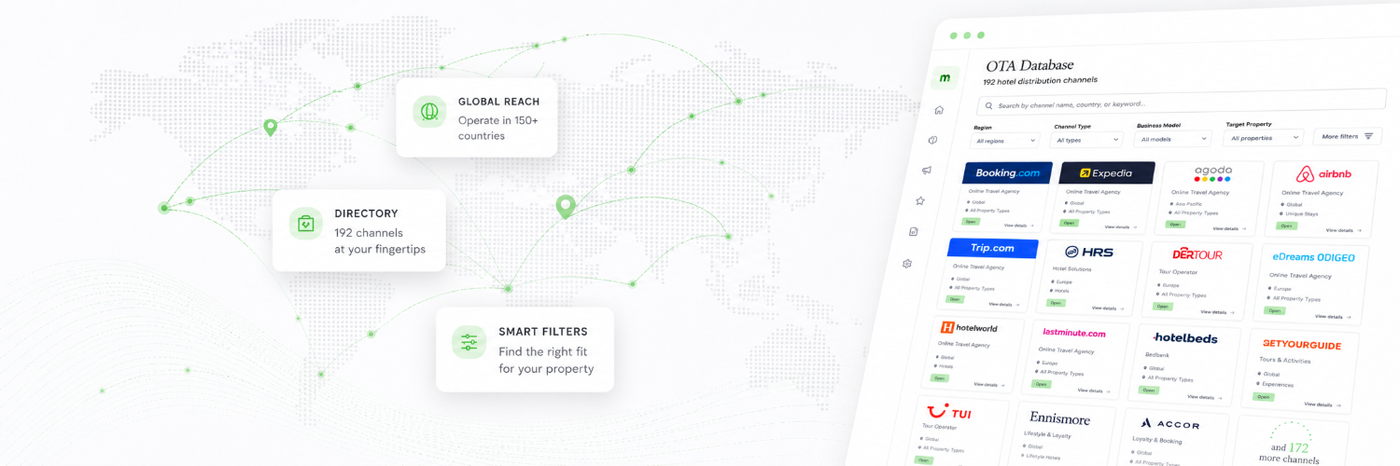
  • The OTA Market, Finally Mapped

    View Post
Join our 300,000+ Readers!
Most Read
  • The Five Subconscious Signals in Hotel Experiences
    • 3 June 2026
  • Sadio Mané’s Next Transfer Could Help Solve Overtourism
    • 3 June 2026
  • Three Hard Truths from NYU IHIF 2026
    • 2 June 2026
  • PPDS continues to lead the charge for a more sustainable AV future following ‘defining year’ of action and education – new internal report details
    • 2 June 2026
  • Meta’s New AI Agent Could Turn WhatsApp Into the Hospitality Industry’s Next Booking Channel
    • 5 June 2026
Sponsors
  • What AI is telling travelers about your hotel tonight. And you have no idea
  • SOCIETIES Vol 5: Google AI Travel, Guerlain, and the Rise of Design Hospitality
  • Luxury Hotels Shift to Mobile Technology, Eliminating Fixed Workstations for Seamless Guest Services and Staff Flexibility
Top News
  • iPullRank Experiment Reveals LLMs' Use of Private Data Sources, Challenging Universal "AI Share of Model" Metric
    • 7 June 2026
  • Maxalto Unveils New Horizontal Configuration for Artemone Collection, Enhancing Modern Dining Storage Solutions
    • 6 June 2026
  • Marriott, Hilton, and IHG Discuss AI Integration and Launch New Apps to Enhance Traveler Experience
    • 5 June 2026
  • Hotel Booking Contracts Evolve: AI, B2B Growth, and Legal Shifts Redefine Terms for Chains and OTAs
    • 5 June 2026
  • Strong Travel Demand and Limited New Hotel Supply Boost 2026 U.S. Hospitality Forecast Despite Economic Concerns
    • 4 June 2026
Sponsored Posts
  • What AI is telling travelers about your hotel tonight. And you have no idea

    View Post
  • SOCIETIES Vol 5: Google AI Travel, Guerlain, and the Rise of Design Hospitality

    View Post
  • Luxury Hotels Shift to Mobile Technology, Eliminating Fixed Workstations for Seamless Guest Services and Staff Flexibility

    View Post
Contact informations

[email protected]

Advertise with us
Contact Tony to learn more: [email protected]
Press release
[email protected]
10 Minutes News for Hoteliers 10 Minutes News for Hoteliers
  • Top News
  • The Columns
  • Posts
  • 👉 Sign-up
  • 🌎 Languages
  • 📰 More
  • About us
Discover the best of international hotel news. Categorized, and sign-up to the newsletter

Input your search keywords and press Enter.