Everything happening at Cloudbeds, in one place. This hub aggregates the latest news, product releases and partnerships around Cloudbeds’ hospitality management platform — PMS, channel manager, booking engine and its growing AI tooling — as covered by trusted sources worldwide. A fast way for independent hoteliers and groups to keep up with one of the fastest-moving names in hotel tech.
-

Google Ads Campaign Types for Hotels and Restaurants: Cogwheel Marketing Cites 2–4% CTR Benchmark for PMax
·
Source:
20 November 2026🏨 Cogwheel Marketing’s Kylie Chen recommends matching hotel and restaurant Google Ads campaigns to booking-funnel goals. Performance Max suits independent hotels without shared domains and restaurants, targeting 2–4% click-through rates and costs below $1 per click. Search benchmarks exceed 6% CTR, with $1–$2 clicks and returns above 6:1. Demand Gen suits shared-domain hotels, targeting 1–2% CTR. Video benchmarks include costs below $0.05 per view and 20–30% completion rates.
-

AI agents booked four Uber rides during Halloween week, against roughly 320 million trips and orders
·
Source:
18 November 2026🏨 AI agents booked just 4 Uber rides out of roughly 320 million trips and orders during Halloween week. Booking.com attributed significantly under 1% of room nights to AI referrals. While 85% of consumers accept AI product searches, only 10% trust it to purchase. US travelers’ extensive AI use rose from 13% to 30% in one year. IDC forecasts agents will handle 30% of travel bookings by 2030, making direct AI booking connections increasingly important for hotels.
-

U.S. Hotel Rate Growth Forecast to Slow to 1.6% in 2027, Below Expected Inflation of 2.4%
·
Source:
16 November 2026🏨 U.S. hotel rates are forecast to rise 1.6% in 2027, below 2.4% inflation, with occupancy reaching 63.4%. In India, 2025/26 average rates increased 6.4% to ₹8,962, while RevPAR rose 6.2% to ₹6,099. Its 161,000-room pipeline equals roughly 77% of existing inventory. Independent hotels are eight times more likely than chains to be unknown to AI. Alessio Re warns that running hotels entirely through AI agents introduces significant risks.
-

Barcelona Study Finds Independent Hotels Eight Times More Likely Than Chains to Be Unknown to AI
·
Source:
16 November 2026🏨 Stiplo’s autumn study of 659 Barcelona accommodations across 27,360 AI answers found independent hotels were eight times likelier than chains to be unknown to AI. Roughly 20% received no recommendations, while 20% captured over 80% of mentions. An Austin study published October 16 found most independents lost 40–73% of visibility in booking-focused searches. Reviews, editorial coverage and accurate booking feeds emerged as priorities for improving discoverability.
-

AI will book the room, but independent hotels must make guests feel known in 2027
·
Source:
16 November 2026🏨 Are Morch urges independent hotels to prepare for AI booking agents in 2027 while preserving personal service. A study of 27,360 AI travel answers in Barcelona found hotel websites supplied just 7% of property information; independents were eight times likelier than chains to go unmentioned. Booking Holdings reports AI generates well under 1% of room nights. An AHLA–Actabl report found 84% reported AI improving their own work, versus 15% for frontline work.
-
Meta plans transaction fees for Muse bookings as WhatsApp-driven other revenue rises 59% to $1.1 billion
·
Source:
16 November 2026🧳 As of November 16, 2026, Meta is prioritizing Muse adoption over travel revenue. CEO Mark Zuckerberg announced transaction fees on October 21; pricing and timing remain undisclosed. Hotel booking partners include Expedia in the US and Agoda in Singapore and Japan, with Cloudbeds connections planned for Q1 2027. Meta’s quarterly “other revenue” rose 59% to $1.1 billion, primarily driven by WhatsApp paid messaging and subscriptions. Partners haven’t published hotels’ Muse booking costs.
-

Only 20% of Hospitality Professionals Say Their Technology Infrastructure Is Fit for Purpose, Survey Finds
·
Source:
13 November 2026🏨 GuestCentric CTO Sergio Serra urges hotels to remove unnecessary technology and align AI investments with commercial strategy. In 2025, independent hotels received 63.4% of bookings through OTAs, according to Cloudbeds. Conversion rates remain around 2% since 2012. Twilio reports 70% of consumers distrust countdowns and “last chance” warnings; 65% avoid brands using them. Only 20% of industry professionals consider their technology infrastructure fit for purpose, according to the Hospitality Women’s Innovation Council.
-

Zenzap Outlines Six AI Agent Workflows to Keep Hotel Teams Informed During Overnight Emergencies
·
Source:
10 November 2026🏨 Zenzap’s Rebecca Lazar outlines six AI workflows for 24/7 hotel operations: temperature monitoring, shift coverage, procedure guidance, maintenance routing, guest requests and shift handoffs. Agents connect hotel systems to team chats, alerting staff and sharing updates. One example flags a freezer at 18°F at 11 p.m., above its 0°F target; another schedules overnight summaries for 6 a.m. Managers control permissions, while staff retain responsibility for important decisions.
-
ChatGPT seated 190,000 OpenTable diners in September as AI referrals remained below 1% of Booking.com room nights
·
Source:
9 November 2026🤖 Uber recorded just four AI-agent rides among 320 million trips and orders during Halloween week, while ChatGPT booked 190,000 OpenTable diners in September through in-chat reservations. AI referrals generated under 1% of Booking.com room nights; hotel bookings usually finish outside AI platforms. Mastercard found 85% of consumers open to AI shopping assistance, but only 10% would allow autonomous purchases. Cloudbeds’ direct hotel connection to Meta’s Muse is due in Q1 2027.
-

ChatGPT Booked 190,000 OpenTable Diners in September; AI Referrals Accounted for Under 1% of Booking.com Room Nights
·
Source:
9 November 2026🤖 Uber recorded four AI-agent rides and roughly 500 food orders among 320 million trips and orders during Halloween week 2026. ChatGPT booked 190,000 OpenTable diners in September through in-chat reservations. AI referrals accounted for under 1% of Booking.com room nights; hotel bookings typically finish outside AI. Only 10% of consumers would let agents purchase independently. Cloudbeds’ direct Muse connection is due in Q1 2027; Airbnb plans its own agent rollout in early 2027.
-
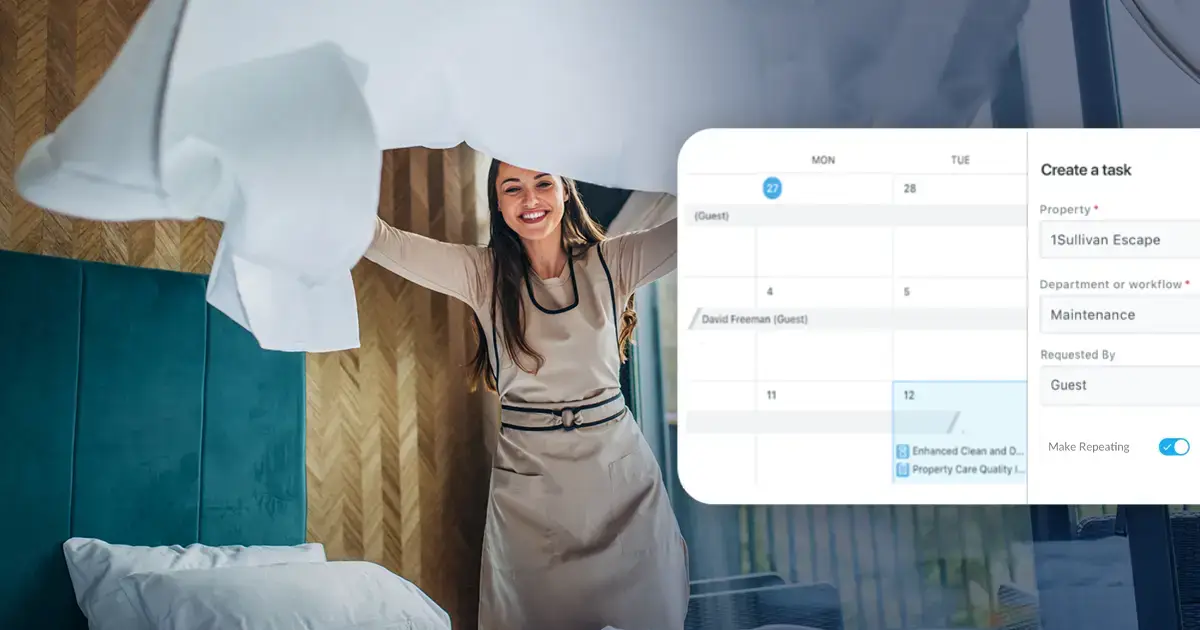
Breezeway outlines 7 ways task management technology can improve housekeeping, maintenance and guest communication for hospitality operators
·
Source:
6 November 2026🏨 An AHLA survey of 200 U.S. hotels found 87% understaffed, with 36% reporting severe shortages. Breezeway’s 2023 Property Operations Report identified quality assurance as the top operational challenge for 52% of operators. Integrated task-management tools automate housekeeping, guest messaging, maintenance and inspections, helping teams manage turnovers between 10 a.m. checkout and 3 p.m. check-in. Breezeway reports powering over 30 million property-care tasks for thousands of rental managers and hospitality operators.
-
North Beach Village Resorts Selects Cloudbeds for Nine Fort Lauderdale Hotels Totaling 390 Rooms
·
Source:
5 November 2026🏨 North Beach Village Resorts selected Cloudbeds on November 5, 2026, to unify management of nine hotels totaling 390 rooms in Fort Lauderdale Beach, Florida. The platform combines operations, distribution, guest services and payments, replacing separate systems to streamline reservations, communication and financial oversight. The rollout includes implementation support and role-specific training. Guests gain mobile-first registration and connected service across properties, which share amenities and access to six restaurants and cafés.
-
Customer Alliance, serving over 5,000 hotels, launches Cloudbeds integration to automate guest feedback and post-stay review collection
·
Source:
5 November 2026🏨 Customer Alliance and Cloudbeds announced a marketplace integration on November 4, 2026, in Berlin and San Diego. Available through Cloudbeds Marketplace, it synchronizes reservation and check-out data to automate guest surveys, review requests and personalized messaging, while flagging concerns for hotel teams. Customer Alliance serves 5,000+ hotels, with 3+ million surveys processed and 90+ million reviews collected. Cloudbeds serves tens of thousands of properties across 150+ countries.
-
HFTP’s Robert Firpo-Cappello Outlines 5 Questions for Hoteliers Assessing AI Investments, Data Ownership and Risks
·
Source:
5 November 2026🏨 Hospitality leaders at The Hospitality Show in Miami Beach, November 2–4, explored AI for bookings, operations and guest relationships. Agilysys offers 30-plus AI features; Wyndham uses Oracle OPERA Cloud across 2,100-plus properties. Industry data shows hotels miss up to 30% of inbound calls, roughly one-third involving booking attempts. Experts stressed consistent data, measurable returns and human oversight. HFTP’s Hospitality AI Exchange runs February 2–3, 2027, in greater Dallas.
-
Only 11% of hotel owners and operators report having a fully integrated technology stack
·
Source:
4 November 2026🏨 Only 11% of hotel owners and operators report fully integrated technology stacks. Published November 3, 2026, the article outlines 3 architectures: integrated systems, bundled suites and natively unified platforms. Spain’s HA Hoteles, operating 5 hotels and over 50 tourist apartments, estimates switching to Cloudbeds saves €200 per property monthly, while automated messaging frees at least 2 hours daily at its Madrid front desk. Annual audits and connected data support efficiency and AI.
-

GHA, Stash and Journey: Three independent hotel loyalty programs differ on booking eligibility, fees and payouts
·
Source:
4 November 2026🏨 As of November 4, 2026, independent-hotel loyalty programs differ on booking eligibility and payouts. GHA DISCOVERY reports 35 million members across about 1,000 hotels, rewarding eligible direct bookings with 4%–7% back. Mostly US-based Stash exceeded 320 hotels by November 2024, offering five points per dollar and cash reimbursement for reward nights. Journey reports 2,000-plus properties; its September 26 terms award three–five points per dollar through Journey bookings. None publishes a full rate card.
-

Cloudbeds and VDA Telkonet partner on smart room integration, with commercial availability planned for Q1 2027
·
Source:
3 November 2026🏨 VDA Telkonet and Cloudbeds announced a partnership on November 3, 2026, in Pordenone, Italy, and San Diego, California, linking hotel operations with smart-room automation. The integration will use check-in and occupancy data to automate temperature, access and welcome settings, supporting guest comfort and energy management. Commercial availability is planned for Q1 2027, pending final certification. VDA Telkonet has over 1 million smart rooms installed across 9,500 properties in 60 countries.
-

8 ways hostel marketing differs from hotel marketing, from social experiences to targeting remote workers
·
Source:
3 November 2026🏨 Hostels can differentiate themselves from hotels through 8 marketing approaches focused on social experiences, local expertise, destination partnerships, staff profiles, mobile travelers, remote workers, and upgraded facilities. Target audiences include Millennials, Gen Z, solo travelers, and digital nomads. Tactics include guest-generated content, local itineraries, location-targeted Facebook ads, and promoting coworking spaces with fast, free WiFi. Over the past 10 years, design hostels, eco-hostels, and “poshtels” have helped challenge the sector’s low-budget, low-quality image.
-

Why Hotels Shouldn’t Automatically Match Competitor Rate Cuts: 15%–30% Discounts Linked to 10.5%–12.2% Lower RevPAR
·
Source:
1 November 2026🏨 Cornell University research covering over 3,000 European hotel observations found that hotels priced above competitors generally achieved lower occupancy but higher revenue per available room (RevPAR). Midscale and economy properties charging 15%–30% less than competitors recorded RevPAR approximately 10.5%–12.2% below their competitive market. Hotels should assess booking pace, remaining inventory, forecast demand and profitability before matching discounts, using targeted offers rather than blanket rate cuts when appropriate.
-
70% of consumers feel safer using digital keys than traditional key cards, FLEXIPASS says
·
Source:
30 October 2026🔑 FLEXIPASS’s October 30, 2026 article reports that 70% of consumers feel safer using digital keys than traditional cards. Hotel guests can unlock rooms via smartphones, with encryption and optional biometrics protecting access. Paired with digital check-in, mobile keys let guests bypass reception while reducing plastic waste and card-management costs. Implementation requires compatible locks and property management systems, staff training, and strong data security. FLEXIPASS has over 30 years of experience in keyless access technology.
-

Digital registration cards speed hotel check-in by collecting guest information before arrival and reducing paperwork
·
Source:
30 October 2026🏨 Akia’s October 30, 2026 article outlines 5 benefits of digital hotel registration: faster check-ins, operational efficiency, automated data collection, improved security, and a better pre-arrival experience. Guests complete forms via email or text before arrival, submitting identification, payment authorization, and signatures. Property management system integration reduces manual entry and errors, while digital forms enable upgrades and personalized offers. Hotels can retain in-person service through a hybrid approach.
-
Hotel guest loyalty: 82% of guests would stay loyal to brands that consistently meet expectations
·
Source:
30 October 2026🏨 Independent hotels receive 63.4% of bookings through online travel agencies. Questex’s 2026 research found 82% of guests would remain loyal when expectations are consistently met, yet only 55% join loyalty programs. Among US travelers, 42% cite freebies as a reason to return, versus 28% citing loyalty programs. Cloudbeds’ October 30, 2026 guide recommends personalized service, unified guest profiles and automated follow-ups, tracking repeat stays and direct bookings to reduce commission costs.
-

How to conduct a hotel competitive analysis in 7 steps, from competitor selection to rate and performance benchmarking
·
Source:
29 October 2026🏨 A 2026 survey of 450 senior revenue decision-makers found 43% of hotels lacked a revenue management system. Half of independent properties base pricing decisions on competitor rates. The guide recommends benchmarking 5–7 direct competitors, comparing equivalent rooms and booking terms, and checking rates 30–90 days ahead. Track occupancy, average daily rate and revenue per available room using MPI, ARI and RGI. Review rates weekly, performance monthly and positioning quarterly; assign three actions with owners and deadlines.
-
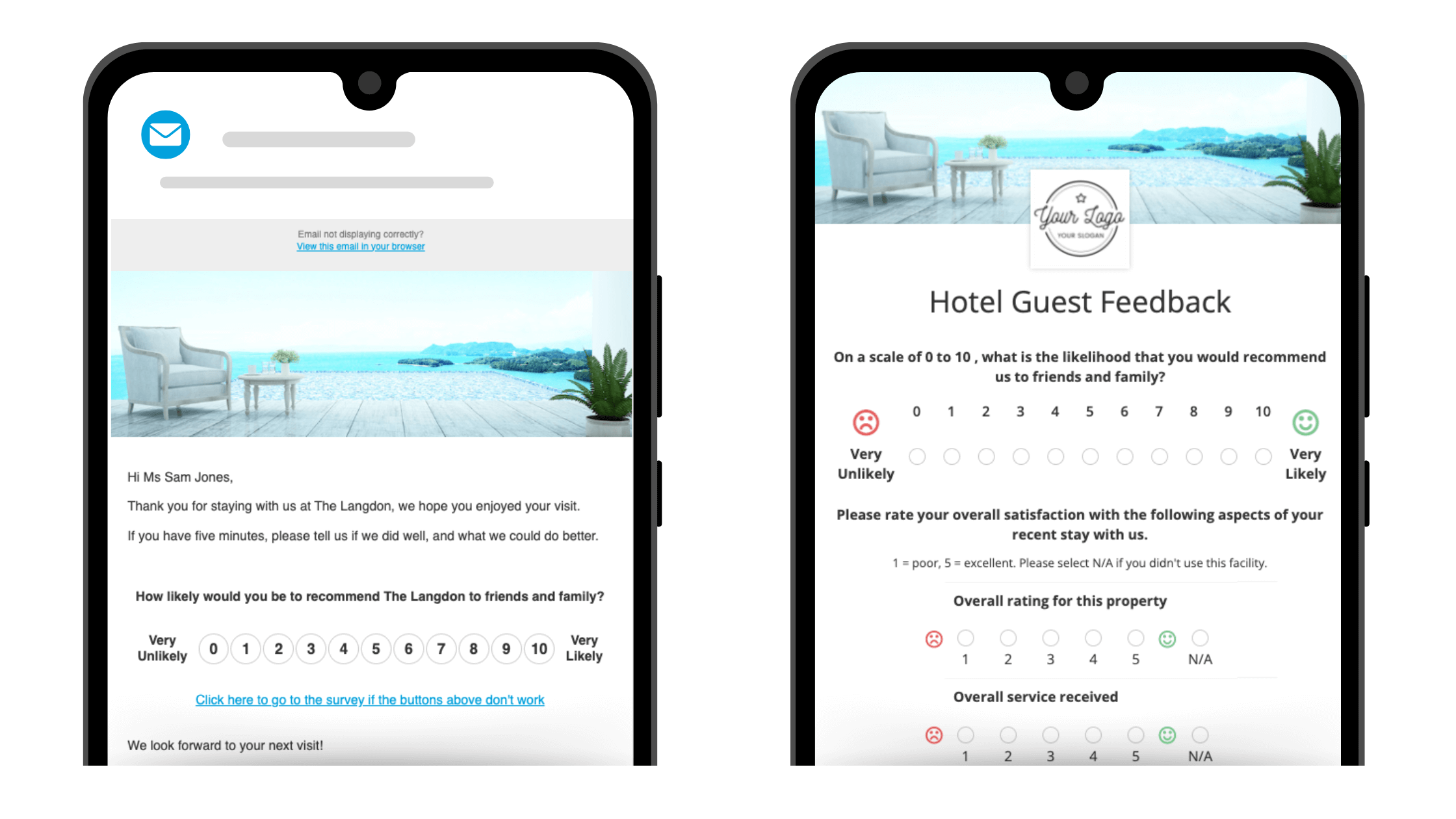
Hotel Net Promoter Score measures guests’ willingness to recommend, with a hospitality industry average of 44
·
Source:
28 October 2026🏨 Hoteliers use Net Promoter Score (NPS), developed by Fred Reichheld in 2003, to measure guests’ willingness to recommend their hotel. Scores range from −100 to +100, calculated as the percentage of promoters (9–10 ratings) minus detractors (0–6). Hospitality’s average is 44, while survey response rates hover around 20%. Sending surveys within 24 hours of checkout and acting on feedback helps improve loyalty. Bain reports over 80% of referrals come from promoters.
-
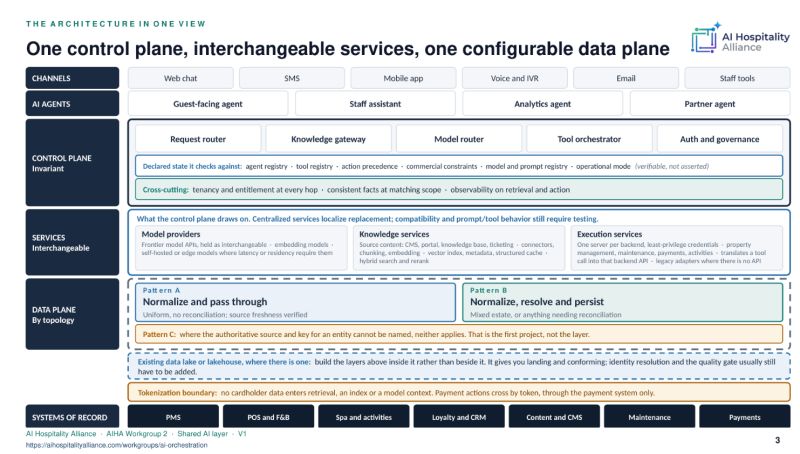
AI Hospitality Alliance publishes AI Orchestration Framework for Hospitality with contributions from AWS, Cloudbeds, Apaleo, Canary and FLYR
·
Source:
28 October 2026🏨 The AI Hospitality Alliance published its free AI Orchestration Framework for Hospitality “yesterday,” led by Ira Vouk with contributors from AWS, Cloudbeds, Apaleo, Canary and FLYR. Addressing the prospect of hotels running five AI agents from five vendors, it covers permissions, checks before AI changes hotel records, vendor questions and when orchestration isn’t needed. The author and Marianna Gelardi plan to attend WTM London “next week.”