For years, building a hotel booking platform required large teams, significant investment, complex supplier agreements, and years of engineering work. Today, a single developer with AI tools can launch something that looks remarkably close to an online travel agency in a matter of weeks.
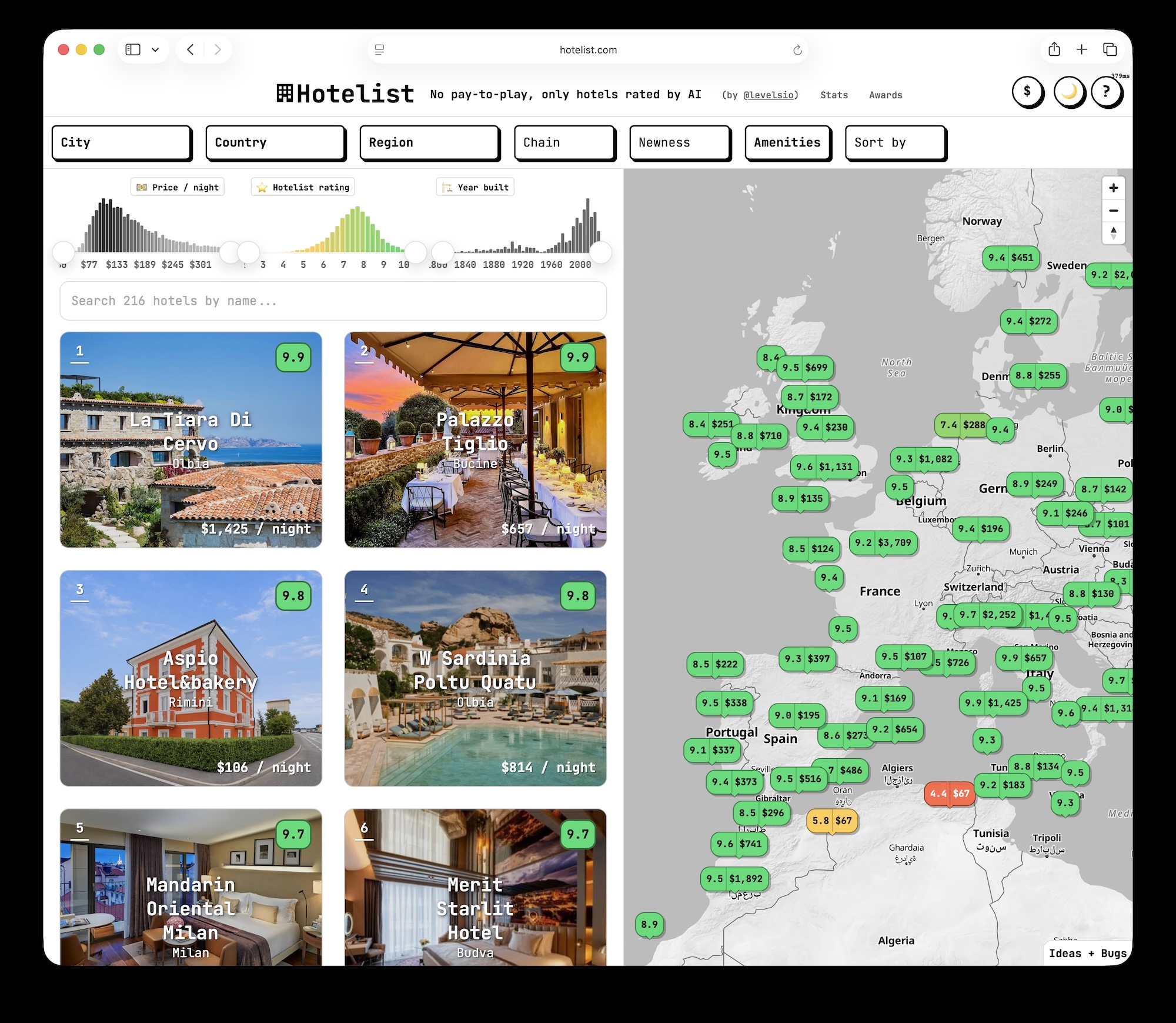
That is exactly what entrepreneur and developer Pieter Levels, better known online as @levelsio, has been experimenting with through Hotelist, an AI-powered hotel discovery platform that aims to rank hotels based on traveler sentiment rather than commercial relationships. According to the project’s own description, Hotelist was created because its founder was frustrated with traditional booking sites and wanted a way to find genuinely good hotels without the influence of commissions or paid placement.
At first glance, Hotelist feels like a glimpse into what the next generation of travel search could look like. The platform aggregates hotel ratings and uses AI to scan discussions across forums, social media, travel communities, and review sources to generate summaries of what travelers actually think about a property. Instead of relying solely on star ratings, the system attempts to identify recurring praise and complaints, presenting them as concise pros and cons.
The project goes much further than simple review summaries. Hotelist includes rankings, statistics, filters, maps, hotel chain comparisons, and a growing list of experimental features that Levels publicly ships almost daily. Recent updates include boutique hotel filters, hotel chain rankings, WiFi speed indicators, search improvements, and various hotel quality metrics. (WIP)

For the hotel industry, the most interesting aspect is not necessarily Hotelist itself. It is what its existence represents.
Only a few years ago, creating a global hotel search engine would have been considered unrealistic for a solo developer. AI coding tools have dramatically lowered the barrier to building products that previously required teams of engineers, designers, analysts, and content creators. Hotelist demonstrates how quickly an individual can now create a functioning travel discovery platform, test ideas publicly, and attract users without raising venture capital.
Yet the project also highlights why OTAs became so sophisticated in the first place.
Finding a hotel is relatively easy. Booking one is much harder.
Traditional OTAs invest heavily in inventory connectivity, payment systems, customer support, cancellations, loyalty programs, rate parity management, fraud prevention, taxation, localization, and supplier relationships. Those invisible layers solve countless problems that travelers rarely notice until they disappear.
Hotelist currently feels closer to an intelligent discovery engine than a complete booking platform. It helps users identify interesting hotels, but many of the operational complexities handled by established OTAs remain outside its scope. That distinction is important because travel search and travel booking are very different challenges.
Still, projects like this raise a fascinating question: are we witnessing the early stages of a new generation of AI-powered travel products, or are we experiencing a temporary phase similar to the early internet, when developers created directories, rankings, and information portals before robust APIs and commercial infrastructure emerged?
Research across the travel sector suggests AI is already beginning to reshape how travelers discover hotels. Recent studies indicate that AI-driven search experiences may shift visibility away from traditional OTA dominance and toward broader sources of travel information, particularly for recommendation and inspiration queries.
Whether Hotelist becomes a major travel platform is almost beside the point. The project serves as a reminder that AI is changing who can build travel technology. A motivated developer can now create products that would have required an entire startup only a few years ago.
The hotel industry should pay attention. The next disruption may not come from a billion-dollar travel company. It might come from a developer who got tired of searching for hotels and decided to build something better over a weekend. Somewhat like Booking was in it’s early days.