One of Paris’ most recognizable department stores is preparing for its biggest transformation in decades, and hospitality is at the heart of the strategy.
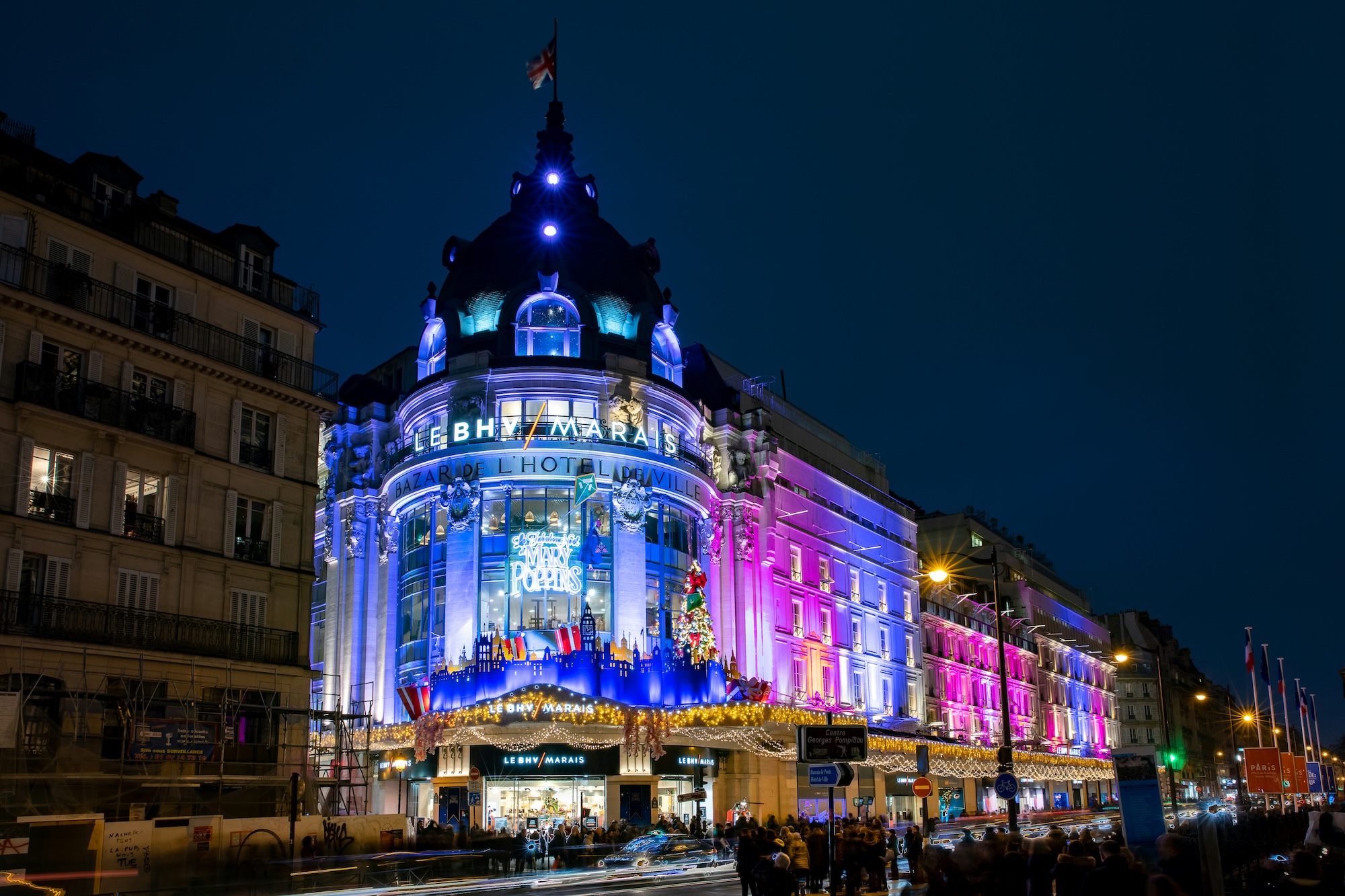
The owners of BHV Marais have unveiled plans for a €200 million redevelopment that will reshape the historic building over the next four years. The headline announcement is the creation of a hotel occupying the top two floors, turning one of the French capital’s best known retail landmarks into a mixed use destination that combines shopping, hospitality and leisure. The project remains subject to planning approval, but it reflects a much broader trend that is redefining city centre retail around the world. (FashionNetwork)
For the hospitality industry, the project is about much more than adding another hotel to Paris. It is another sign that hotels are increasingly becoming the anchor that helps unlock the value of prime urban real estate.
One of Paris’ most valuable tourism locations
The location could hardly be more attractive.
BHV sits directly opposite Hôtel de Ville, at the gateway to the Marais, one of Paris’ most visited and desirable districts. The neighborhood attracts millions of visitors every year thanks to its unique blend of medieval streets, independent boutiques, luxury fashion, art galleries, museums, cafés and some of the city’s highest concentrations of international tourists. It is also within walking distance of landmarks including the Seine, Notre-Dame Cathedral, the Centre Pompidou and Place des Vosges.
Unlike many districts that become quiet after business hours, the Marais has evolved into one of Paris’ most vibrant neighborhoods, where locals and visitors spend entire days exploring, dining and shopping. From a hotel perspective, few locations offer such a strong combination of leisure demand, international visibility and year round foot traffic.
From practical department store to identity crisis
The redevelopment also comes after several challenging years for BHV itself.
For generations, BHV built its reputation as Paris’ practical department store. It was known for home improvement, hardware, DIY, household goods and affordable products that appealed to everyone from professional tradespeople to local residents. It was never designed to compete directly with the luxury positioning of Galeries Lafayette or Printemps.
In recent years, however, the retailer attempted to reposition itself with a stronger premium and lifestyle focus while modernizing its image. At the same time, ownership changes, supplier payment disputes, brand departures and financial pressures created uncertainty around the future of the business. After being sold by Galeries Lafayette in 2023, the store continued to face operational challenges as its new owners worked to stabilize the business. Reports suggested annual losses approaching €15 million before restructuring efforts began. (Modaes). Adding to that, a recent SHEIN partnership that fell on it’s face.
The new redevelopment acknowledges an important reality. The future of landmark retail properties may no longer depend solely on selling more products.
Hotels become the value creator
According to the redevelopment plans, BHV will retain only around 40 percent of its current retail space. The remaining areas will gradually be transformed into a broader destination that combines premium retail, leisure experiences and hospitality. The hotel itself is expected to become one of the project’s central assets rather than simply an additional revenue stream. (FashionNetwork)
That reflects a significant shift in commercial real estate.
Hotels provide consistent occupancy, activate buildings throughout the day and evening, support restaurants and retail tenants, and help diversify income streams at a time when department stores continue to face pressure from ecommerce and changing consumer habits.
A project the hotel industry will watch closely
Exactly how Brookfield executes the transformation may ultimately become more interesting than the hotel itself.
Successfully integrating hospitality into an operational department store while preserving the architectural heritage of one of Paris’ most iconic commercial buildings will require careful planning. Planning permission still needs to be secured, and no hotel operator has yet been announced. (LaTribunedeL’Hotellerie)
For hotels, it reinforces an increasingly important message. Hospitality is no longer simply occupying prime real estate. In many cases, it is becoming the asset that makes large urban redevelopment projects financially viable. As retail continues to evolve, hotels are moving from being tenants inside mixed use developments to becoming the cornerstone around which those developments are designed.