Hotel staffing and workforce, all in one feed. This hub gathers the latest news and trends around recruitment, labor and the hospitality workforce, curated by 10 Minutes News. Stay informed on the people challenge facing hotels.
-
21 must-read hotel management books for 2027
23 October 2026Every great manager is also a student. Hotel management books share hard-won lessons that help hoteliers sidestep mistakes and build stronger, more profitable operations. The post 21 must-read hotel management books for 2027 appeared first on Cloudbeds.
-

Hoteliers adapt to operate hotels effectively. The challenges are what remain the same.
23 October 2026This article was written by HotelsMag. Click here to read the original article Hotel management companies are where the rubber meets the road. Owners hold deeds, and brands have their names on the front door, but it’s the outfit operating the property that makes it go—responsible for generating revenue, containing costs and driving profitability. Economic challenges—both micro and macro—have made running hotels profitably a thorny exercise. The problem isn’t that hotels aren’t making money; it’s that they’re keeping less…
-

What independent hotels should evaluate before replacing a PMS
23 October 2026This article was written by Shiji Insights. Click here to read the original article Replacing a PMS is one of the most disruptive technology decisions an independent hotel can make. Because the next system may stay in place for a decade or more, choosing one based on features alone can be a costly mistake. The question is not simply, “Does this system do what we need?” It is, “How will this system affect the way our hotel operates every day?” …
-

Global Soccer Tournament in North America Challenges Hotels with Over 5 Million Fans, Testing Supply Chains and Operations
23 October 2026🏆 Summer 2026, U.S., Mexico, Canada: A major global soccer tournament attracted over 5 million fans, testing hotel supply chains. Los Angeles will host the Super Bowl (February 2027) and 2028 Olympics, potentially generating $18 billion in economic impact and supporting 90,000 jobs. Hotels should act early, cross-train staff, and increase PAR levels to accommodate 15 million visitors. Strategic procurement and planning can ensure efficient operations and guest satisfaction during such mega-events.
-

Hotels with Wellness Facilities Report 108% Higher Revenue per Available Room, Highlighting Growing Trend in Wellness Tourism
22 October 2026🏨 2024: The global wellness economy will be valued at $6.8 trillion, growing 7.5% annually. Wellness tourism and spas are expanding faster at 14.5% yearly. Hotels with significant wellness facilities earn 108% higher TRevPAR. Steve Porter of Trybe explains the trend of guests booking hotels for wellness offerings. Mews and Trybe collaborate to streamline booking systems, enhancing guest experiences. Technology aids in managing operations and maximizing wellness value, encouraging a holistic hotel approach.
-
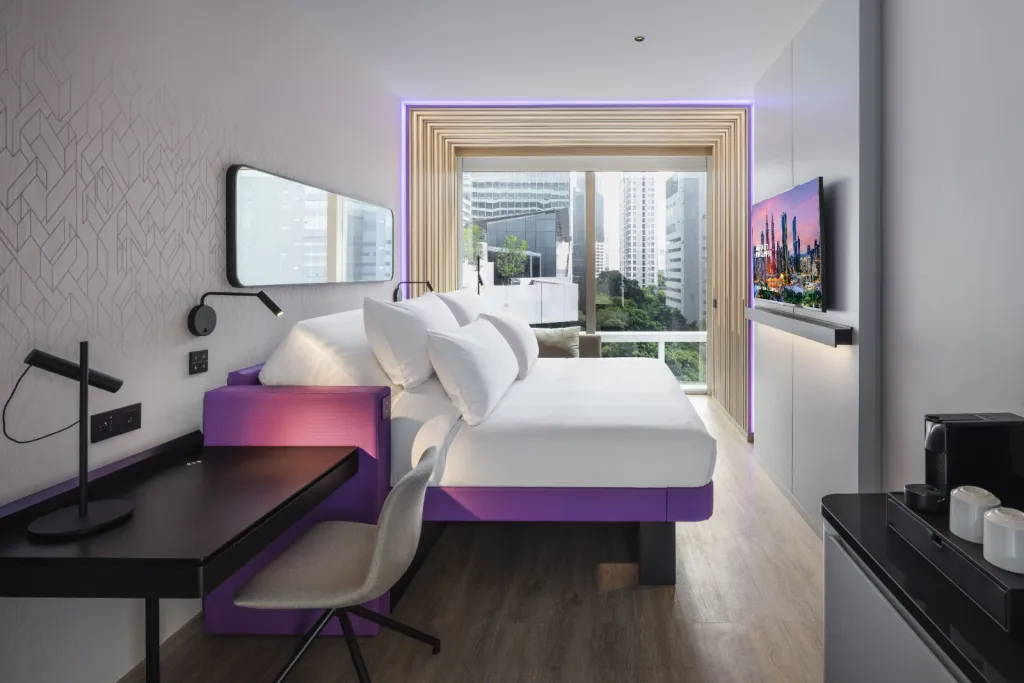
Yotel Aims to Expand to 100 Hotels by 2031, Leveraging Hilton Partnership and Focusing on Asian Markets
22 October 2026🏨 Yotel plans to expand from 24 to 100 hotels by 2031, focusing on Asia, with Kuala Lumpur opening next year. They’re discussing upscale formats with larger rooms and city-center pods. Talks with major Asian airports for YotelAir sites are ongoing. The Hilton partnership grants access to 250 million Hilton Honors members. Yotel expects two-thirds of business through direct channels. Unlike citizenM, which sold to Marriott, Yotel retains brand ownership.
-

Creating a Hotel Business Plan in 2027: Essential Steps for Success and Financial Viability
22 October 2026🏨 A hotel business plan serves as a roadmap and a funding document, crucial for proving concepts before capital investment. By 2027, key sections include executive summaries, financial projections focused on occupancy, ADR, RevPAR, and GOPPAR, and strategic plans for marketing and operations. Emphasizing competitive analysis, realistic financial modeling, and technology integration is vital. Aim for financing readiness with contractor quotes and lender shortlists before contracts. Regularly update the plan to align with market realities and goals.
-

Booking Holdings Collects Guest Payments on 73% of Sales in 2025, Up from 25% in 2019
21 October 2026📈 Booking Holdings collects payments on 73% of its sales, up from 25% in 2019, impacting price control. In 2025, OTA share of hotel bookings held steady at 30%. Charlotte Weatherall, GM of Corinthia London since July 2025, uses a £200 TMT programme for guest experiences. Paathz, an AI hospitality hiring platform, attracted 50,000 professionals. HVS forecasts strong U.S. hotel performance in fall 2026. GHA added 26 properties across Asia. RoomPriceGenie reports 53% AI adoption in pricing among hoteliers.
-

Sous Vide Cooking Offers Solutions for Labor Shortages, Cost Management, and Consistency in High-Volume Kitchens
21 October 2026🍴 Labor shortages, rising costs, and staffing issues challenge kitchens. Sous vide offers solutions by improving consistency, labor efficiency, and yield. It’s beneficial for high-volume operations, reducing send-backs and improving plate yields by 8-10% in banquet settings. Sous vide requires fewer skilled hours, enhances menu flexibility, and centralizes production. Investment in sous vide yields ROI by improving food costs (5-15% yield), labor savings, and revenue protection. Emphasizing workflow changes over mere equipment purchase is key.
-

U.S. Hotel Industry Forecasts Strong Fall Performance with ADR Growth Surpassing Pre-Pandemic Levels
21 October 2026📈 September 2026, USA: HVS forecasts strong fall meeting and convention season, with ADR significantly exceeding expectations. September and October occupancy rates are near pre-pandemic levels (67%-69%), despite a supply increase since 2019. Occupancy still lags by about two points. ADR remains above pre-pandemic levels, with growth surpassing earlier gains, but expected to decline in November and December. Contracting out hotel departments is rising due to staffing challenges. A webinar on January 21, 2027, will discuss market trends.
-

Rising Capital Costs and Operational Complexity Reshape Hotel Investment Lifecycle, Cushman & Wakefield Reports
20 October 2026🏨 Hotel investment complexity is increasing due to rising capital costs and prolonged holding periods. Operational performance is now key to value creation. Strategic decisions begin early, with brand selection and management agreements impacting future asset value. The interconnected lifecycle challenges previous linear models, as owners must strategically manage phases like development and operations. Cushman & Wakefield, with 53,000 employees across 60 countries, emphasizes understanding lifecycle connections for optimal outcomes in hotel investment.
-

Social Entrepreneurship in Hospitality: Innovative Business Models Integrate Social Inclusion with Economic Objectives for Mutual Benefits
20 October 2026🏨 In 2024, social entrepreneurship in hospitality is challenging traditional models by integrating economic and social value, illustrated by Albergo Etico and Label Gamelle. Albergo Etico operates 10 hotels across Italy, Australia, Albania, and Argentina, and focuses on inclusion for people with impairments. Label Gamelle, in Paris, combines high-quality catering with employment for marginalized groups. These ventures prioritize stakeholder relationships and innovative business models, highlighting that social and economic objectives can be mutually reinforcing.
-

Stayfull Wins Both Judges’ and People’s Choice Awards at Inaugural Hospitality AI Start-Up Competition
20 October 2026💻 Destination AI Conference hosted its first Hospitality AI Start-Up Competition, selecting six finalists from 20 entrants. Key participants included Ella, FlowStay AI, AI Hospitality Group, Goldi, Caleta, and Stayfull. Stayfull, aiming to revamp hotel technology stacks, won both the Judges’ Award and People’s Choice Award. FlowStay AI boasts over 60 hotels in its pipeline, while Goldi reported 5,000 users in six months. AI Hospitality Group targets a 500 basis point GOP margin improvement. Stayfull is priced at $200 per…
-

Independent Hoteliers Urged to Engage in 2026 Elections to Influence Policies Impacting Business Operations and Profitability
19 October 2026🏨 Independent hoteliers face crucial business decisions influenced by the 2026 elections. Key issues: taxes, labor regulations, insurance, and tourism funding. Hoteliers must address local, state, and federal policies that affect operations, profitability, and viability. Active participation in voting and advocacy is essential. Engage with representatives and associations like AAHOA to voice challenges. Effective advocacy extends beyond Election Day, combining firsthand experiences to influence industry policies. Evaluate candidates on business-related issues to make informed voting decisions.
-

AI-Enabled Forecasting Enhances Hotel Workforce Management Amid 2026 Wage Hikes and Regulatory Changes
19 October 2026📈 In 2026, global hospitality labor laws saw rapid changes, including increased minimum wages and tighter labor protections. This environment demands smarter workforce management, using AI for demand forecasting and staff allocation. With labor as a significant operating cost, hotels face challenges like unpredictable demand and staffing issues. Leveraging AI can aid in real-time decision-making and improve guest experiences, while technology should enhance, not replace, human judgment in hospitality operations.
-

OTH Hotels Resorts Adds Capital Plaza Hotel and Four Points by Sheraton to Portfolio, Expanding U.S. Presence
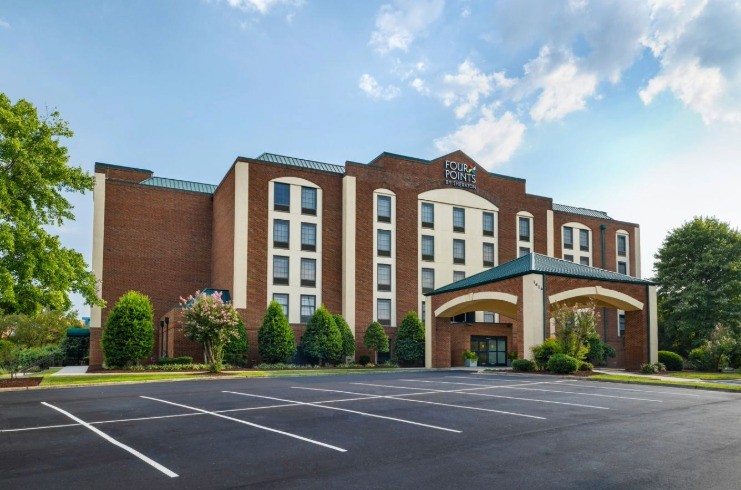
19 October 2026🏨 OTH Hotels Resorts adds Capital Plaza Hotel in Frankfort, KY, and Four Points by Sheraton Greensboro Airport, NC, to its portfolio. The Capital Plaza Hotel, developed in 1983 and listed on the National Register in 2024, will be rebranded as The Franklin Hotel in 2027, featuring 163 redesigned rooms. Four Points, a 112-room hotel, offers modern amenities. These additions follow OTH’s recent expansions in NY, PA, OH, MD, NJ, and Los Angeles.
-

TFE Hotels’ Leadership Programs Gain University Accreditation, Offering Pathways to Higher Education for Hospitality Staff
19 October 2026📖 TFE Hotels has become the first hotel group in Australia and New Zealand to get accreditation for its leadership programs from eight Australian universities and higher education providers. Since 2012, over 330 team members have graduated from ACADEME, with 86% promoted. The People Leaders Program received the Excellence Award for Best Leadership Development Program at the 2025 Australian Institute of Training and Development Awards. Participants can gain university credits and potentially pursue the Graduate Certificate of Applied Management.
-
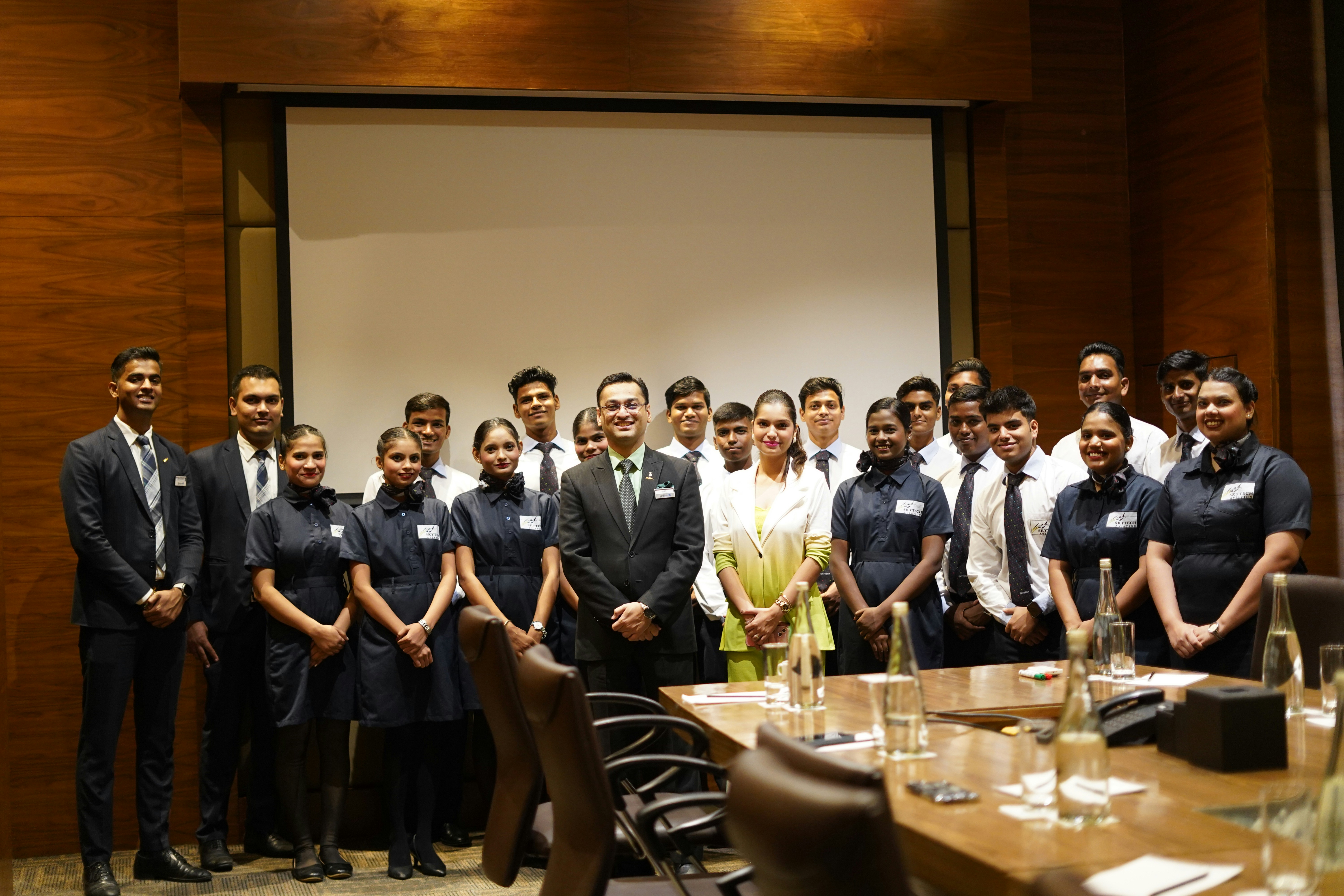
Luxury Hospitality Defined by Behind-the-Scenes Preparation and Personalization, Says Hyatt Event Planning Manager
19 October 2026🏨 Professional basketball player at the NBA All-Star Game in New Orleans experienced severe airborne allergy issues due to last-minute information. A meeting planner at a corporate event required discreet transportation to a recovery support meeting. Luxury hospitality demands extensive preparation and personalization, with planning for events like Mardi Gras and NBA All-Star Weekend starting years in advance. Hyatt manages over 1,350 hotels in 78 countries as of June 30, 2024.
-

Next-Gen Booking Engines Evolve into Commerce Platforms, Integrating Rooms with Dining, Wellness, and Events for Hotels
18 October 2026📅 The next generation of hotel booking technology is evolving into full commerce platforms, integrating room reservations with dining, wellness, and recreational experiences. This shift aims to reduce operational pressure and increase revenue per guest. The potential for a 2% channel shift in annual revenue through behavioral data analysis is significant. AI-assisted commerce will personalize recommendations, enhancing guest satisfaction and conversion rates. Migration challenges persist, but advancements are expected within the next year.
-
OTH Hotels Resorts Expands Portfolio with Addition of Two Hotels in Kentucky and North Carolina, Totaling 275 Rooms
16 October 2026🏨 In 2024, OTH Hotels Resorts added two hotels in Kentucky and North Carolina, boosting their portfolio by 275 rooms. The Capital Plaza Hotel, a historic site in Frankfort from 1983, will become The Franklin Hotel in 2027 after a renovation introducing 163 redesigned rooms. Nearby Kentucky landmarks include the State Capitol and Buffalo Trace Distillery. The Four Points by Sheraton Greensboro Airport, with 112 rooms, offers amenities like a heated outdoor pool and 1,184 sq. ft. of event space.
-

Hotels Should Establish Robust Kitchen Systems Before Hiring New Executive Chefs to Avoid Repeated Turnover Costs
16 October 2026🍴 1 hour ago, Paul Forciniti highlighted hotel kitchen challenges. Chef turnover’s hidden costs include recruitment fees and inconsistency. Key solutions: standardizing recipes, forecasting production, and establishing clear decision maps. Structural issues, like undocumented kitchens, hinder new chefs. Evaluation within the first 60 days should focus on system improvement, not just personality. A sound structure enables better staff retention and consistent guest experiences. Strategic hiring considers the existing system’s impact on chef performance and hotel operations.
-

OTH Hotels Resorts Expands Portfolio with Two New Hotels in Kentucky and North Carolina, Adding 275 Rooms
16 October 2026🏨 OTH Hotels Resorts, founded in 2019 in Williamsburg, VA, expands with two new hotels: Capital Plaza Hotel in Kentucky and Four Points by Sheraton Greensboro Airport in North Carolina, adding 275 rooms to its portfolio. Capital Plaza, a historic 1983 property, will be rebranded as The Franklin Hotel after renovations in early 2027, retaining its New Formalist architecture. OTH now manages 20 hotels and 38 restaurants across the U.S., focusing on strategic growth and enhanced guest experiences.
-

Opinion: Professionals Face Competency Trap, Repeated Expertise Stymies Growth and Innovation in the Workplace
16 October 2026🍴 In a recent piece by Mike Hohnen, the “competency trap” is explored, where individuals excel at certain tasks and become relied upon for them, leading to stagnation. Herminia Ibarra’s book “Act Like a Leader, Think Like a Leader” addresses this issue, suggesting action as a path to new roles. This dynamic often results in people remaining in their comfort zones and not exploring new opportunities for growth. Breaking away requires effort and stepping outside established expertise.
-

Hotel Development on French Riviera Lacks Hospitality Expertise, Impacting Operational Success and Strategic Decisions
14 October 2026🏨 On the French Riviera, hotel projects are booming, yet often lack essential operational expertise. Decision-making without hospitality insights can lead to long-term operational challenges. For instance, reduced housekeeping storage to accommodate more guest rooms can hinder service delivery. A Swiss five-star hotel relocated its sales offices 20 minutes away due to space constraints, complicating client interactions. Effective hotel development requires integrating hospitality professionals early, ensuring that design, budgets, and operations align for a successful venture.
-
Digital Ordering in Hotels Enhances Service Efficiency by Reducing Repetitive Tasks Without Necessarily Cutting Staff
14 October 2026📑 47 minutes ago, Shiji highlighted the impact of digital ordering in hotels on service efficiency and guest experience. Digital systems reduce repetitive tasks, allowing staff to focus on personal service without cutting jobs. Efficiency includes removing unnecessary steps, while maintaining service quality depends on smooth order processing and connectivity across hotel outlets. Digital ordering enhances guest privacy and flexibility, yet operational adjustments are crucial to avoid order fulfillment bottlenecks. Shiji supports over 91,000 hotels with their cloud-based solutions.