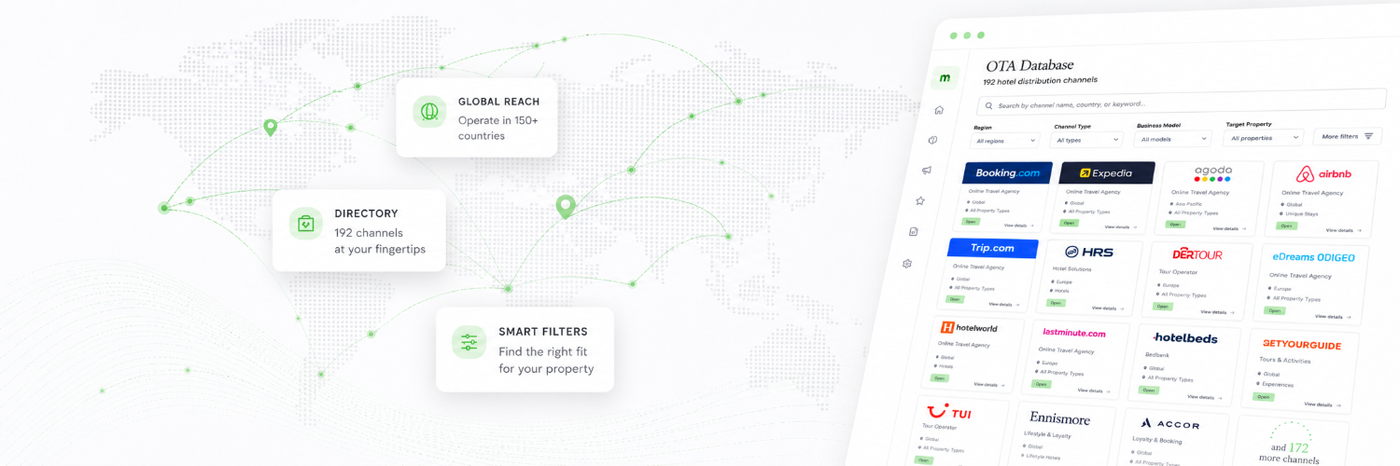
I’ve spent thousands of hours over the years researching and building market maps and industry infographics.
Done well, they’re incredibly valuable.
They simplify complex markets. They help buyers understand categories. They spark healthy debate. They are never perfect, and they always generate comments like “you missed us” or “that company belongs somewhere else.” That’s part of the process. Judgment is involved.
Lately, though, LinkedIn has been flooded with AI-generated market maps and infographics. They look fantastic. They collect thousands of likes. They spread incredibly fast. But almost every single one of them is wrong.
This is an infographic I asked AI to generate. A ranking of the largest hotel technology companies by category. At first glance, it looks surprisingly convincing. The design seems right. The categories made sense.
But it is ridiculously wrong.
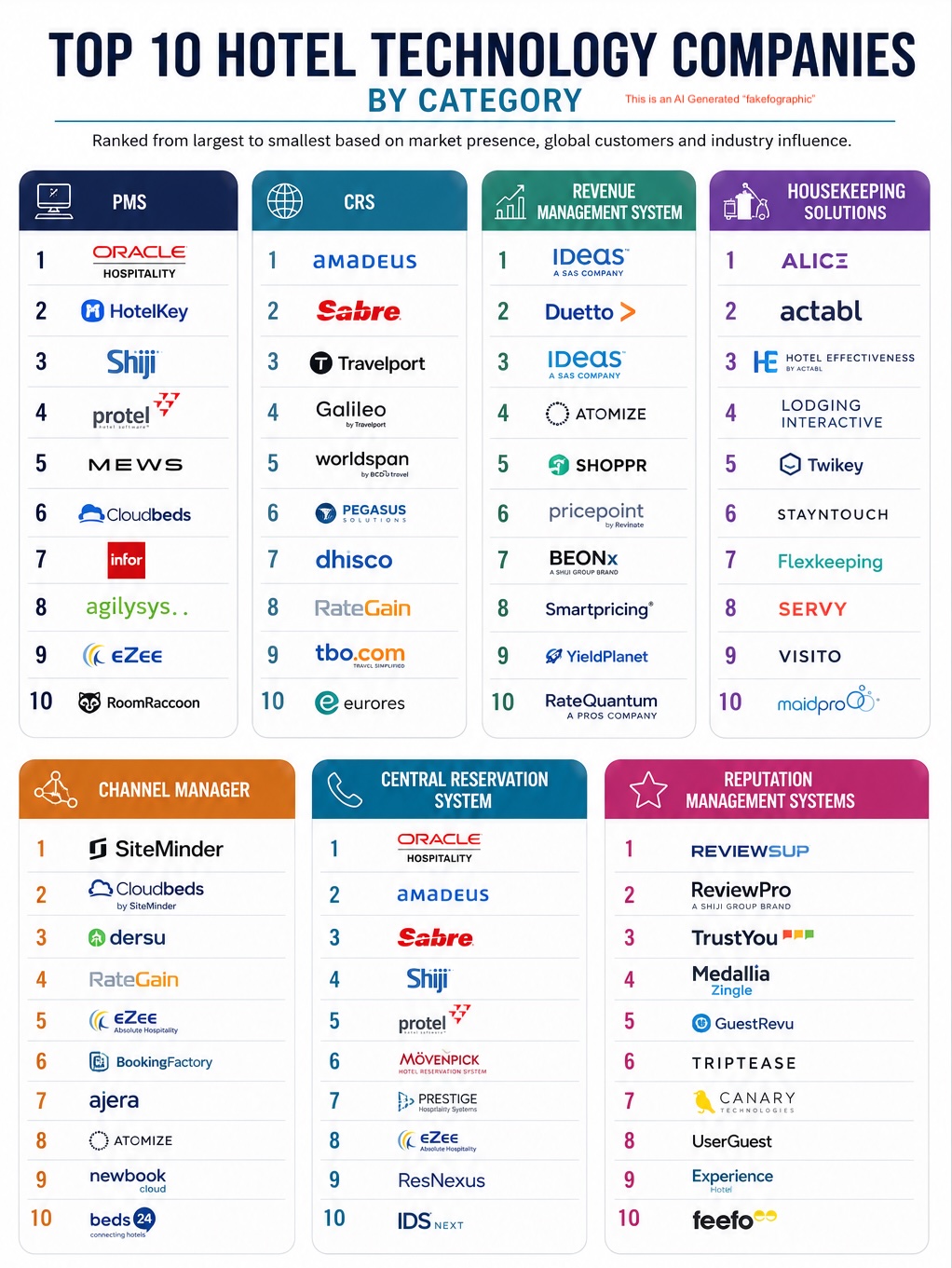
Companies that no longer exist. Brands listed multiple times. Incorrect logos. Companies that have been renamed years ago. Vendors placed in categories where they don’t belong. Market leaders missing entirely. Others promoted to the top that aren’t even in the market.
Visually impressive. Factually unreliable.
The issue isn’t that AI makes mistakes. We all know it does. The issue is that people present them as research.
Writing “I researched the top companies…” is very different from saying “I asked AI to generate an industry overview.” One implies expert analysis. The other is an AI draft that still needs verification.
Those are not the same thing.
Good market maps have never been about collecting every company that exists. They are about applying judgment. Someone has to decide what belongs, what doesn’t, what best represents the market, and what will genuinely help the reader understand an industry. That judgment is still a human responsibility.
AI is an extraordinary research assistant. I use it every day. It helps me work faster, explore ideas, and organize information. What it doesn’t do is replace critical review.
If we’re going to publish AI-generated content, let’s be transparent about it. Say it was AI-researched. Invite corrections. Treat it as a starting point rather than presenting it as authoritative research.
Because every inaccurate infographic that goes viral makes it harder for people to trust the next one, including the ones built on weeks or months of genuine research.
Thought leadership isn’t about generating the most content and getting the most likes.
It’s about generating content people can trust.
Imagine a leader that lies all the time. How much of a leader would they be to you?