KeyData’s US Summer Index shows rate growth carrying revenue gains across nearly every region as demand growth levels off
Santa Rosa Beach, Fla., 28 July 2026 — US short-term rental revenue is pacing well ahead of last year for the rest of the summer, with September currently showing the strongest forward revenue pace. KeyData‘s US Summer Index shows revenue growth continuing to be driven by pricing strength, even as booking demand levels off.
September pacing well ahead as travel extends later into the season
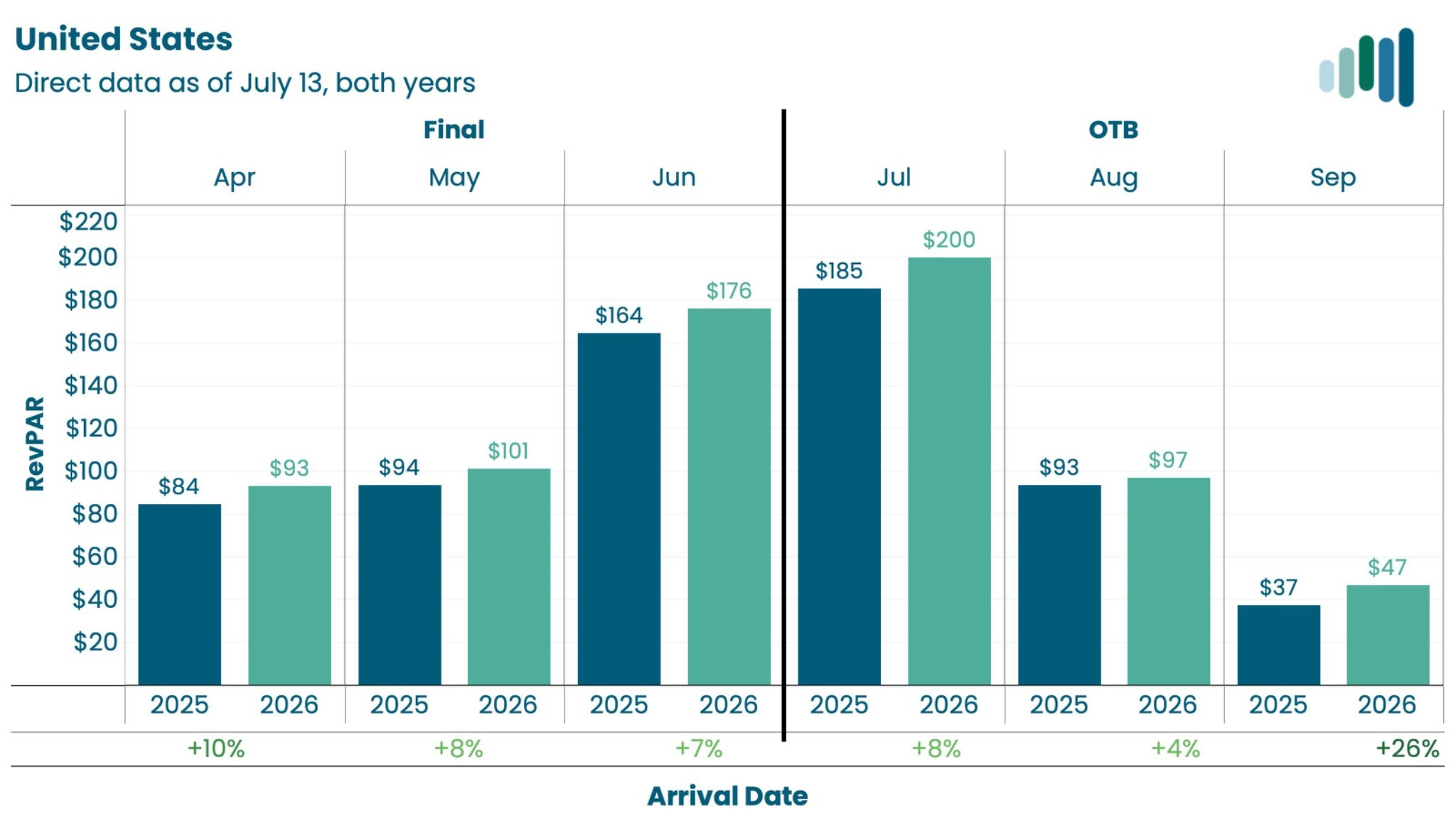
September is running clearly ahead of last year, with on-the-books RevPAR (revenue per available rental) up 26%, occupancy up 13%, and ADR (average daily rates) up 11%¹. While it remains earlier in the booking cycle and follows a lower comparison base than peak summer months, current pricing and occupancy trends point to a strong revenue outlook, with further bookings still to come. July and August are also pacing ahead of last year, with on-the-books RevPAR up 8% and 4% respectively, while ADR remains firm across both months.
Rate growth carries revenue as demand normalizes
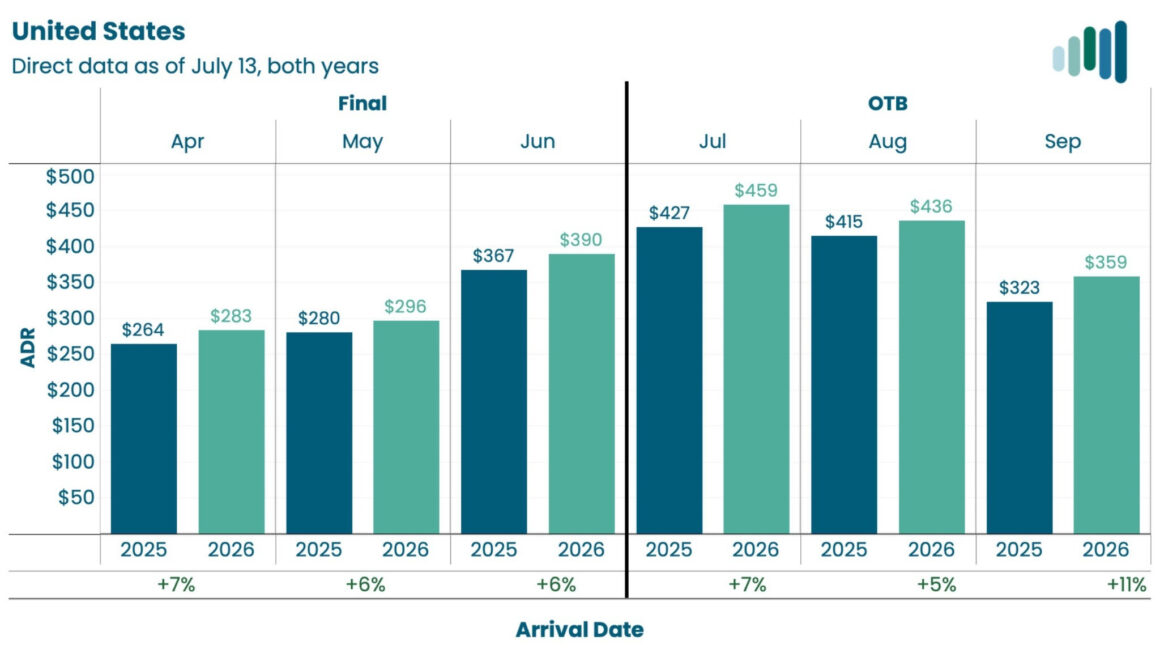
The same pattern is shaping the rest of the summer, with revenue growth continuing to be driven primarily by higher nightly rates rather than stronger occupancy. ADR rose every month of Q2, up 7% in April and 6% in May and June, lifting RevPAR 10%, 8%, and 7% while paid occupancy gains moderated to low single digits. That pricing strength is also carrying into the summer months ahead, with on-the-books ADR pacing up 7% in July, 5% in August, and 11% in September as operators continue to maintain pricing discipline despite a more normalized booking environment.

Regional growth is rate-led
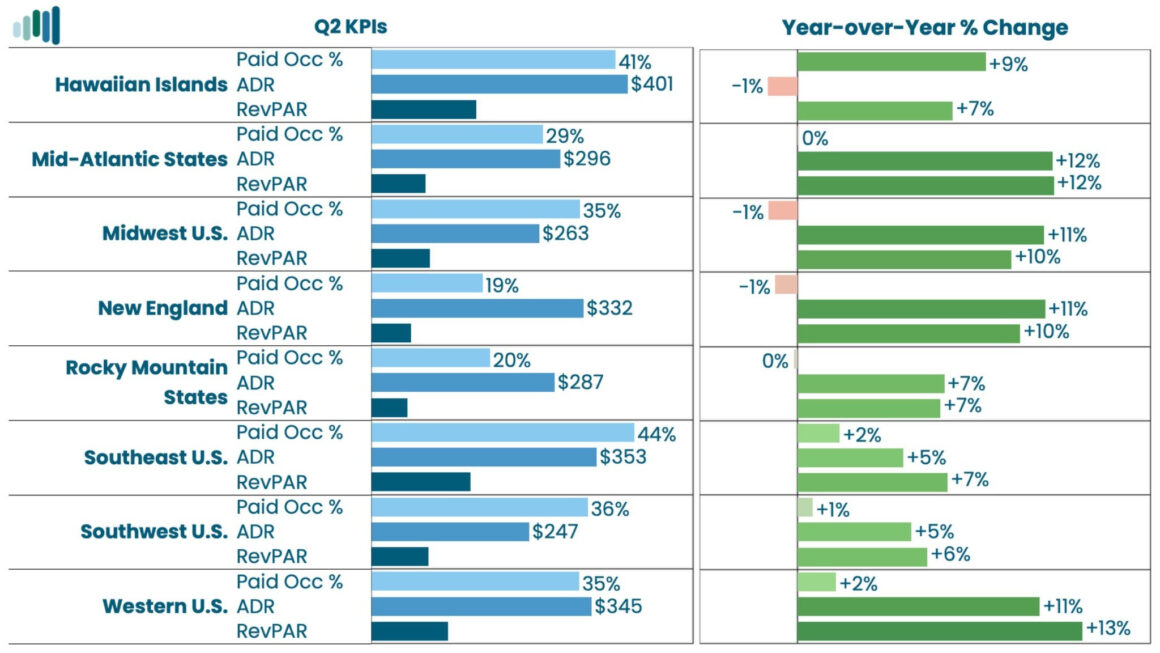
The same trend is reflected across most US regions. Most regions offset flat or softer occupancy growth with higher ADR. The Western US led on RevPAR at 13%, followed by the Mid-Atlantic at 12%, both driven largely by double-digit ADR growth. The Hawaiian Islands stood out for demand-led performance, with occupancy up 9%.
Airbnb passes half of all bookings as direct share slips
Airbnb accounted for 51% of reservations and 43% of revenue in Q2, up from 47% and 36% a year earlier. Direct bookings fell to 21% of reservations and 29% of revenue, down from 25% and 36%, while Vrbo held steady at 20% and 23%. The shift points to the growing importance of marketplace visibility, even as direct channels remain a source of higher-value bookings.
Sally Henry, VP of Market Intelligence and Insights at KeyData, said: “The story this summer is pricing. Operators have held rates firmly through the second quarter and into the forward months, and that discipline is carrying revenue growth even as booking momentum settles into a steadier pattern. September is the one to watch, with revenue pacing well ahead of last year as travelers push trips later into the season. For property managers, the opportunity now is to resist early discounting and benchmark against their own local market rather than the national average.”
The outlook for the rest of 2026 points to a stable but more competitive market. Revenue growth is expected to continue, though it will depend less on broad demand and more on how effectively operators manage pricing and capture bookings closer to arrival.
Read the full KeyData US Summer Index Report here.