For the past twenty years, hotel marketing has revolved around visibility. The goal was to appear on the first page of Google, rank highly on OTAs, build a strong review profile, and attract enough traffic to convert visitors into bookings. The digital marketing playbook was largely about getting found first and then convincing potential guests to choose your hotel.
That model is beginning to change.
According to new research from McKinsey, consumers are rapidly adopting AI throughout the purchasing journey, using it to research products, compare alternatives, summarize reviews, and generate personalized recommendations. Rather than opening a dozen browser tabs, many consumers now ask a single question and allow AI to perform the research on their behalf. While this shift will affect almost every industry, hospitality may be among those most profoundly impacted because hotel bookings have always involved extensive research before a purchase is made.
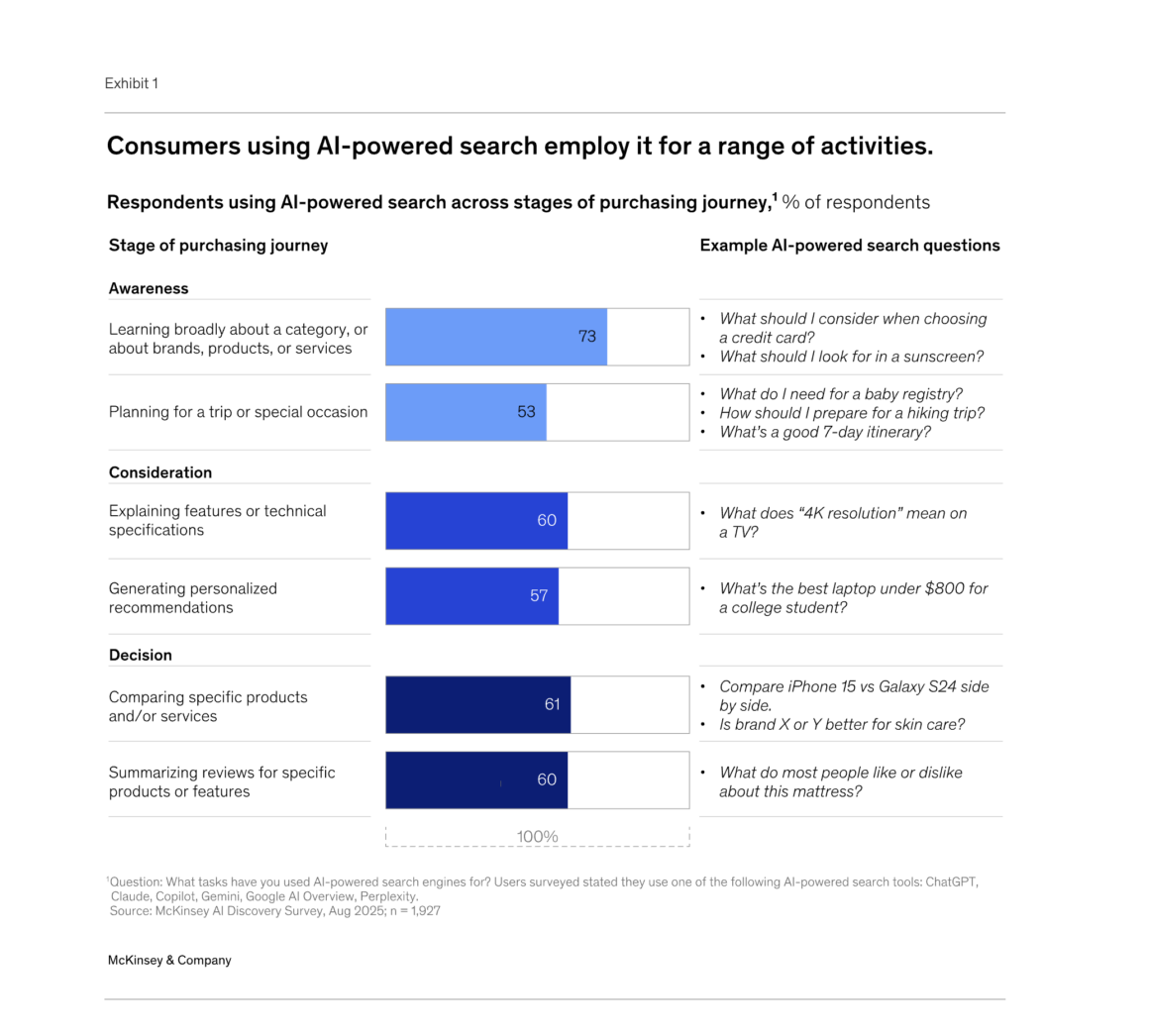
Unlike buying everyday consumer goods, booking a hotel is a decision that requires research. Guests compare locations, room types, amenities, cancellation policies, value for money, and, perhaps most importantly, reviews. They often spend days or even weeks researching before making a final decision. AI dramatically increases the amount of data that can be checked in that research process. Instead of reading hundreds of reviews or comparing dozens of hotel websites, travellers can now ask an AI assistant to recommend the best hotel for their specific needs, explain the trade-offs between different properties, and summarize the experiences of previous guests within seconds.

This fundamentally changes what marketing means for hotels. Increasingly, the challenge will no longer be getting a guest to visit your website first. Instead, it will be ensuring that when an AI evaluates your property, it reaches the right conclusions.
That is where reviews become significantly more important than they already are today.
Traditionally, reviews have been written for future guests. A potential customer would browse through dozens of comments, trying to identify recurring themes while filtering out unusually positive or negative opinions. AI removes that burden entirely. Instead of manually reading hundreds of comments, travellers can simply ask, “Are the rooms quiet?”, “Is breakfast worth paying for?”, or “Do guests regularly complain about the air conditioning?” The AI reads every review, identifies recurring patterns, and presents a concise summary.
This has important implications for hotel operations. Issues that were once buried across hundreds of individual reviews become immediately visible. If multiple guests mention noisy street-facing rooms, inconsistent housekeeping, slow elevators, or disappointing breakfast service, AI will quickly identify those patterns. Likewise, strengths such as exceptional staff, comfortable beds, or outstanding location become more consistently reinforced. Reputation management therefore shifts from managing individual reviews to managing operational consistency.
This observation also aligns closely with the guest satisfaction trends we recently wrote about. Some aspects of the guest experience generate remarkable agreement among travellers. Cleanliness and location tend to produce highly consistent opinions. Other categories, including food and beverage, decoration, and entertainment, show considerably greater variation because guest expectations differ more widely. AI has the ability to interpret these nuances far more effectively than traditional review scores. Rather than simply reporting an average rating, it can explain why guests disagreed and identify the circumstances under which certain experiences were viewed positively or negatively.
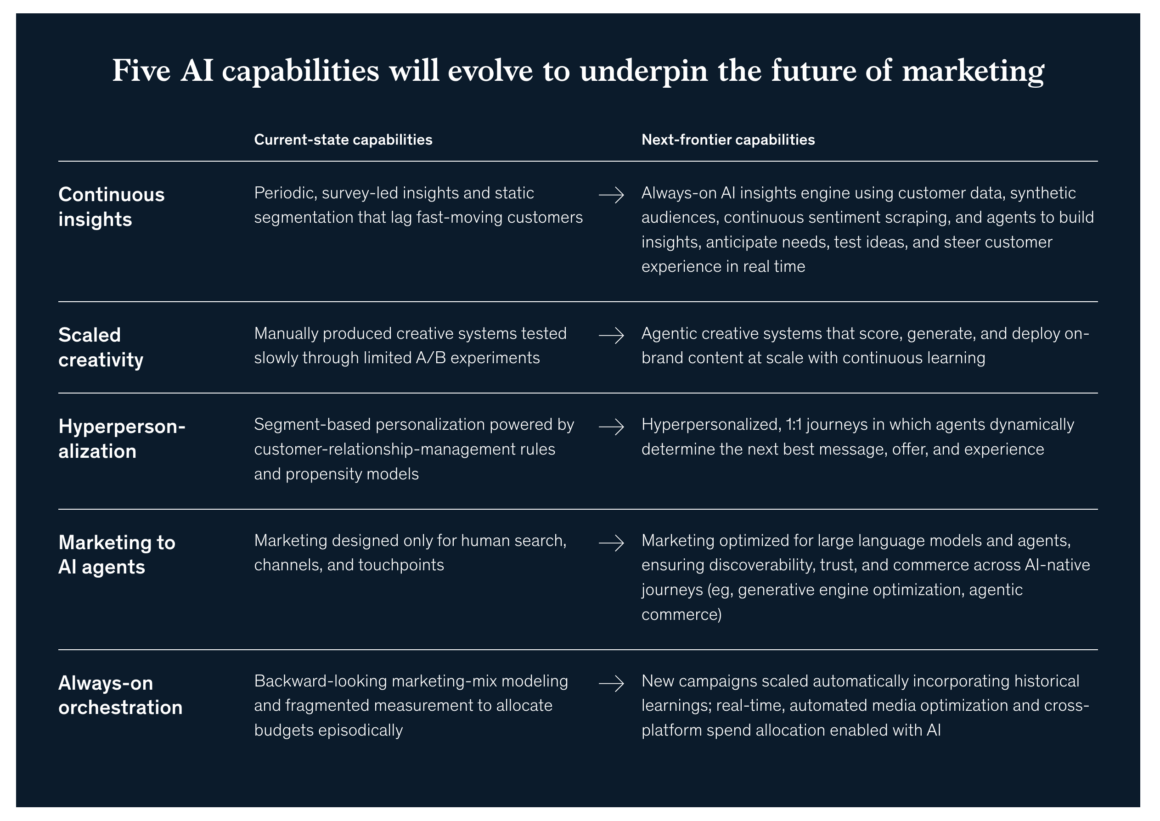
McKinsey introduces another interesting concept in its report: the emergence of what it calls the “Agent Whisperer.” While the name may sound futuristic, the principle is likely to become very familiar. This role focuses on ensuring that brands are accurately represented within AI systems by providing structured, trustworthy, and consistent information that AI models can interpret and confidently recommend.
In many ways, this feels like the next evolution of SEO.
As with every search technology before it, businesses will inevitably look for shortcuts. There will undoubtedly be attempts to manipulate AI recommendations just as there were attempts to manipulate Google’s search rankings through keyword stuffing, link farms, and countless other tactics. History suggests that these approaches rarely survive for long. Search engines continuously evolved to reward quality, authority, and trust while penalizing attempts to game the system. AI systems are likely to follow the same path because their value depends entirely on providing users with accurate recommendations rather than manipulated ones.
For hotels, this means the competitive advantage shifts away from producing ever more marketing content and towards building a consistently trustworthy digital footprint. Hotel websites remain important, but they become just one source among many. Reviews, business listings, editorial coverage, structured property information, social content, and even responses to guest feedback all contribute to the information AI uses to understand a property.
Perhaps the biggest implication is that marketing and operations become more closely connected than ever before. Every guest interaction generates data that future AI assistants may use when recommending or rejecting a hotel. Marketing can no longer compensate for operational weaknesses because AI is exceptionally good at identifying recurring patterns across thousands of guest experiences. Conversely, hotels that consistently deliver excellent service create an information advantage that becomes increasingly difficult for competitors to replicate.
The buying funnel itself is therefore beginning to change. Instead of moving from Google to an OTA, then to review sites, before finally arriving at a hotel website, many travellers may soon begin with a conversation. By the time they visit a booking page, much of the research has already been completed by AI. Hotels that understand this shift early will focus less on simply attracting clicks and more on ensuring that every piece of information about their property contributes to a trustworthy, consistent, and compelling picture.
For years, the industry’s digital marketing strategy centred on helping guests find information. In the AI era, the objective becomes helping machines understand it. The hotels that succeed will not necessarily be those with the largest advertising budgets, but those whose guest experience, reputation, and digital presence consistently tell the same story.